The political landscape in India is currently embroiled in a complex debate over job guarantees, with the two major national parties, the Bharatiya Janata Party (BJP) and the Indian National Congress, presenting voters with a confusing array of acronyms and promises. At the heart of this debate are flagship schemes like the Mahatma Gandhi National Rural Employment Guarantee Act (MGNREGA) and the proposed Nyuntam Aay Yojana (NYAY), creating what many are calling an "alphabet soup" of policies.
The Core of the Controversy: MGNREGA vs NYAY
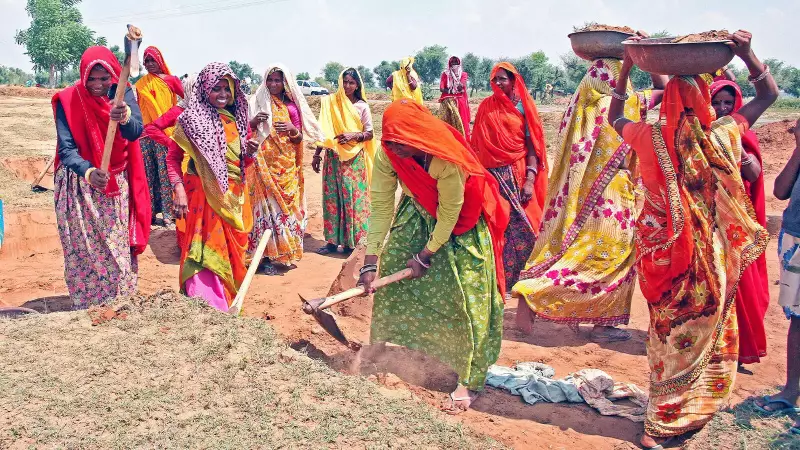
The existing Mahatma Gandhi National Rural Employment Guarantee Act (MGNREGA) is a central legislation that provides a legal guarantee for 100 days of wage employment in a financial year to every rural household whose adult members volunteer to do unskilled manual work. It has been a cornerstone of rural welfare for years.
In contrast, the Congress party has proposed the Nyuntam Aay Yojana (NYAY) or Minimum Income Support Scheme. This ambitious promise aims to provide a guaranteed minimum income to the poorest families in India, directly transferring a specific sum of money into their bank accounts annually. The party claims this is a more direct and efficient way to alleviate poverty and boost consumption.

A Clash of Ideologies and Implementation
The BJP-led government defends MGNREGA, highlighting its role as a social safety net and its contribution to creating rural infrastructure. Supporters argue it provides not just income but also assets for communities. Critics, however, point to issues like delayed wage payments, corruption, and the creation of non-durable assets.
The Congress's NYAY scheme is presented as a revolutionary step towards eradicating poverty through direct cash transfers, reducing bureaucratic leakage. However, opponents, primarily from the BJP, question its fiscal feasibility, potential to discourage work, and the challenges in accurately identifying beneficiaries. They argue it could become a massive drain on the national exchequer without creating tangible assets.
This debate has left many voters and analysts confused. The core question is whether the nation should stick with and improve the existing employment-linked guarantee of MGNREGA or shift to a new paradigm of direct income support as promised under NYAY. The political rhetoric often obscures the technical and economic nuances of each approach.
Beyond the Big Two: A Soup of Schemes
The confusion is compounded by other state and central government initiatives with similar acronyms or goals focused on skilling, urban employment, and startup promotion. This proliferation of schemes, often announced with great fanfare, makes it difficult for the public to track outcomes and hold governments accountable.
The key issues for voters to consider include:
- The fundamental difference between a right to work (MGNREGA) and a right to income (NYAY).
- The implementation track record of existing schemes versus the promises of new ones.
- The long-term economic impact on productivity, inflation, and government finances.
- The actual reach and effectiveness in alleviating poverty and distress.
As elections dominate the political discourse, the debate between MGNREGA and NYAY symbolizes a larger ideological battle over the state's role in welfare. One side emphasizes employment generation and asset creation, while the other advocates for direct income redistribution. The outcome of this debate will significantly shape India's social welfare policy for the coming years.
Ultimately, for the common citizen, cutting through this "alphabet soup" requires looking beyond the acronyms and political slogans to understand the mechanics, costs, and proven benefits of each proposed job guarantee or income scheme. The choice between these models will have profound implications for India's economic trajectory and social fabric.