

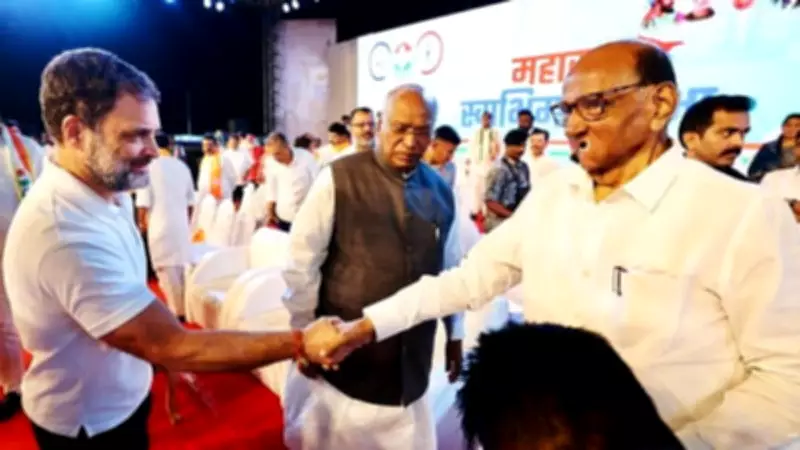
In a significant political development, Nationalist Congress Party (NCP) chief Sharad Pawar has thrown his weight behind Congress leader Rahul Gandhi during a heated debate in the Lok Sabha concerning the unpublished memoir of former Army Chief General Manoj Mukund Naravane. The controversy erupted on Wednesday when Gandhi cited the memoir to allege that Prime Minister Narendra Modi failed to fulfil his responsibilities during the 2020 India-China border conflict, instead shifting blame onto General Naravane.
Political Showdown in Parliament Over Military Leadership
The Lok Sabha witnessed intense exchanges as opposition leaders, led by Rahul Gandhi, used General Naravane's yet-to-be-published memoir to question the government's handling of the 2020 Galwan Valley clash. According to sources, the memoir reportedly contains insights into decision-making processes during the tense standoff with Chinese forces along the Line of Actual Control (LAC). Gandhi's assertions have sparked a fierce political row, with the ruling Bharatiya Janata Party (BJP) dismissing the claims as baseless and politically motivated.
Sharad Pawar's Endorsement Adds Weight to Opposition Critique
Veteran politician Sharad Pawar, known for his strategic acumen, publicly backed Gandhi's stance during the parliamentary session. Pawar emphasized the need for transparency and accountability in matters of national security, particularly concerning military leadership during conflicts. His support has bolstered the opposition's narrative, turning the memoir issue into a broader debate on governance and defence preparedness.

The unpublished memoir has become a focal point in Indian politics, with opposition parties arguing that it reveals critical lapses in the government's response to the China conflict. They claim that Prime Minister Modi's administration did not provide adequate support to military commanders on the ground, leading to avoidable casualties and strategic setbacks.
Government's Firm Rejection of Allegations
In response, government representatives in the Lok Sabha have vehemently denied the allegations, labelling them as an attempt to undermine national unity and the armed forces' morale. They have pointed to the government's robust defence policies and increased border infrastructure development as evidence of its commitment to national security. The BJP has accused the opposition of politicizing sensitive military matters for electoral gains.
This development comes at a time when India-China relations remain strained, with ongoing diplomatic and military talks aimed at de-escalating tensions. The political fallout from the memoir row could impact future defence policies and parliamentary discussions on border security.
Broader Implications for Indian Politics and Defence Discourse
The backing of Sharad Pawar, a key figure in Maharashtra politics and a former defence minister, adds considerable credibility to the opposition's critique. His intervention highlights the growing concerns among political veterans about the handling of border conflicts and the need for bipartisan support in defence matters. As the debate continues, it is likely to influence public opinion and shape the political landscape ahead of upcoming elections.
Observers note that this episode underscores the deepening political divisions in India, with national security becoming a central theme in opposition rhetoric. The government, meanwhile, remains focused on showcasing its achievements in defence modernization and diplomatic outreach to counter the criticism.






