Nitish Kumar's Departure from Bihar CM Post Creates Political Crossroads
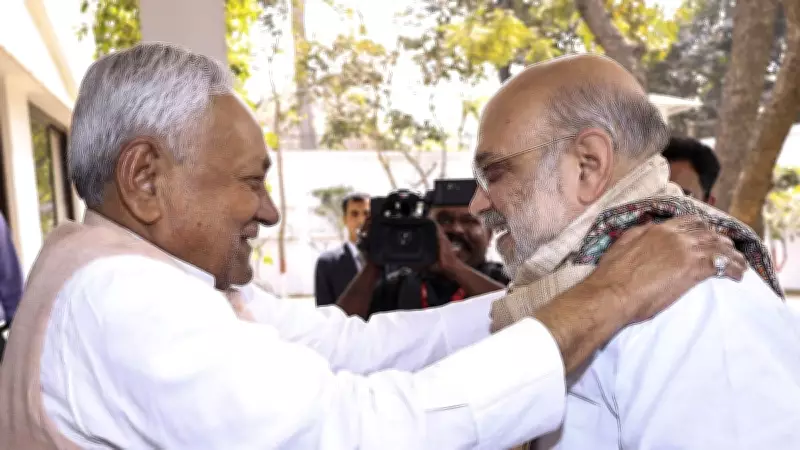
The political landscape of Bihar has been dramatically reshaped with the announcement that Nitish Kumar will be stepping down from his position as Chief Minister. This move, which comes as he pursues his long-held ambition of securing a seat in the Rajya Sabha, has sent shockwaves through the state's political establishment and beyond.
A Litmus Test for BJP's Political Standing in Bihar
Nitish Kumar's tenure as Chief Minister has been instrumental in providing the Bharatiya Janata Party (BJP) with a level of political respectability and acceptance in Bihar that was previously elusive. Through their alliance, Kumar helped the BJP shed what many observers described as a "political untouchability" in the state, allowing the party to establish deeper roots and broader appeal among Bihar's electorate.
Now, with Kumar's departure from the chief ministerial office, the BJP faces a crucial test of its independent political strength in Bihar. The party must demonstrate whether it can maintain its political momentum and organizational effectiveness without the protective umbrella of Kumar's leadership and the JD(U) alliance. This transition period will reveal much about the BJP's actual grassroots strength versus its reliance on coalition dynamics.

Existential Questions for JD(U) Without Its Primary Leader
For the Janata Dal (United), Nitish Kumar's decision to relinquish the chief minister's chair represents more than just a leadership change—it poses fundamental questions about the party's identity and future viability. Kumar has served as the party's undisputed mascot and primary vote-getter for decades, with his personal popularity often overshadowing the party's institutional strength.
The JD(U) now faces the daunting challenge of establishing a post-Nitish identity while maintaining its political relevance in Bihar. Party leaders must determine whether they can develop a new leadership structure that preserves Kumar's legacy while adapting to new political realities. The coming months will test whether the JD(U) can survive as an independent political force or whether it will need to reconsider its alliance strategies and political positioning.
The Rajya Sabha Ambition and Its Broader Implications
Nitish Kumar's pursuit of a Rajya Sabha seat represents a significant strategic shift in his political career. While some view this as a natural progression for an experienced politician seeking national influence, others see it as a calculated move that could have far-reaching consequences for Bihar's governance and political alignment.
This transition raises important questions about succession planning within the JD(U) and the future of governance in Bihar. It also creates uncertainty about how Kumar will balance his national parliamentary responsibilities with his continued influence over state politics. The manner in which this transition is managed will likely set precedents for how regional leaders navigate between state and national political arenas in the future.
Potential Scenarios and Political Reconfigurations
Political analysts are closely watching several potential developments in the wake of Kumar's announcement:

- BJP's consolidation efforts: The BJP may attempt to strengthen its independent position in Bihar, potentially altering the power dynamics within the ruling coalition.
- JD(U)'s leadership vacuum: The party must identify and empower new leaders who can maintain organizational cohesion and electoral competitiveness.
- Opposition opportunities: Other political parties in Bihar may see this transition period as an opportunity to gain ground, particularly if there is any perceived instability in the ruling alliance.
- Governance continuity: The administrative machinery of Bihar faces the challenge of maintaining policy continuity and implementation efficiency during this leadership transition.
The coming weeks and months will be critical in determining whether Nitish Kumar's departure from the chief minister's office represents a temporary realignment or a fundamental restructuring of Bihar's political landscape. Both the BJP and JD(U) face significant challenges in navigating this transition while maintaining their political relevance and electoral prospects in one of India's most politically significant states.