

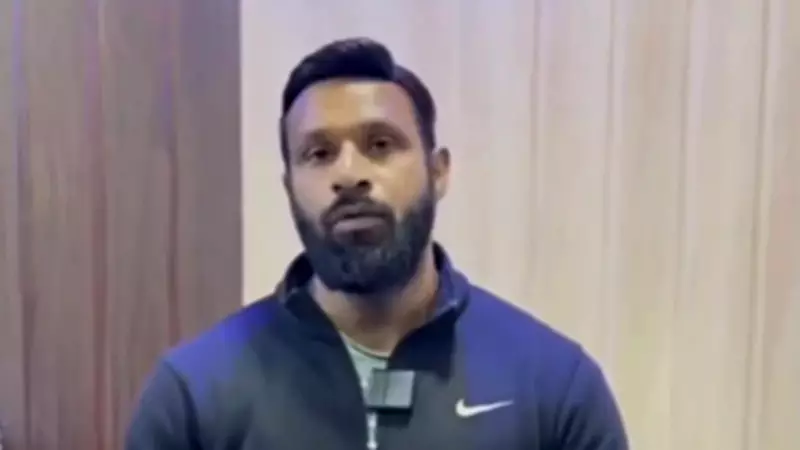
Mohammad Deepak's Stand: A Beacon of Hope in India's Communal Landscape
In a society often perceived as grappling with hatred and intolerance, a simple yet powerful statement—"Mera naam Mohammad Deepak hai, bhai"—has emerged as a profound reminder of India's inherent decency. This incident, unfolding in the quiet town of Kotdwar, Uttarakhand, has reignited faith in the nation's capacity for empathy and solidarity, challenging narratives of division.
The Christchurch Echo and India's Response
Seven years ago, the world witnessed an extraordinary act of unity in New Zealand following the tragic mosque shootings in Christchurch. Non-Muslim women donned headscarves, standing in solidarity with the Muslim community, declaring that differences should not define safety or humanity. Their words, "We are wearing these so that if someone thinks of targeting the Muslims again, he won't be able to make out any difference between them and us. Because really, in the end, there is no difference," left an indelible mark, prompting reflections on whether such maturity could flourish in India.
The Kotdwar Confrontation: A Test of Values
Recently, a video from Kotdwar, located approximately five hours from the national capital, provided a resounding answer. The scene involved Vakeel Ahmed, an elderly Muslim shopkeeper running a school uniform store named Baba Clothes Store. On Republic Day, a vigilante group confronted him, demanding he change the shop's name to reflect his Muslim identity, arguing it should show "apni pehchan" (one's own identity).

The term Baba is deeply ingrained in the subcontinent's culture, used variously for spiritual figures, elders, children, or even in affectionate or mocking contexts. The group's insistence sparked a tense moment, until Deepak Kumar, a local gym owner, stepped in. When asked his name, he defiantly replied, "Mera naam Mohammad Deepak hai, bhai," a statement that quickly went viral.
Unveiling the Hero: Deepak Kumar's Conviction
As the video spread, Deepak Kumar's identity was revealed. He is a practising Hindu, often greeting with "Jai Siya Ram" and displaying a poster of Lord Hanuman in his gym. Explaining his actions, he told The Indian Express, "They asked me my name, and in anger, I said I was Mohammad Deepak. I intended to convey that I was an Indian and everyone was equal before the law."
Despite facing backlash, including sloganeering against him and his family in a local park, Kumar remains steadfast. "I am not going back on my words because I have always stood up for the right thing," he asserts. His philosophy shines through in statements like, "Na main Hindu hun na Musalman hun, sabse pehle insaan hun" (Neither am I a Hindu, nor a Muslim. I am a human being, first and foremost) and "Ye Hindustan hai. Hindustan mei sabko rehne ka adhikar hai" (This is India, everyone has the right to live here).
Broader Acts of Bravery in Uttarakhand
Deepak's case is not an isolated incident in Uttarakhand. In April of last year, Shaila Negi, a young woman from Nainital, confronted a mob targeting Muslim-owned shops following a rape case. She boldly questioned, "Hindu aur Musalman kyun kar rahe hain aap log?" (Why are you making it a Hindu-Muslim issue?), momentarily halting the frenzy. Negi faced severe backlash, including threats to her character and safety, but stood unfazed, retorting, "Koi baat nahi, rape me, do whatever you want to do... But is that why you took to the streets?"
The Real India: A Tapestry of Courage and Unity
These stories collectively underscore that the real India is one where individuals, regardless of background, champion the right to live freely and express identity without fear. Deepak Kumar's words serve as a shot in the arm, countering narratives of intolerance and reminding us that bravery is not confined to urban elites or atheist circles. It thrives in small towns, embodied by a god-fearing "gym bro" or a diminutive young woman who risks personal safety for justice.

As we reflect on these acts, there is no longer a need to wistfully look back at the women of New Zealand. India, too, boasts its own heroes—ordinary people who, in moments of crisis, articulate profound truths with clarity and courage. It is individuals like Deepak Kumar and Shaila Negi, not hate-mongers, who truly embody the spirit of Dev Bhoomi, making Uttarakhand and indeed the nation, a beacon of hope and harmony.





