PM Modi Condemns Opposition for Defeating Women's Reservation Amendments
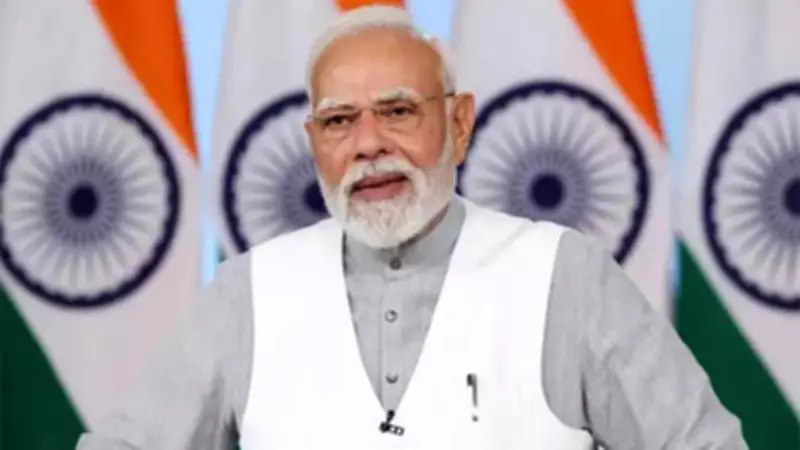
NEW DELHI: In a powerful national address on Saturday, Prime Minister Narendra Modi launched a fiery condemnation of opposition parties for defeating proposed amendments to the women's reservation law. The Prime Minister accused them of committing what he termed "bhrun hatya" or political feticide in Parliament by obstructing his government's efforts to implement a 33% quota for women by 2029 and increase Lok Sabha seats for every state by 50%.
Historic Speech Targets Political Rivals
In an impassioned 30-minute speech that marked a departure from his usual policy-focused national addresses, Modi began by apologizing to women across India for his government's inability to pass the crucial bill despite what he described as "utmost efforts." He asserted that those who defeated the legislation had effectively thwarted women's rise and smothered their political aspirations.
"Women will never forgive you for this sin," Modi declared in his direct message to opposition parties, while affirming that it remains only a matter of time before women receive their rightful representation in both Lok Sabha and state assemblies.

Specific Parties Named and Criticized
The Prime Minister specifically targeted Congress, Trinamool Congress, Samajwadi Party, and DMK, accusing these four parties of spreading misinformation to mislead the public about the proposed amendments' true intent. He claimed these parties had ultimately unmasked themselves before the nation through their actions.
Modi argued that family-run political organizations like Congress, TMC, SP, and DMK feared that empowered women's leadership would threaten the dominance of their ruling families. "Members of these parties were thumping their desks after snatching the rights of women. This was not merely thumping of desks but also a strike at women's self-respect," he stated emphatically.
Rebuttal of Opposition Claims
The Prime Minister strongly rebutted opposition claims that the Constitution (131st Amendment) Bill would reduce southern states' representation in Parliament through delimitation. He clarified that the legislation was designed not to take anything away but to provide every state, regardless of size, with equitable benefits.
Modi emphasized that the women's reservation amendment represented a critical need for the nation, as it sought to enhance political power across all regions—north, south, east, and west—by an equal percentage. He accused Congress of inheriting a divide-and-rule mentality from British colonial rulers and claimed that every national challenge stemmed from the party's entrenched negativity and anti-reform ideology.
Confidence Amid Legislative Setback
Despite lacking the required 66% parliamentary support to pass the constitutional amendment, Modi expressed confidence that his government enjoyed the blessings of what he estimated as 100% of women across India. This assessment suggested the Bharatiya Janata Party might transform this legislative setback into an opportunity to strengthen support among female voters.
"I want to put it bluntly that those who opposed the Constitution amendment bill are taking women for granted," Modi asserted, singling out Congress for what he described as historical opposition to women's quotas and consistent resistance to reforms ranging from GST and digital payments to Article 370 repeal and triple talaq legislation.
Unwavering Resolve for Women's Empowerment
The Prime Minister concluded his address on a defiant note rather than one of disappointment. "Our morale is undimmed and our courage is intact. Our resolve is also unshakeable," he declared, promising that opposition parties would ultimately fail to prevent increased women's representation in legislatures.
Modi assured every Indian woman that his government would systematically remove every obstacle hindering women's reservation. "We may have lacked the numbers, but that does not mean that we lost. Our willpower is invincible, and we will not be stopped until we have fulfilled our commitment," he vowed, framing the struggle as one between national interest and partisan politics that had sacrificed women's empowerment for political gain.