

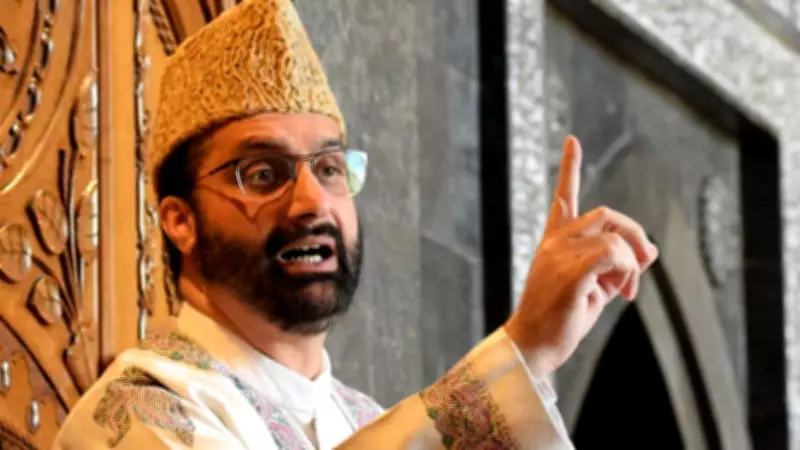
Kashmir's prominent religious leader Mirwaiz Umar Farooq has strongly condemned what he describes as the 'forced' shutdown of Srinagar's historic Jamia Masjid during the sacred occasion of Shab-e-Barat. In a sharp critique, he has demanded an explanation from authorities, asserting that such actions contradict the narrative of a 'Naya Kashmir' and regional normalcy.
Detained at Home on Sacred Night
On Tuesday, Mirwaiz revealed that he was detained at his residence as he prepared to lead prayers at the Jamia Masjid to mark Shab-e-Barat, an important night of prayer and reflection in the Islamic calendar. He shared photographs on social media showing the locked gates of both the mosque and his home, highlighting the stark contrast with other mosques across the region that were illuminated with devotion.
A Pattern of Restrictions
This incident is not isolated. Mirwaiz pointed out that Shab-e-Barat now joins a long list of occasions since 2019 when prayers at the Valley's largest mosque have been forcibly stopped. He emphasized that no reasons have been provided for these closures, only locked gates and official silence. This pattern of restriction has raised significant concerns about religious freedom and administrative transparency in Jammu and Kashmir.

Recent History of Prayer Disruptions
The chief cleric's ability to lead congregational prayers has been consistently hampered in recent weeks. Notably, he was not permitted to lead Friday prayers on three consecutive Fridays in January. Although he managed to address congregational prayers at the mosque on January 30, he was again barred from leaving his house on February 3. Just a day before the Shab-e-Barat incident, Mirwaiz had publicly announced his intention to lead prayers at the mosque through social media platforms, making the subsequent restriction particularly conspicuous.
Questioning the 'Naya Kashmir' Narrative
In his statement, Mirwaiz directly challenged the official narratives surrounding Kashmir's development and stability. He stated, "For those who beat the drums of 'normalcy' and 'naya Kashmir', this contrast needs an explanation." His remarks underscore a growing tension between governmental claims of progress and the lived experiences of religious communities facing periodic restrictions on worship.
Broader Implications for Religious Freedom
The repeated closure of Jamia Masjid, a central religious institution in Srinagar, has broader implications for the region's social and political landscape. It raises questions about the balance between security concerns and the fundamental right to religious practice. The situation has drawn attention to how administrative decisions impact communal harmony and public trust in institutions.
As developments continue to unfold, the incident highlights ongoing challenges in Jammu and Kashmir's transition period, where assertions of normalcy often clash with ground realities. The demand for explanation from Mirwaiz reflects a broader call for accountability and dialogue in addressing the region's complex socio-political dynamics.






