

Manipur Welcomes a 'Popular' Government Amidst Deep-Rooted Challenges
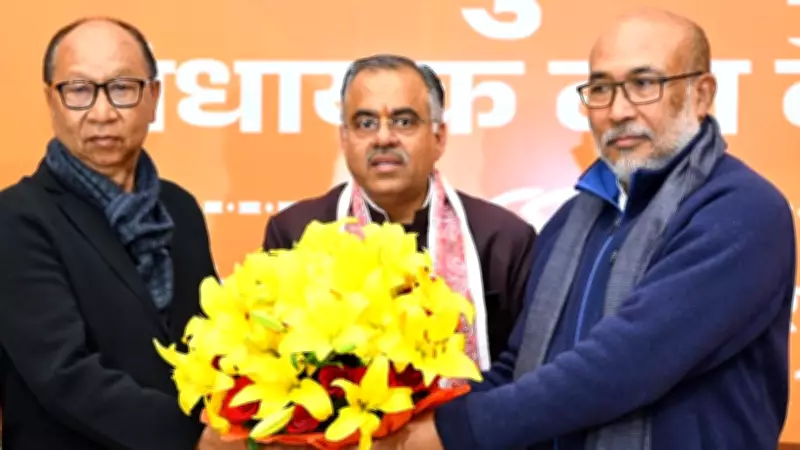
After nearly a year under President's Rule, Manipur is poised to witness the return of a democratically elected administration, with Yumnam Khemchand Singh of the Bharatiya Janata Party (BJP) set to take charge as the chief minister. This development, framed as a constitutional necessity in Delhi, marks a significant political transition for the northeastern state. However, beneath the surface of this orderly restoration lies a complex web of unresolved issues that continue to plague Manipur's social fabric.
A State Divided: Physical Segmentation and Displacement
The new government will inherit a state that remains physically segmented, where free movement for citizens often depends on delicate negotiations and informal permissions. Thousands of individuals, displaced by the ethnic violence that erupted on May 3, 2023, still find themselves unable to return to their homes safely. Relief camps, initially intended as temporary shelters, have gradually transformed into long-term addresses for many, highlighting the prolonged nature of the crisis.
In the Kuki and Zomi areas, the term "popular government" is met with skepticism and unease. Residents question whether this restoration signifies a genuine return to protective politics or merely a procedural formality. This sentiment has manifested publicly, with student organizations in Churachandpur staging protests against the formation of a government without a prior political settlement to address the underlying ethnic tensions.

Internal Party Dynamics and Delayed Leadership
The prolonged delay in establishing a government was not primarily driven by ground conditions or the concerns of displaced communities. Instead, it stemmed from internal disagreements within the ruling BJP, as legislators reportedly struggled for months to reach a consensus on leadership. Once this internal impasse was resolved, the path to forming a popular government cleared rapidly, revealing that earlier justifications for the delay were more about party dynamics than constitutional constraints.
During President's Rule, administrative control was tightened, and security decisions were centralized, even as efforts toward relief, rehabilitation, and political dialogue stagnated. Over time, the pressure to normalize governance overshadowed the patience required to confront deeper political questions, leading to the current transition.
Inheriting an Unresolved Legacy
The conflict in Manipur did not arise from a lack of institutions but from a prolonged failure of leadership. Long before violence erupted, politics in the state had taken a coercive turn, with administrative authority drifting away from hill districts while critical decisions on land, identity, and belonging accumulated at the center. By the time houses were burnt and trust in the state had thinned, the damage was already deep-seated.
The new government inherits this unresolved terrain, presiding over a society that has learned through harsh experience to separate order from justice and authority from legitimacy. For many residents, safety, rehabilitation, and political assurance are not mere post-governance demands but fundamental conditions that give governance its true meaning.
The Burden of Reconciliation and Limited Autonomy
By prioritizing government restoration over political settlement, the Centre has shifted the burden of reconciliation onto state leadership, which operates with limited room to maneuver. Key issues such as negotiations with armed groups, administrative reconfiguration, and territorial security remain tightly controlled by central authorities. While the popular government may manage day-to-day governance, it will function within boundaries it did not draw, raising questions about its efficacy in addressing core conflicts.
Supporters of government formation argue that democratic processes cannot remain suspended indefinitely and that elected representatives must assume responsibility. However, Manipur's recent history demonstrates that mere presence in office is insufficient. Citizens are not demanding instant resolutions but seek clear direction and acknowledgment from politics about the path forward.

The Need for Tangible Assurances
What has been conspicuously absent in Manipur is tangible assurance—written commitments that people can rely on, testable timelines, and a public articulation of intent that endures beyond fleeting news cycles. While healing in Manipur may take a decade, as many already understand, this moment will be closely scrutinized. It will reveal whether the restoration of government marks the beginning of genuine political repair or merely another exercise in moving forward without reckoning.
Manipur does not need reassurance that democracy has returned; it requires proof that democracy has learned from past failures—how easily authority can lose legitimacy and how costly that loss has been for those forced to live with its consequences. As Yumnam Khemchand Singh prepares to lead, the eyes of the state are on whether this new chapter will bring meaningful change or perpetuate existing divisions.





