

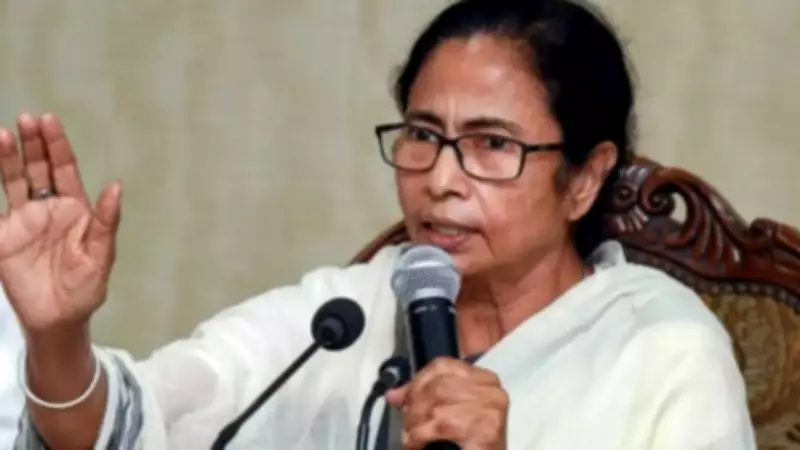
West Bengal Chief Minister Mamata Banerjee launched a scathing attack on Chief Election Commissioner Gyanesh Kumar on Monday, labeling him as "arrogant" and a "liar" following a contentious meeting at the Election Commission headquarters in New Delhi. The confrontation occurred amidst the ongoing Special Intensive Revision of electoral rolls in West Bengal, a process that Banerjee and her Trinamool Congress party have vehemently denounced as biased and discriminatory.
Banerjee's Strong Accusations Against Election Commissioner
Emerging from the Election Commission office, an emotional Mamata Banerjee expressed deep disappointment with her interaction. "I am very sad. I have been involved in politics in Delhi for a very long time. I was a minister four times and an MP seven times," she stated. "I have never seen such an Election Commissioner who is so arrogant, who is such a liar."
The veteran politician emphasized her respect for the institution while criticizing the individual holding the position. "I told him that I respect your chair because no chair is permanent for anyone. One day you have to go," Banerjee remarked, questioning why Bengal was being specifically targeted in the electoral process.

Concerns Over Voter Roll Revision Process
Banerjee raised serious concerns about the Special Intensive Revision exercise, which she claims has resulted in the deletion of approximately 58 lakh voters from West Bengal's electoral rolls without proper justification or opportunity for defense. "Elections are a festival in a democracy, but you deleted the names of 58 lakh people and did not allow them to defend themselves," she asserted, highlighting what she perceives as fundamental flaws in the democratic process.
The Trinamool Congress delegation, which included party MPs Abhishek Banerjee and Kalyan Banerjee along with families affected by the SIR exercise, formally presented their grievances to the Election Commission. They characterized the revision process as "biased, arbitrary, discriminatory, and politically motivated," demanding immediate corrective measures.
Security Concerns and Treatment of Bengal Delegation
Banerjee's visit to Delhi was marked by additional controversy surrounding security arrangements. She had previously criticized what she described as excessive police deployment outside Banga Bhawan, where she was scheduled to hold a press conference. "Such threats cannot continue," she warned, expressing concern about the treatment of political representatives from West Bengal.
Drawing a stark contrast between hospitality extended to central ministers in Bengal and the reception her delegation received in Delhi, Banerjee remarked: "When the home minister comes to Bengal, we give him the red carpet. But when we come to Delhi, you give us the black carpet." She appealed for restraint from what she termed "atrocities and torture" against the people of Bengal.
National Context of Electoral Roll Revision
The Special Intensive Revision exercise is currently underway across 12 states and union territories nationwide, with the final electoral rolls scheduled for publication on February 7. While the Election Commission maintains this as a routine process to ensure accurate voter lists, political parties in several regions have raised objections about implementation methods and potential biases.
Banerjee's strong criticism comes at a crucial juncture in India's electoral calendar, highlighting the ongoing tensions between state governments and constitutional bodies over electoral processes. The West Bengal chief minister's direct confrontation with the Election Commission leadership underscores the deepening political divisions surrounding electoral integrity and administrative fairness.
This development adds to the growing list of controversies surrounding electoral preparations in various states, with opposition parties increasingly vocal about perceived irregularities in voter registration and verification processes. The Election Commission now faces mounting pressure to address these concerns while maintaining its constitutional mandate of conducting free and fair elections across the country.






