

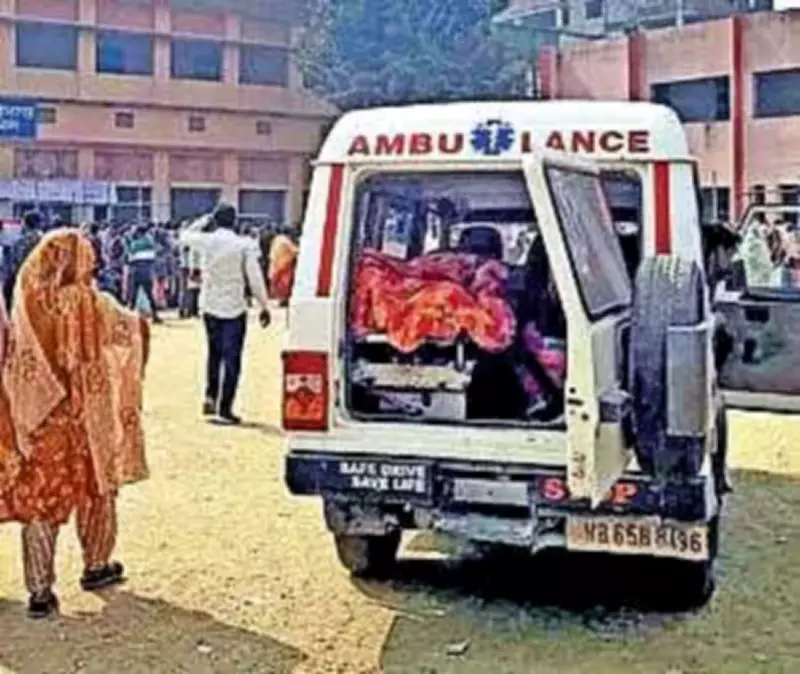
In a poignant incident highlighting the lengths to which citizens go to fulfill their civic duties, a 60-year-old voter in Malda, West Bengal, made a remarkable journey in an ambulance to attend a Summary Revision of Electoral Rolls (SIR) hearing on Tuesday. The elderly man, identified as Mahmud Sk, a mason by profession, has been bedridden for two years following a severe accident where he fell from a multi-storey building, leaving him under continuous medical care.
Bedridden Voter's Determination to Attend Hearing
Mahmud Sk, residing in Bibigram under the English Bazar Police Station area, was scheduled for a routine doctor's appointment in Raiganj on the same day. However, his plans were disrupted when he received a notice a few days prior, mandating his presence at the SIR hearing held at Malda Zilla School. Despite his fragile health condition and reliance on medical treatment, he was determined to comply with the electoral authorities' summons.
Ambulance Journey and Family Support
Accompanied by his children, Mahmud was transported to the hearing center in an ambulance, a testament to his commitment to the electoral process. His son, Altaf, recounted the day's events, stating, "In the same ambulance, we took him to Raiganj after the hearing was over," emphasizing the family's efforts to balance his medical needs with civic responsibilities. This arduous trip underscores the physical and emotional challenges faced by voters with disabilities or health issues when engaging with electoral procedures.

Political Reactions and Controversy
The incident has ignited a heated political debate, with local leaders from major parties expressing divergent views. Trinamool Congress councillor Subhomoy Basu criticized the Election Commission, calling its actions "inhuman" and pointing out that approximately 1,200 out of 4,176 voters in his ward were summoned due to logical discrepancies in the electoral rolls. He argued that such demands place undue hardship on vulnerable individuals like Mahmud.
BJP's Counterargument
In contrast, BJP leader Ajoy Ganguly dismissed the situation as a political stunt by the Trinamool Congress. He asserted, "Trinamool Congress is deliberately trying to make a gimmick. There was no need to bring Mahmud personally. Anybody from his family could have brought his documents," suggesting that the hearing could have been managed without the voter's physical presence, thereby avoiding unnecessary distress.
Broader Implications for Electoral Processes
This case raises critical questions about the accessibility and humanity of India's electoral system, particularly for elderly or bedridden voters. Key points to consider include:
- The need for more flexible hearing procedures that accommodate individuals with severe health conditions.
- The role of family members in assisting voters who are unable to attend in person, as highlighted by the BJP's stance.
- Potential reforms to reduce the burden on voters, such as digital submissions or home visits by election officials.
As elections approach, such incidents remind us of the importance of ensuring that every citizen, regardless of physical limitations, can participate in democracy without undue hardship. The Malda episode serves as a call to action for authorities to review and humanize electoral protocols, balancing legal requirements with compassion for voters' well-being.






