

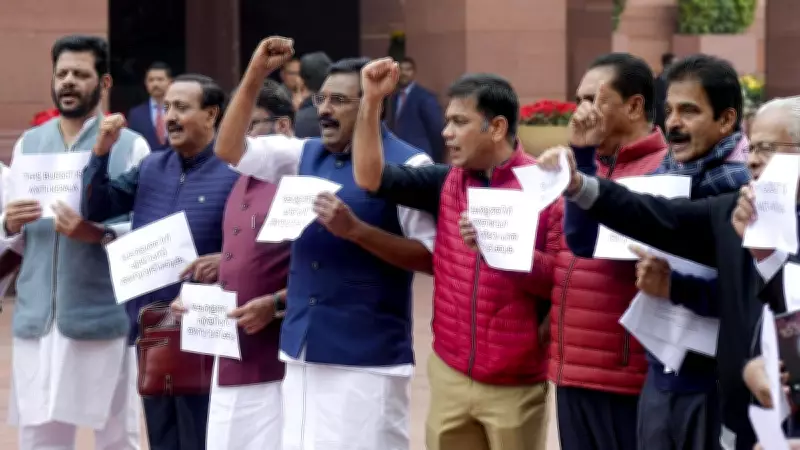
In a significant display of political dissent, Opposition Members of Parliament from Kerala staged a protest against the Union Budget within the hallowed halls of Parliament. The lawmakers vehemently criticized the financial blueprint presented by the central government, branding it as an 'anti-Kerala Budget' that they claim fails to address the specific needs and developmental aspirations of the southern state.
Parliamentary Protest Over Budgetary Allocations
The protest by Kerala's Opposition MPs underscores the deepening political rift between the state's ruling front and the central government. The parliamentarians argued that the budget allocations disproportionately neglect Kerala's priorities in sectors such as healthcare, infrastructure, and social welfare. This confrontation highlights the ongoing tensions in Indian federalism, where regional parties frequently clash with the central administration over fiscal policies and resource distribution.
Simultaneous Uproar in Kerala Legislative Assembly
Meanwhile, political turmoil also gripped the Kerala Legislative Assembly, where proceedings descended into chaos following the Speaker's decision. The Opposition had submitted a formal notice demanding an urgent discussion on serious allegations against the state government. They accused the administration of violating key provisions of the Kerala Prisons and Correctional Services (Management) Act, a legislation designed to ensure proper management and humane conditions within the state's correctional facilities.

The Speaker's alleged rejection of this discussion notice triggered immediate and vociferous protests from Opposition members. This parallel unrest demonstrates how political controversies are unfolding at both the national and state levels simultaneously, reflecting the complex and multi-layered nature of governance challenges in India.
Broader Implications for Kerala's Political Landscape
These twin protests—in Parliament against the Union Budget and in the state assembly over prison management allegations—point to a heightened period of political confrontation in Kerala. The events signal potential obstacles for legislative cooperation and governance efficiency, as key institutions become arenas for partisan disputes rather than platforms for constructive policymaking.
The situation warrants close observation as it develops, with implications for both Kerala's internal administration and its relationship with the central government. The convergence of these protests on the same day suggests a coordinated opposition strategy to challenge authorities on multiple fronts, using both fiscal and administrative grievances as rallying points.






