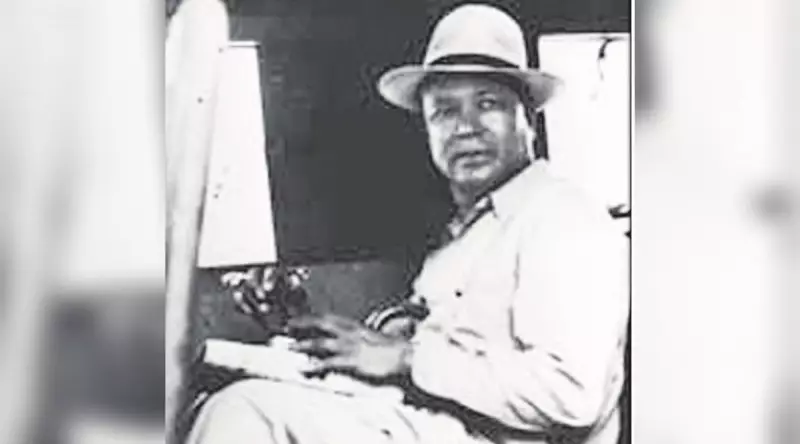
Every January, the chill in Jharkhand's air carries with it a profound and recurring question. How does a nation remember a visionary leader whose ideas far outpaced his era? Born Pramod Pahan on January 3, 1903, Jaipal Singh Munda is revered in his homeland as Marang Gomke or the great leader. Yet, in India's public memory, he remains a paradox—occasionally mentioned but seldom understood, a figure archived away from mainstream consciousness.
From Oxford Blue to Olympic Gold: A Life Defying Boundaries
Munda's extraordinary life resists simple labels. He navigated spheres that colonial India strove to keep separate. His path took him from mission schools to the debating halls of Oxford University, where he earned a degree in Economics, Philosophy, and Politics. Oxford gave him more than academics; it equipped him with the language to challenge entrenched power structures.
On the hockey field, he broke racial barriers. Munda became the first Indian to earn an Oxford Blue in hockey and later captained the Indian team to a gold medal at the 1928 Amsterdam Olympics. This was not just sporting excellence; it was a bold statement of confidence that colonial stereotypes could not contain. Crucially, Munda never saw his personal achievements as an end goal. For him, they were tools to be leveraged for a larger cause—the emancipation of his people.
The Constitutional Visionary: Championing Adivasi Rights
The defining shift in Munda's journey came upon his return to India, where he confronted the harsh realities of Adivasi life in regions like Chotanagpur and Santhal Parganas. Witnessing land alienation, cultural erosion, and exploitation firsthand, he transformed local grievances into a powerful political movement as president of the Adivasi Mahasabha.
His most significant contributions were made in the Constituent Assembly. His interventions were far from token. When he proudly identified himself as a "jungli," he was not romanticizing a primitive past but challenging the civilizational arrogance within nationalist discourse. He argued that tribal societies possessed deep democratic traditions from which the modern state could learn.
Munda's advocacy was instrumental in shaping the framework of protective discrimination for Scheduled Tribes and infused India's constitutional debates with a genuine ethic of cultural plurality. He warned against mere symbolic inclusion without material justice, a critique that remains powerfully relevant.
An Unfinished Legacy: Resistance, Pride, and Contemporary Questions
The demand for a separate Jharkhand state was the political culmination of Munda's vision—a claim rooted in dignity, autonomy, and control over resources. While the state was formed decades after his death, its current realities often reflect the limits of that vision, with an extractive economy and demographic shifts marginalizing the very community he fought for.
Yet, Jaipal Singh Munda's legacy is alive and refuses to be confined to statues. It thrives on the hockey fields of Jharkhand, where Adivasi youth forge paths to national acclaim. It echoes in contemporary movements for the recognition of the Sarna religion, land rights, and cultural identity.
Remembering Munda today is not an act of nostalgia. It compels us to ask urgent questions: Who truly speaks for Adivasis in modern India? Can a development model that displaces its original inhabitants be just? Is Indian democracy capable of accommodating radically different ways of life, or does it merely tolerate them? Munda's life offers a method: to speak with unapologetic confidence from where you stand, to refuse erasure, and to insist that the nation listens. On his birth anniversary, this insistence is his most vital gift to the republic.