In a powerful Republic Day demonstration, the Indian Air Force has released compelling video evidence showcasing its advanced fighter jets armed with cutting-edge missiles, effectively silencing critics who had questioned India's military capabilities.
Visual Proof of Advanced Missile Arsenal
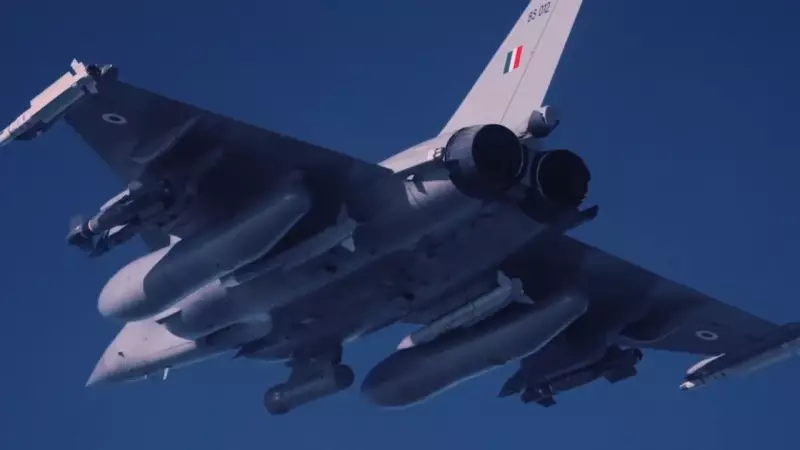
The Indian Air Force posted a significant video on social media platform X on Monday, revealing fully-loaded fighter jets including French-acquired Rafales, Sukhois, and indigenously-manufactured Tejas aircraft. The visual documentation clearly shows these aircraft equipped with sophisticated missiles like the Meteor and BrahMos systems, which were reportedly deployed during Operation Sindoor against Pakistan.
Ending Months of Speculation
This video release has conclusively ended months of uncertainty and speculation regarding India's possession of the beyond-visual-range Meteor missile. Various Pakistani and western critics had previously alleged that India did not actually possess these advanced missiles despite claims of their use during the 2019 Balakot surgical strikes and subsequent operations.

Meteor Missile: A Game-Changer in Aerial Combat
The Meteor represents the next generation of beyond visual range air-to-air missile systems, designed to transform aerial warfare in the 21st century. This sophisticated weapon system offers several revolutionary capabilities that give India's air force a significant strategic advantage.
Advanced Technical Specifications
What makes the Meteor missile particularly formidable is its multi-shot capability, allowing multiple launches against multiple targets simultaneously. The missile can engage highly maneuverable targets including fighter jets, as well as smaller threats such as UAVs and cruise missiles, even in heavy electronic countermeasures environments.
With an impressive operational range exceeding 200 kilometers, the Meteor utilizes a solid-fueled ramjet motor that enables it to cruise at speeds over Mach 4. This propulsion system provides continuous thrust and mid-course acceleration, creating what experts describe as the largest 'no escape zone' of any current air-to-air missile system.
The fragmentation warhead design ensures maximum lethality against targets, making the Meteor several times more effective than conventional medium-range air-to-air missiles currently in service with most air forces worldwide.
Historical Context: The Rafale Deal and Missile Integration
India's acquisition of these advanced missile systems traces back to September 2016, when India and France signed a landmark 7.87 billion euro agreement for 36 Rafale fighter jets. This comprehensive deal included not only the aircraft but also the latest missile systems and weapon technologies, along with multiple India-specific modifications to meet the unique requirements of the Indian Air Force.
As part of this strategic acquisition, the Rafale fighter jets arrived equipped with both Meteor and Scalp missiles, forming a crucial component of India's enhanced aerial defense and strike capabilities.
Addressing Skepticism with Visual Evidence
Despite the official documentation of the Rafale deal, skeptics had persistently questioned whether India actually received the Meteor missiles as part of the fighter jet package. The newly released video provides irrefutable visual confirmation that these advanced weapons are indeed operational within India's air force inventory.
Comprehensive Display of Air Power
The Republic Day video presentation goes beyond just showing the Meteor missiles. Additional footage reveals a Tejas Light Combat Aircraft firing the Meteor missile, demonstrating the indigenous fighter's integration with this advanced weapon system. The video also shows a fully-loaded Mirage 2000 equipped with the same missile model reportedly used during the 2019 Balakot surgical strike.
Furthermore, the Indian Air Force showcased the Rampage air-to-surface missile, renowned for its precision strike capabilities. During Operation Sindoor, the IAF's Sukhoi-30MKI aircraft successfully deployed these Rampage missiles, adding another layer to India's demonstrated aerial strike capabilities.

This comprehensive visual presentation serves as both a technological showcase and a strategic message about India's growing military capabilities and its commitment to maintaining air superiority in the region.