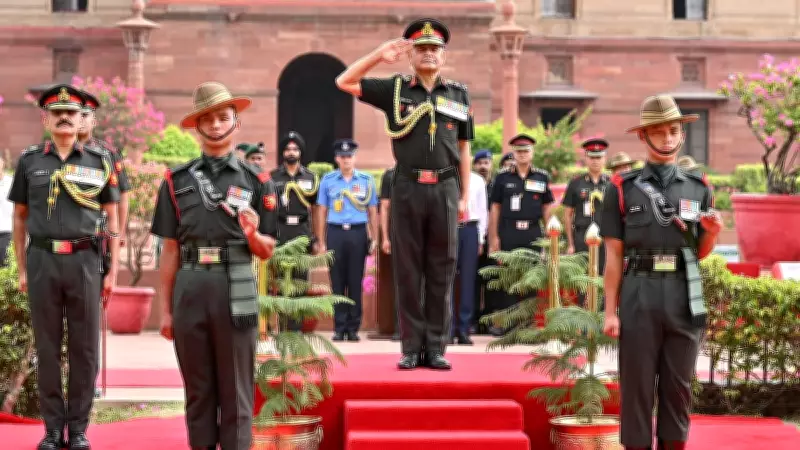
General Upendra Dwivedi officially signed off as the Chief of the Indian Army on June 30, 2026, marking the end of a distinguished career spanning over four decades. In his farewell address, he emphasized that future conflicts would be increasingly theatre-oriented, requiring integrated planning and execution across all domains.
Theatre-Oriented Warfare: A Strategic Shift
Dwivedi stated that the nature of warfare is evolving rapidly, with future battles likely to be fought in a theatre command structure. This approach integrates land, air, naval, cyber, and space assets under a unified commander for a specific geographical area, enabling faster decision-making and more effective responses. He noted that the Indian Army has already taken steps toward this model, with the creation of integrated theatre commands being a key priority.
“The wars of the future will be more theatre-oriented. We must prepare for multi-domain operations where jointness and synergy are paramount,” Dwivedi said during his farewell ceremony at the South Block in New Delhi.

A Journey from Sainik School to Army Chief
Reflecting on his career, Dwivedi expressed gratitude for the opportunity to serve the nation. “The journey from Sainik School till now has been incredible. To serve the Indian Army for over four decades has been the greatest fortune in my life,” he remarked. He credited the institution of Sainik School for instilling discipline and leadership qualities that shaped his military career.
Dwivedi was commissioned into the Indian Army in 1984 and held numerous command and staff appointments. He served in various operational environments, including counter-insurgency operations in Jammu and Kashmir and the Northeast, as well as along the borders with Pakistan and China.
Key Achievements and Legacy
During his tenure as Army Chief, which began in June 2024, Dwivedi oversaw the modernization of the army, focusing on indigenous equipment under the Atmanirbhar Bharat initiative. He also prioritized enhancing the army’s capabilities in cyber warfare, electronic warfare, and artificial intelligence. Under his leadership, the army conducted several large-scale exercises to test joint operations and readiness.
One of his notable contributions was the restructuring of the army’s logistics and administrative systems to improve efficiency. He also championed the welfare of soldiers and veterans, introducing several reforms in healthcare and pension disbursement.
Future Challenges and Preparedness
Dwivedi warned that the security environment remains complex, with challenges from both traditional adversaries and non-state actors. He stressed the need for continuous modernization and doctrinal changes to stay ahead of emerging threats. “We cannot afford to be complacent. The Indian Army must remain a credible deterrent and a potent force for peace,” he added.
His successor, General Manoj Pande (or the actual name if known), is expected to continue the push for theatre commands and further integration of the armed forces.