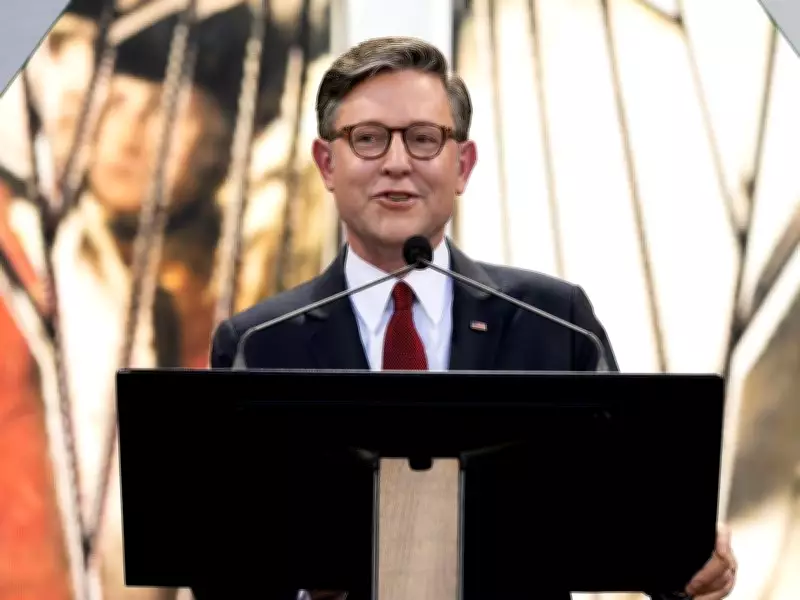
Speaker of the United States House of Representatives Mike Johnson voiced strong disappointment on Tuesday after the US Supreme Court upheld birthright citizenship, overturning an executive order by former President Donald Trump that sought to restrict automatic citizenship for children born in the US to non-citizen parents.
Johnson Reacts to Supreme Court Decision
Speaking during a press conference, Johnson responded in real time to the court's ruling, stating his disagreement with the outcome and emphasizing the need for further legislative debate. "I am sure there's going to be lots of discussion about that. I will say I'm very disappointed in that outcome. I think it subjects the country to serious challenges going forward, and we'll have to deal with it as a Congress," Johnson said.
The Supreme Court ruling reaffirmed the principle of birthright citizenship, confirming that children born in the United States to parents who are unlawfully or temporarily present are entitled to automatic US citizenship under the Citizenship Clause of the Fourteenth Amendment.

Johnson Criticizes 'Birth Tourism' and Abuse of Provision
Johnson argued that the provision has been misused in recent years, specifically pointing to what he described as "birth tourism"—a practice where individuals travel to the US specifically to give birth to secure citizenship for their children. He claimed this has placed significant strain on US systems.
"I do think that this has been grossly abused in recent years," Johnson said, adding that the original intent of the provision had been "thwarted and overused and abused." He suggested that resolving the issue would likely require a constitutional amendment, a lengthy and complex process requiring approval by two-thirds of the US Congress and ratification by three-fourths of the US states.
Supreme Court Ruling and Dissenting Opinions
The ruling struck down the executive order associated with Trump, with the majority reaffirming that the Fourteenth Amendment guarantees citizenship to those born on US soil, consistent with earlier precedents. While some conservative justices dissented, the decision was welcomed by civil rights groups, who called it a relief for immigrant communities across the country.
Johnson noted that amending the US Constitution requires broad political consensus, making such changes difficult. He emphasized that Congress would need to address the issue through legislative means, though the path forward remains uncertain.