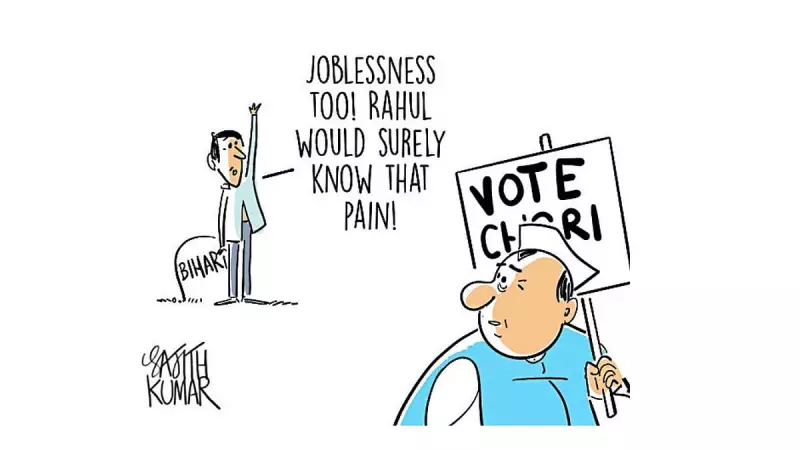
A recent political cartoon published by Deccan Herald has ignited significant controversy and discussion across political circles in India. The cartoon, titled 'Vote Chori,' presents a sharp commentary on current electoral processes and has become a talking point among politicians, journalists, and citizens alike.
The Controversial Cartoon That Started the Debate
The 'Vote Chori' cartoon employs powerful visual metaphors to question the integrity of electoral processes in contemporary Indian politics. Through symbolic imagery and clever artistic representation, the cartoon suggests concerns about the fairness and transparency of voting mechanisms that form the bedrock of Indian democracy.
While political cartoons have long been a staple of Indian journalism, this particular illustration has struck a chord due to its timing and the potency of its message. The artwork comes at a crucial moment when electoral reforms and voting integrity are subjects of intense national discussion.

Public and Political Reactions
The cartoon has generated polarized responses from various segments of society. Supporters of the cartoon argue that it represents legitimate concerns about electoral processes and serves as an important check on power. They view it as exercising freedom of expression to highlight potential vulnerabilities in the democratic system.
Critics, however, have accused the cartoon of undermining public trust in democratic institutions and spreading misinformation about electoral integrity. Some political figures have called the depiction exaggerated and potentially damaging to the credibility of India's electoral framework.
Media analysts note that the strong reactions on both sides reflect the deeply polarized nature of contemporary political discourse in India. The cartoon has become more than just an editorial illustration—it has transformed into a symbol of the broader debate about democracy and free speech.
Broader Implications for Indian Democracy
The controversy surrounding the 'Vote Chori' cartoon raises important questions about the role of satire in political commentary and the boundaries of free expression in a democratic society. Political cartoons have historically served as a vital form of social commentary, using humor and exaggeration to highlight serious issues.
This incident also underscores the ongoing tension between media freedom and political sensitivities in India. As the country continues to navigate complex democratic challenges, such expressions of dissent through art remain crucial for healthy public discourse.
The debate generated by the Deccan Herald cartoon demonstrates that artistic expression continues to play a significant role in shaping political conversations and holding power accountable in the world's largest democracy.