Dalit Christians in Kerala: Caught Between Caste and Faith
The brutal killing of Kevin P Joseph, a 23-year-old Dalit Christian from Kottayam in 2018, shocked Kerala. Murdered for loving a Catholic woman, his death exposed a deep social fault line that continues to shape the lives of Dalit Christians across the state. For many like Sneha Susan, who posted "Love or caste?" on social media after the incident, this violence felt disturbingly familiar, revealing a community trapped between two worlds.
The Legal Paradox of Caste and Conversion
Scheduled Caste converts to Christianity (SCCC) occupy a precarious position in Indian society. The moment they convert, they lose constitutional protections reserved for Scheduled Castes, even as caste-based discrimination continues to define their daily reality. They are marked as "Dalit" by society but largely ignored by a legal system that ties protections to religion rather than lived experience.
The JB Koshy Commission report, submitted in 2023 and released in February 2026, officially acknowledges this contradiction. The comprehensive document notes that Dalit Christians in Kerala often fare worse socio-economically than Scheduled Castes who have not converted. It identifies a troubling "reconversion paradox": state benefits are restored if individuals return to Hinduism, implicitly admitting that caste identity persists beyond religious change.

"Denying support based on faith amounts to administrative injustice," the commission argues, highlighting how the current system fails to address the continued social disadvantage faced by this community.
Supreme Court Ruling Reinforces Exclusion
The commission's recommendations gain added significance following a recent Supreme Court ruling that reaffirmed persons professing religions other than Hinduism, Sikhism or Buddhism cannot be recognized as Scheduled Castes. This position, consistent with existing law, means conversion results in the automatic loss of SC status regardless of ongoing discrimination.
Justice (retd) JB Koshy noted that the commission received numerous representations from Dalit Christians detailing their continued social disadvantage. "As long as this is the law, nothing can change unless it is amended," he stated. "Our recommendation to the state was clear: Their social condition has not improved, and support must reflect that reality."
Political Timing and Social Justice Questions
The long-withheld report was finally released on February 28, 2026, just weeks before state assembly elections were declared—a timing widely seen as politically calculated to appeal to sections of the Christian electorate. Regardless of intent, its publication has pushed into the spotlight one of Kerala's most under-addressed social justice questions, giving overdue visibility to a community long overlooked in political discourse.
For Sneha Susan, awareness of her identity came gradually. "I only thought of myself as a Christian," she recalls. That changed in Class VIII when a teacher's comments about government grants revealed historical discrimination. "I felt bad. I went home and asked about it more," she says. This awareness led to years of concealing her identity before she eventually reclaimed it with pride as an MSW graduate.
Discrimination Within Religious Communities
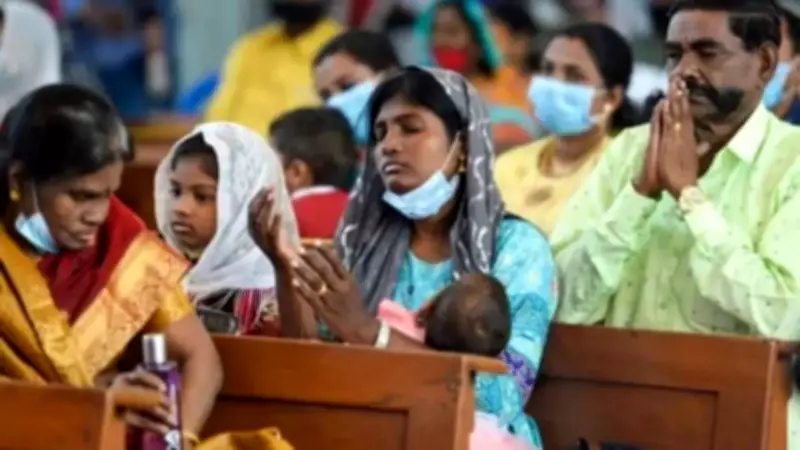
Dalit Christians are not outside the Church—they are embedded within it across denominations including Syrian Christian, Mar Thoma, Latin and others. But belonging does not translate into equality. Marriage remains one of the clearest markers of this divide, with inter-community unions remaining rare and often fraught with social consequences.
According to community members:

- Families anticipate discrimination when inter-caste marriages occur
- Some families are gradually excluded from their daughter's life after such unions
- In extreme cases, families attend ceremonies at odd hours to avoid social interaction
- Successful marriages often require relocation abroad or specific financial circumstances
Fragmented Community and Leadership Vacuum
George Pallithara, president of the Dalit Catholic Mahajana Sabha (DCMS) in the Trivandrum Latin diocese, points to fragmentation as a key obstacle. Dalit Christians are spread across denominations with little coordination between them. "Even within the Catholic fold, DCMS is active only in a handful of dioceses," he notes.
This fragmentation has significant consequences. "Despite a significant presence in dioceses such as Vijayapuram, Neyyattinkara and Punalur, there has never been a Dalit Christian bishop from Kerala," Pallithara observes. "The absence of leadership at that level weakens the community's negotiating power."
Calls for Policy Intervention and Data-Driven Solutions
For activist T M Sathyan, the issue requires both social and policy solutions. He sees the Koshy Commission's call for a detailed, data-driven study as its most meaningful recommendation. "It is the responsibility of the state to uplift communities through reservation," he emphasizes. "The Church cannot do that."
He points to stark disparities:
- Families surviving on extremely low incomes
- Limited access to education quotas
- Negligible employment reservation under OEC categories
- Even available education quotas divided among multiple groups
"At least one percent reservation exclusively for Dalit Christians could have made a real difference," Sathyan argues.
Psychological and Economic Impacts
Beyond policy, there are significant psychological costs. Sneha notes that many young people from the community display confidence within familiar spaces but retreat in mixed environments. Economic pressures deepen these challenges, with many students entering the workforce early to support families at the expense of higher education and long-term mobility.
Fr Thomas Tharayil, deputy secretary general of the KCBC, echoes the demand for state intervention. "The backwardness stems from caste, and changing one's faith does not solve it," he states. "When someone converts, they receive support from their new religious community—but that alone cannot change their social situation. Government support is essential."
A Continuing Search for Justice
For Kevin Joseph's father, the debate is not abstract. Years after his son's murder, the grief remains immediate. The courts have convicted most of the accused, but the family continues to pursue justice against those acquitted. "It was caste hatred," he says simply.
For the Dalit Christian community, Kevin's death remains the most violent expression of a deeper, quieter exclusion they endure daily—a reality the Koshy Commission report has now brought into sharp focus, challenging both society and government to address this persistent injustice.