The Indian National Congress has unveiled an extensive, year-long agitation plan named 'MGNREGA Bachao Sangram' to protest against the central government's VB-G RAM G Act. The first phase of this nationwide protest is scheduled to commence on January 10, 2026, and will run until February 25, 2026.
Congress Strategy: From Panchayats to Parliament
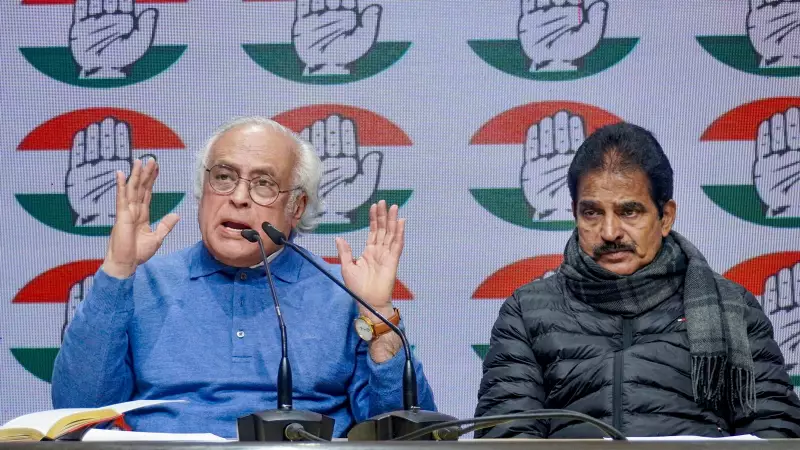
Senior Congress leaders Jairam Ramesh and K C Venugopal detailed the multi-pronged strategy during a press conference at the party headquarters in New Delhi. The party aims to replicate the scale and intensity of the Delhi-centric farmers' protest that led to the repeal of the three farm laws.
All state units have been directed to ensure mass participation, effective mobilisation, and comprehensive media outreach. They are also required to submit detailed reports on the campaign's progress to the party high command.

Why Congress is Protesting: Key Allegations
The core of the Congress's opposition lies in the changes brought by the VB-G RAM G Act to the Mahatma Gandhi National Rural Employment Guarantee Act (MGNREGA). Venugopal, the AICC general secretary (organisation), argued that the new law strips employment of its legal right status. He stated that work will now be provided only in panchayats specifically notified by the Centre.
'The MGNREGA was the most decentralised scheme but now everything will be decided by Delhi and villages will suffer,' Venugopal claimed. He dismissed the Centre's assertion of increased workdays under the new law as 'bogus' and 'false'.
Echoing this sentiment, Congress President Mallikarjun Kharge posted on X that MGNREGA is a legal guarantee, not charity. He accused the VB-G RAM G Act of being designed to dismantle this right, leading to capped budgets and centralised control, which would render gram sabhas and panchayats irrelevant.
Detailed Phase-Wise Protest Plan
The Congress has laid out a meticulous schedule for the first phase of its agitation:
January 8, 2026: State-level preparation meetings will be held across India to brief leadership on the new law's implications and assign district-wise responsibilities.
January 10: District-level press conferences will formally launch the campaign at the grassroots level.
January 11: A one-day fast will be observed at district party headquarters and prominent public places, involving leaders, elected representatives, and MGNREGA workers.
January 12-29: Intensive panchayat-level outreach. Letters from Congress President Kharge and Leader of Opposition Rahul Gandhi will be delivered to gram pradhans, former pradhans, rozgar sevaks, and workers. Simultaneously, nukkad sabhas and pamphlet distribution will occur at Vidhan Sabha levels.
January 30: Peaceful sit-ins (dharnas) will be organised at ward and block levels.
January 31 to February 6: District-level 'MGNREGA Bachao Dharna' protests.
February 7-15: State leadership will lead protests and gherao (encirclement) of Vidhan Sabhas.
February 16-25: The first phase will culminate with four major zonal rallies organised by the All India Congress Committee (AICC).
A Fight for Decentralisation and Rights
The Congress frames this protest as a fundamental battle to protect the rights of crores of rural workers and the principle of decentralisation. Kharge has vowed that the party will resist 'peacefully and firmly, from every panchayat to Parliament.' The success of this planned year-long agitation hinges on the party's ability to mobilise its state units and translate national strategy into effective local action, mirroring the pressure tactics of past successful movements.