Days ahead of the highly anticipated Economic Survey and Union Budget, the Congress party has launched a scathing critique of the government's economic performance, releasing a detailed report that paints a picture of rising inequality and retreating welfare measures.
Congress Research Department's Economic Analysis
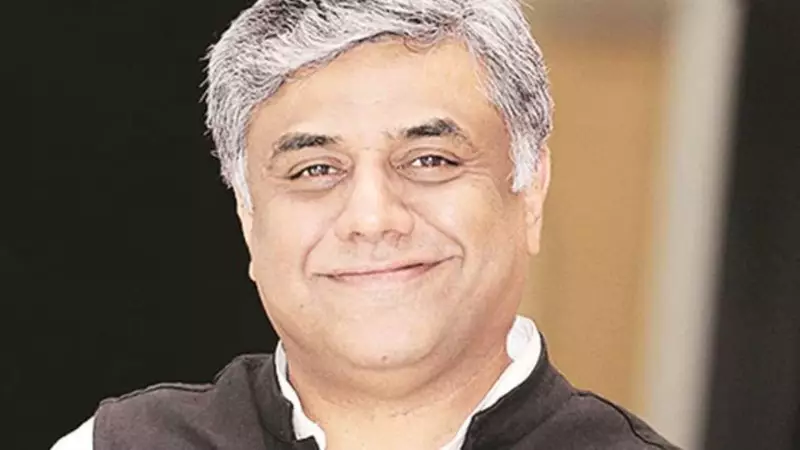
The Congress Research Department, under the leadership of MP Rajeev Gowda, unveiled a comprehensive report titled "Inequality on the Rise, Welfare in Retreat-Real State of the Economy 2026." This document, released in New Delhi on January 27, 2026, aims to counter what the party describes as government propaganda expected during the upcoming parliamentary sessions.
Allegations of Statistical Discrepancies
Gowda presented several key findings that challenge official economic narratives. He highlighted significant disparities in GDP calculation methods, noting that while the government's production metric showed 9.2% growth in 2024, the expenditure-based metric indicated only 4.9% growth—a 47% difference. Furthermore, he referenced former Economic Advisor Arvind Subramanian's assessment that actual GDP figures might be at least 2.5% lower than reported.

The report also pointed to inconsistencies in manufacturing data, with official growth figures of 8.4% in the first half of 2025-26 contrasting sharply with the 2.9% growth shown by the index of eight core industries.
Foreign Investment and Currency Concerns
On the international front, Gowda raised alarms about foreign direct investment trends, revealing that net FDI turned negative in four out of ten months during 2025. This pattern suggests more capital was leaving India than entering, with increased outflows of Indian money abroad surpassing foreign investments into the country.
Adding to these concerns, the report identified the Indian rupee as Asia's worst-performing currency in 2025, further complicating the economic landscape.
Structural Economic Challenges
Employment and Manufacturing Trends
The Congress analysis revealed troubling shifts in employment patterns. Between 2017-18 and 2023-24, the share of workers in manufacturing declined from 12.1% to 11.4%, raising questions about the effectiveness of initiatives like Make in India. Meanwhile, agriculture's share of employment increased from 44.1% to 46.1%, suggesting a reversal toward traditional sectors rather than industrial advancement.
Gowda emphasized that job growth has become concentrated in low-value, informal, and gig economy positions, rather than in stable, high-productivity sectors.
Wealth Distribution and Household Finances
The report presented stark statistics on economic inequality, claiming that the top 10% of Indians control 58% of national income while the bottom half receives only 15%. Wealth distribution appears even more skewed, with the top 10% owning 65% of the nation's wealth, the bottom half holding just 6.4%, and the top 1% alone controlling 40%.
Household financial health shows concerning trends, with net financial savings at a five-decade low of 5.2% and household debt rising sharply from 35% in 2019 to 41%. The report also highlighted that four out of five Indians subsist on less than Rs 200 per day, with one-third surviving on less than Rs 100 daily.
Political Context and Implications
Accompanied by Congress leader Amitabh Dubey during the report's release, Gowda accused the government of preparing to push its "propaganda" through the President's address, Economic Survey, and Union Budget. The Congress party's preemptive economic assessment sets the stage for intense parliamentary debates as the budget session approaches.
This comprehensive critique comes at a crucial political moment, with the opposition seeking to challenge the government's economic narrative and policy direction ahead of major fiscal announcements.