Congress Targets Government Over US Waiver for Russian Oil Purchases
The Congress party on Friday launched a sharp attack on the Central government following the United States' announcement of a temporary waiver allowing India to purchase Russian oil. Senior leaders questioned the duration and implications of what they termed "American blackmail," highlighting concerns over national sovereignty and energy security.
Congress Leaders Voice Strong Criticism
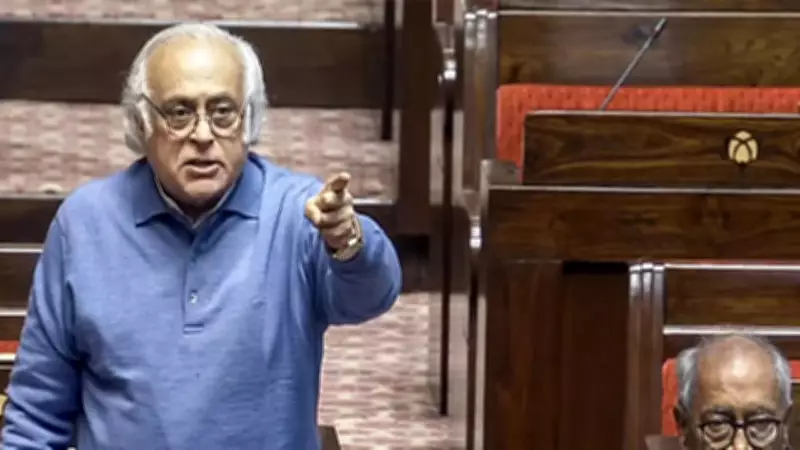
In a post on social media platform X, Congress general secretary Jairam Ramesh used a Hindi verse to express his disapproval, translating to: "Trump's new game; told his friend in Delhi you can get oil from Putin; how long will this American blackmail continue?" This remark underscored the party's view that the waiver reflects undue external pressure on India's policy decisions.
Congress leader Manish Tewari also joined the criticism, stating, "Issuing a 30-day waiver—the sanctimonious language of condescension drips with neo-imperial arrogance. Are we a banana republic that we need the permission of the US to secure our energy security imperatives?" He further pointed out the government's silence on the matter, asking, "The silence of an otherwise overly loquacious government is deafening. Does it not understand what sovereignty means?"

Background of the US Waiver and Global Context
The move comes after the United States issued a temporary 30-day waiver permitting India to continue purchasing Russian oil. US Treasury Secretary Scott Bessent explained that this step aims to stabilise global energy supplies amidst rising tensions in the Middle East. He noted, "President Trump's energy agenda has resulted in oil and gas production reaching the highest levels ever recorded. To enable oil to keep flowing into the global market, the Treasury Department is issuing a temporary 30-day waiver to allow Indian refiners to purchase Russian oil."
Bessent added that the US expects India to increase energy imports from the United States in the future, stating, "India is an essential partner of the United States, and we fully anticipate that New Delhi will ramp up purchases of US oil." He described the waiver as a measure to "alleviate pressure caused by Iran’s attempt to take global energy hostage."
Energy Security Risks and Regional Dynamics
The waiver is particularly significant as India faces potential risks from energy supply disruptions in the Middle East. Escalating tensions in West Asia, following a joint US-Israel military strike on February 28 on Iranian territory that killed Supreme Leader Ayatollah Ali Khamenei and other senior officials, have heightened concerns. India sources nearly 40% of its oil imports from the region, with a substantial portion transported through the strategically crucial Strait of Hormuz.
In response to these challenges, Russia has indicated readiness to redirect crude shipments to India to offset supply disruptions caused by the conflict. According to Reuters, nearly 9.5 million barrels of Russian oil are currently positioned near Indian waters and could reach the country within weeks. This potential supply shift follows Iranian strikes on vessels in the region, raising fears that the Strait of Hormuz could be partially closed, affecting roughly 40% of India's crude imports.
Implications for India's Energy Strategy
The controversy highlights broader issues of energy independence and diplomatic relations. While the US waiver provides a short-term solution to maintain oil flow, it has sparked debate over India's reliance on external approvals for critical energy needs. The Congress party's criticism emphasises the need for a sovereign approach to energy security, free from perceived foreign interference.
As global energy markets remain volatile due to the Middle East crisis, India's ability to navigate these complexities will be crucial. The temporary nature of the waiver and the expectation of increased US oil imports suggest ongoing adjustments in India's energy procurement strategies. This development underscores the intricate balance between international partnerships and national interests in securing stable energy supplies.