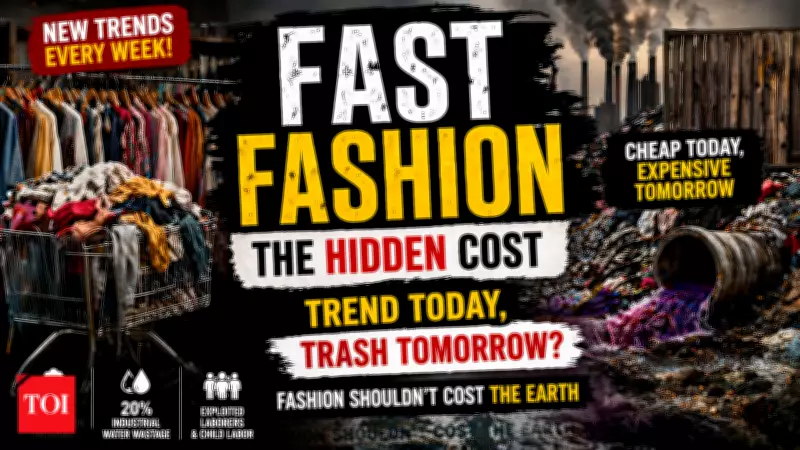
Fast fashion has revolutionized the global clothing industry, offering faster trends, cheaper prices, and an endless cycle of consumption. However, beneath the surface of convenience lies a growing environmental and social crisis that demands urgent attention.
The Environmental Toll of Fast Fashion
The fashion industry is now responsible for an estimated 8 to 10 percent of global carbon emissions and nearly 20 percent of industrial water pollution, making it one of the world's largest polluters. Every year, over one hundred billion garments are produced, while nearly 85 percent of textiles end up in landfills. A single cotton shirt can require approximately 2,700 liters of water to produce, and synthetic fabrics like polyester can take hundreds of years to decompose.
Overproduction and Waste Dumping
Fast fashion operates on a model of overproduction, where brands churn out massive quantities of clothing to keep up with rapidly changing trends. This leads to enormous waste, as unsold or discarded garments are often dumped in landfills or incinerated. The problem is exacerbated by the use of non-biodegradable materials, which persist in the environment for centuries.

The Role of Social Media and Influencer Culture
Changing trends, now driven by social media and influencer culture, are accelerating how quickly clothes are bought, worn, and discarded. Consumers are pressured to constantly update their wardrobes to keep up with the latest aesthetics, fueling a cycle of consumption that benefits brands but harms the planet.
Psychological Impact on Consumers
Beyond the environmental cost, fast fashion also has a deeper psychological impact on consumers. As identities become increasingly tied to aesthetics and trends, the pressure to maintain a certain image grows. This can lead to anxiety, financial strain, and a sense of inadequacy when one cannot keep up with the latest styles.
The Rise of Mindful Consumption
Yet, as awareness rises, so does the conversation around mindful consumption. Consumers are beginning to question the true cost of cheap clothes and seek more sustainable alternatives. This shift raises a key question: is fast fashion just a business model, or a system we have all become part of?
In conclusion, fast fashion's hidden costs are staggering, from environmental degradation to social and psychological harm. By understanding these impacts, we can make more informed choices and work toward a more sustainable future.