Tensions within the opposition INDIA bloc have surfaced publicly after Jammu and Kashmir Chief Minister Omar Abdullah made statements distancing the alliance from the "vote chori" (vote theft) issue raised by the Congress. The Congress party has now responded, emphasizing that an alliance does not mean the negation of a constituent's independent political ideology.
Congress Defines Alliance Dynamics
Senior Congress leader Salman Khurshid addressed the media in Srinagar on Saturday, directly responding to questions about whether Omar Abdullah was drifting away from the INDIA bloc. Khurshid clarified the nature of the opposition coalition, stating that being in an alliance does not require member parties to abandon their identity or core beliefs.
"Alliance is not a negation of independent political parties. They don't write off their own identity and own ideology," Khurshid asserted during the press conference. He reminded everyone that Omar Abdullah had been present in various INDIA bloc meetings, including those held in Kolkata, and acknowledged the alliance's success in the recent parliamentary elections, albeit not a complete one.

The 'Vote Chori' Controversy and Statehood Demand
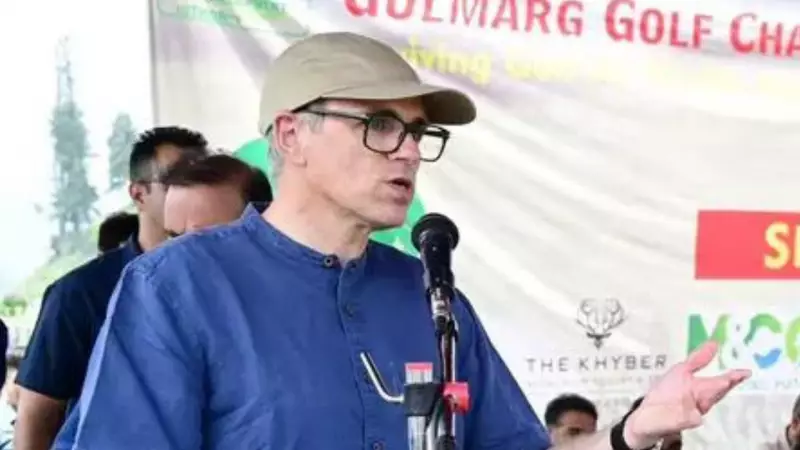
The current friction stems from comments made by Chief Minister Omar Abdullah on December 15th. He explicitly stated that the "vote chori" issue was a concern for the Congress alone and that the "INDIA bloc has got nothing to do with it." He repeated this stance in New Delhi earlier this week, creating a visible rift.
Beyond the immediate controversy, Khurshid used the platform to highlight a fundamental issue for the region. He framed Jammu and Kashmir's demand for the restoration of its statehood as a fight for its very existence, describing it as an identity that had been taken away. This remains a central and emotive political issue in the Union Territory.
United Front on MGNREGA and Gandhi's Legacy
Despite the differences on certain political narratives, the Congress and Omar Abdullah presented a united front on other critical matters. Both leaders strongly criticized the central government's decision to remove Mahatma Gandhi's name from the rural employment guarantee scheme, now simply called NREGA.
Salman Khurshid questioned the necessity of the name change, calling it an emotive issue for the Congress. Omar Abdullah echoed this sentiment, stating that no one could erase Gandhi's legacy, regardless of the scheme's name. He praised the original MGNREGA as a far-sighted policy.
Furthermore, the Jammu and Kashmir Chief Minister accused the NDA government of attempting to weaken the scheme by shifting its financial burden onto the states. He alleged that the Centre's ultimate goal was to do away with the popular welfare program altogether.
The events underscore the complex balancing act within the INDIA bloc, where constituent parties strive to maintain their unique political voices while projecting a cohesive opposition front against the ruling dispensation. The public airing of differences on the "vote chori" issue, contrasted with unity on matters like statehood and MGNREGA, reveals the nuanced and sometimes fragile nature of the coalition.