Finance Minister Presents Union Budget 2026-27 With Focus on Capital Expenditure
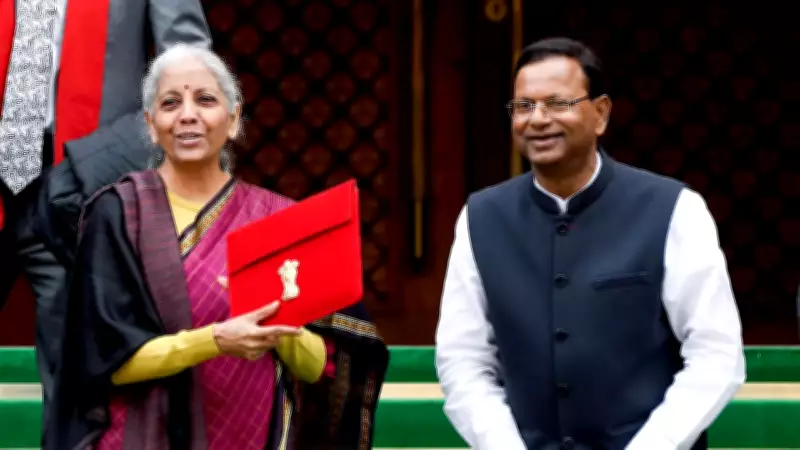
Finance Minister Nirmala Sitharaman on Sunday presented the Union Budget for the financial year 2026-27 in the Lok Sabha during the ongoing Budget session of Parliament. This marked her ninth consecutive budget presentation, which has generated a spectrum of reactions from political parties across the nation.
Key Budgetary Announcements and Fiscal Targets
While delivering her budget speech, the finance minister outlined several significant fiscal measures and targets for the upcoming financial year:
- The capital expenditure target has been increased to Rs 12.2 lakh crore for FY27, representing a substantial rise from the Rs 11.2 lakh crore allocated in the current fiscal year.
- The Centre will provide Rs 1.4 lakh crore to states as tax devolution in the next financial year.
- Net tax receipts are estimated at Rs 28.7 lakh crore, contributing to the total budget size of Rs 53.5 lakh crore.
Bharatiya Janata Party Hails Growth-Oriented Budget
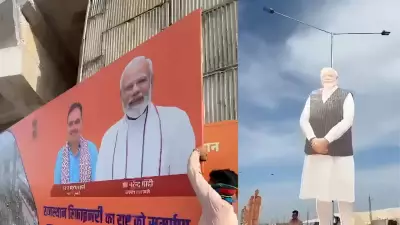
The ruling Bharatiya Janata Party enthusiastically welcomed the budget announcements, describing them as comprehensive and forward-looking. Union Minister Jyotiraditya Scindia emphasized that the budget aligns with Prime Minister Narendra Modi's vision of harnessing India's growth potential. He highlighted economic indicators including close to 7.5 percent growth and inflation control at 1.7 percent.

Union Minister Kiren Rijiju characterized the budget as a 'Reform Express' for 'Viksit Bharat', asserting that all announcements are designed for the common people. He questioned opposition criticism, suggesting political motives behind their responses. BJP MP Ravi Shankar Prasad specifically welcomed the focus on Tier 2 and Tier 3 cities and the promotion of corporate partnerships as innovative approaches.
NDA Allies Express Support With Nuanced Perspectives
Shiv Sena, an NDA partner, praised the budget for being positive toward taxpayers, manufacturing sectors, and industries affected by US tariffs. Shiv Sena MP Milind Deora contextualized the budget within current global economic conditions marked by instability and trade pressures. He identified three key positives:
- Relief for honest small taxpayers and protection from harassment
- Strong support for manufacturing, particularly MSMEs, benefiting workers and youth
- Relief for industries impacted by US tariffs, including textiles and seafood exports
Lok Janshakti Party chief and Union Minister Chirag Paswan described the budget as laying a strong foundation for a developed India, emphasizing infrastructure, rural development, urbanization, and self-reliance. He characterized this budget as particularly significant for the second quarter of the 21st century in the context of Viksit Bharat goals.
Congress and Opposition Parties Voice Strong Criticism
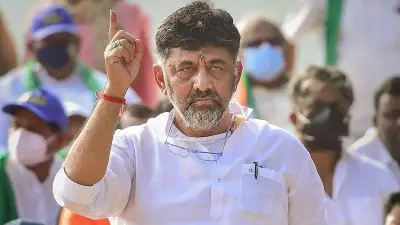
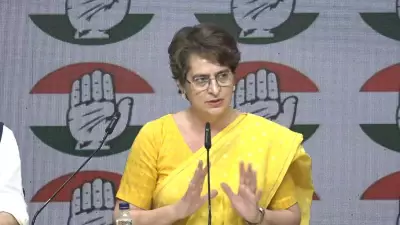
The Congress party expressed deep disappointment with the budget, describing it as lacking substance and specificity. Congress leader Rahul Gandhi, in a social media post, criticized the government for ignoring pressing issues including youth unemployment, falling manufacturing, capital flight, plummeting household savings, farmer distress, and looming global shocks.
Congress President Mallikarjun Kharge asserted that the Modi government has exhausted its ideas, claiming the budget offers no solutions to India's economic, social, and political challenges. He specifically mentioned the absence of meaningful welfare support for farmers and insufficient attention to inequality and marginalized communities.
Congress leaders also raised concerns about federalism and state finances. KC Venugopal expressed disappointment for Kerala, noting the absence of promised AIIMS allocation despite the state's contributions to tourism, aviation, and health sectors. Congress MP Shashi Tharoor criticized the budget for offering little to the middle and lower-middle classes and maintaining unchanged fiscal devolution at 41 percent.

Regional Parties Express Varied Concerns
Samajwadi Party chief Akhilesh Yadav described the budget as 'beyond understanding', criticizing the neglect of basic issues like education and health. SP MP Dimple Yadav noted the absence of specific provisions for women and youth, calling for increased allocations to education, healthcare, and agriculture.
All India Trinamool Congress chief and West Bengal Chief Minister Mamata Banerjee accused the Centre of not allocating 'a single paisa to Bengal', criticizing what she described as the diversion of state funds through GST collections. TMC MP Saugata Roy characterized the budget as repetitive, suggesting the finance minister merely reiterated previous schemes without introducing substantial new initiatives.
Budget Context and Economic Implications
The Union Budget 2026-27 comes at a time of global economic uncertainty and domestic expectations. The increased capital expenditure target of Rs 12.2 lakh crore represents the government's continued emphasis on infrastructure development as a growth driver. However, the mixed political reactions highlight differing perspectives on the budget's effectiveness in addressing India's diverse economic challenges and regional needs.
As the detailed budget documents undergo further scrutiny, the actual implementation of these fiscal measures and their impact on various sectors will become clearer in the coming months. The budget session of Parliament will continue with discussions and debates on the proposals presented by the finance minister.