The Bharatiya Janata Party (BJP) on Monday strongly dismissed former Congress president Sonia Gandhi's sharp criticism of the recent changes to the Mahatma Gandhi National Rural Employment Guarantee Act (MGNREGA). The ruling party labeled her accusations as a flight of "political fancy" and asserted that the new legislation represents a crucial repair and expansion of social security for a transforming rural India.
A Clash of Narratives: Demolition vs. Repair
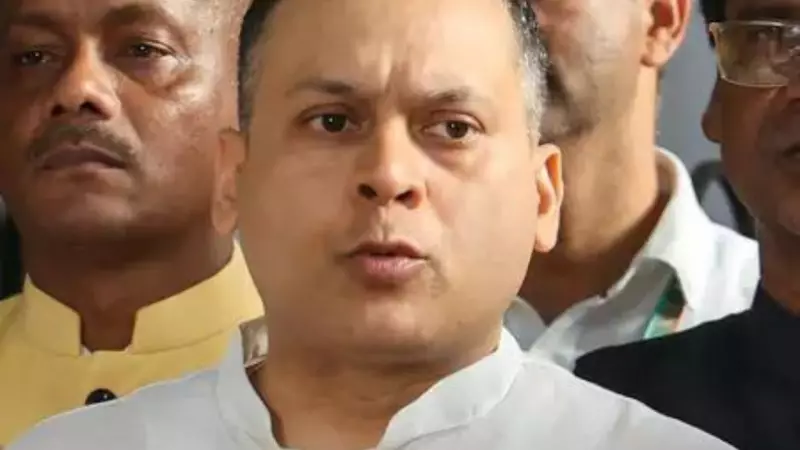
BJP's IT department head, Amit Malviya, issued a detailed rebuttal after Sonia Gandhi claimed that the "demolition" of MGNREGA would have catastrophic consequences for crores of people in rural India. Malviya accused the Congress leader of mischaracterization and spreading falsehoods.
"This is not demolition - it is overdue repair," Malviya stated. He framed the debate as a choice between "paper guarantees that under-deliver and a modern framework that actually works." He emphasized that the VB-G RAM G law is not a retreat from social protection but its "renewal and expansion for a changing India."

Key Changes and BJP's Defence
Malviya outlined the core modifications to counter the opposition's narrative. He clarified that the legal right to employment remains untouched, albeit with a revised budgeting framework. The system has shifted from being open-ended to a norm-based structure, aligning it with other government schemes.
In a significant detail, he highlighted that guaranteed employment has been strengthened from 100 days to 125 days, directly contradicting the charge of weakening the job guarantee. He also argued that the new law would not suppress rural wage growth, stating that critics ignore the ground realities of rural transformation.
Citing data from NABARD and MPCE, Malviya pointed out that 80% of rural households report higher consumption, 42.2% report higher incomes, and 58.3% now rely exclusively on formal credit. "MGNREGA today functions as a fallback safety net, not as the defining feature of rural livelihoods," he concluded.
Rationalizing the Funding Model
Addressing the contentious issue of funding, Malviya countered the charge that the Centre is shifting the financial burden to states by moving from a 90:10 model to a 60:40 split. He argued that in practice, the Centre never funded 90% of the scheme, as states already bore 25% of material costs, major administrative expenses, and 100% of unemployment allowances, often without predictability.
"The new model simply formalises and rationalises funding, making states equal partners rather than passive implementers of top-down mandates," he explained. This move, according to the BJP, aims to bring transparency and shared responsibility in the scheme's execution.
The political skirmish underscores the deep ideological divide on social welfare policies. While the Congress frames the changes as an assault on a rights-based framework, the BJP positions them as essential administrative and structural reforms to adapt to new economic realities.