Bihar Braces for First Contested Rajya Sabha Election in Over a Decade
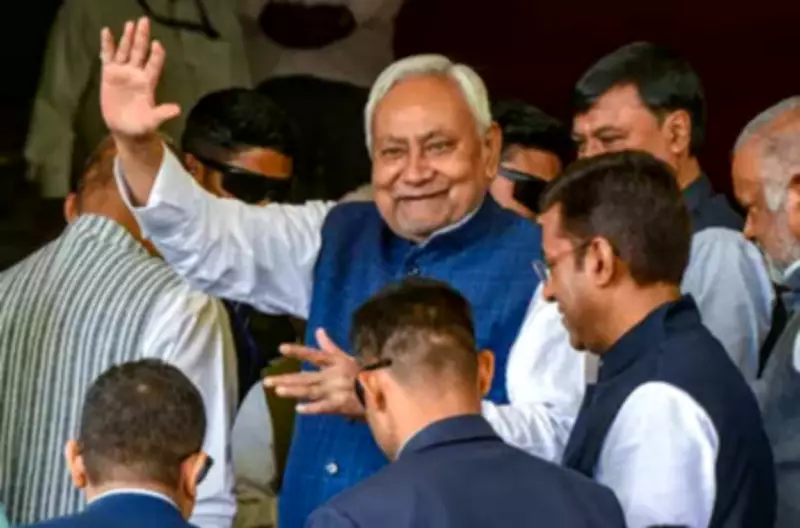
In a significant political development, Bihar is poised to witness a voting process for the Rajya Sabha elections after a gap of more than ten years. On Thursday, six candidates formally submitted their nomination papers for the five Upper House seats from the state, setting the stage for a potential electoral contest. The list of nominees includes prominent figures such as Bihar Chief Minister and JD(U) national president Nitish Kumar, alongside BJP state president Nitin Nabin.
Historical Context and Current Scenario
The last instance where Rajya Sabha elections in Bihar required actual voting, rather than being decided unopposed, dates back to a by-election in 2014. Since that time, every biennial election and by-election for the Rajya Sabha from the state has been uncontested. This occurred because political parties typically fielded a number of candidates that precisely matched the available vacancies, thereby avoiding any competitive polling.
An official from the Bihar assembly confirmed that if all six candidates remain in the race after the withdrawal period, voting will be conducted on March 16. This marks a departure from the recent trend of unanimous selections and introduces an element of political rivalry.

Candidate Profiles and Political Alliances
Out of the six individuals who have filed nominations, five represent the ruling National Democratic Alliance (NDA), while one hails from the opposition Rashtriya Janata Dal (RJD). The NDA's roster features:
- Nitish Kumar, the incumbent Chief Minister and JD(U) leader.
- Nitin Nabin, the state president of the BJP.
- Ram Nath Thakur, a Union minister from the JD(U) who is aiming for a third consecutive term in the Rajya Sabha.
- Upendra Kushwaha, president of the Rashtriya Lok Morcha (RLM), seeking re-election for a second term.
- Shivesh Kumar, a BJP state general secretary and former MLA, who is making his debut attempt for the Upper House.
From the opposition camp, Amarendra Dhari Singh, a current Rajya Sabha member from the RJD, filed his nomination. He was accompanied by the party's national working president, Tejashwi Prasad Yadav, during the submission at the Vidhan Sabha secretariat.
Electoral Mathematics and Strategic Calculations
The outcome of this election hinges critically on the numerical composition of the Bihar legislative assembly. According to the established formula for the Rajya Sabha polls in the state, each candidate must secure the support of at least 41 Members of the Legislative Assembly (MLAs) to be elected successfully.
The NDA, following the assembly elections held in November of last year, commands a robust strength of 202 seats in the 243-member house. This dominant position theoretically positions the alliance to capture all five available seats, provided it can garner additional support from three more MLAs belonging to smaller political parties.
Conversely, the opposition, led by the RJD, is actively exploring avenues to secure at least one seat. The Grand Alliance, which includes the RJD along with allies such as the Congress and Left parties, currently holds a combined tally of 35 MLAs. To achieve the necessary quota of 41 votes for their candidate Amarendra Dhari Singh, the opposition would require the backing of five MLAs from the All India Majlis-e-Ittehadul Muslimeen (AIMIM) and one from the Bahujan Samaj Party (BSP).
Should this scenario materialize, the NDA would be limited to winning only four of the five seats, thereby transforming the election into a rigorous test of cross-party negotiations and last-minute political alignments.
Vacancies and Political Strategy
The five Rajya Sabha seats from Bihar will become vacant on April 9 due to the scheduled retirement of several incumbents. These include former Union minister Prem Chand Gupta and Amarendra Dhari Singh (both from the RJD), Union minister Ram Nath Thakur and Rajya Sabha deputy chairperson Harivansh Narayan Singh (both from the JD-U), and Upendra Kushwaha, also a former Union Minister, from the RLM.

Historically, the RJD held two of these five seats. However, in light of its diminished performance in the 2025 assembly polls, where it secured only 25 seats, the party has strategically opted to contest for just one seat, thereby dropping Prem Chand Gupta from the race.
Next Steps in the Electoral Process
The scrutiny of all nomination papers is scheduled to take place on Friday. Candidates will have the opportunity to withdraw their nominations until March 9. These procedural steps will ultimately determine whether the election proceeds to a formal vote or if any last-minute adjustments lead to an uncontested outcome.
This impending Rajya Sabha election in Bihar not only underscores the shifting dynamics within the state's political landscape but also highlights the intricate calculations and alliances that define Upper House elections in India.