

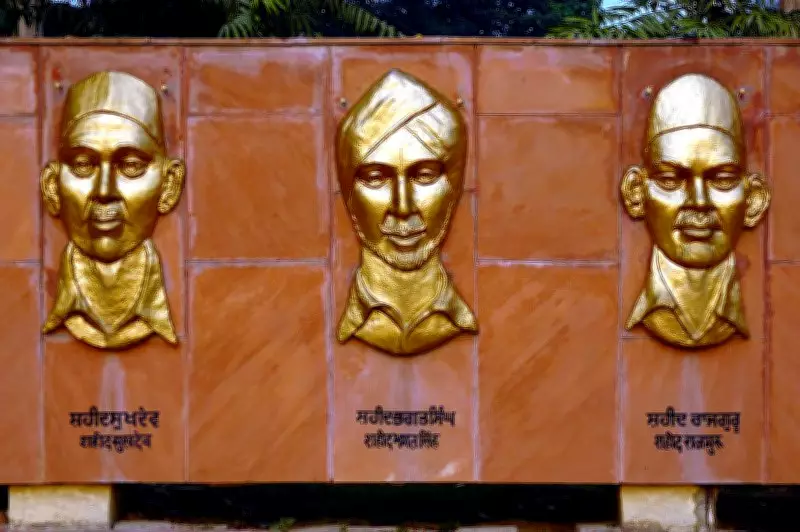
Bhagat Singh's Enduring Legacy of Unity and Equality
The execution of Bhagat Singh, along with Shivaram Rajguru and Sukhdev Thapar, on March 23, 1931, stands as a pivotal moment in India's fight against British colonial rule. Their martyrdom continues to inspire patriotism and sacrifice across generations. Beyond his revolutionary deeds, Bhagat Singh's extensive writings unveil a deeply intellectual and visionary perspective centered on social and political equality. Numerous biographers, including his close comrades Sohan Singh Josh, Ajay Ghosh, and Shiv Verma, have hailed him as one of the most profound thinkers of the Indian independence movement.
Intellectual Contributions Through Journalism
Writing under pseudonyms such as Vidrohi, Ranjit, and Balwant, Bhagat Singh actively contributed to the Punjabi monthly publication Kirti, which was founded by Santokh Singh in Amritsar. Collaborating closely with editor Sohan Singh Josh, he addressed critical social issues of his time, using his platform to advocate for justice and reform.
Addressing Communal Divisions
In his 1927 article titled 'Communal Riots and Their Solution', Bhagat Singh meticulously analyzed the divisive tactics employed by British colonial policies, particularly in the aftermath of the Jallianwala Bagh massacre. He argued that the British authorities deliberately fueled communal tensions to undermine national unity and weaken the resistance movement. Reflecting on the 1924 riots in Kohat, he expressed deep sorrow over how religious identities were manipulated to provoke violence. Bhagat Singh criticized both the general populace and political leaders for failing to transcend sectarian mindsets, emphasizing the need for a unified national consciousness.

Championing Social Equality
In another significant essay, 'Achhut Samasya' (1928), Bhagat Singh tackled the entrenched issue of untouchability in Indian society. He pointed out the hypocrisy of demanding political freedom while denying fundamental human rights to millions of Dalits. He condemned discriminatory practices that excluded Dalits from temples, educational institutions, and even access to clean drinking water. Stressing moral responsibility, he asserted that true liberation must encompass social equality and justice for all. Bhagat Singh also highlighted the contradiction between religious pride and the lack of empathy for marginalized communities, urging a more compassionate and inclusive approach.
Advocating for Economic Justice
Bhagat Singh's concerns extended to economic injustices under colonial rule. In Kirti, he wrote extensively about the severe hardships faced by farmers and industrial workers. He supported mass movements as essential tools for mobilizing the oppressed and challenging exploitation. He criticized the British administration for imposing heavy taxes on peasants in Punjab's districts, even during periods of crop failure, which exacerbated their suffering. Additionally, he admired the courage of figures like Ganesh Shankar Vidyarthi, who fought tirelessly for workers' rights despite facing severe repression.
Vision for a Unified Struggle
Bhagat Singh firmly believed that India's liberation required a united front among workers, peasants, and all oppressed groups. He argued that only through collective action could imperialism be dismantled and a just, socialist society be established. His vision emphasized solidarity across class and caste lines as the foundation for lasting freedom.
Relevance in Contemporary Times
Bhagat Singh's cautionary warnings against communal politics remain strikingly relevant today. In an era where divisive debates often overshadow critical issues such as education, healthcare, and employment, his call for unity and focus on substantive social justice resonates deeply. His intellectual legacy continues to inspire discussions on equality and national cohesion in modern India.






