February 2, 1986: A Day of Economic Turmoil, Legal Milestones, and Campus Unrest
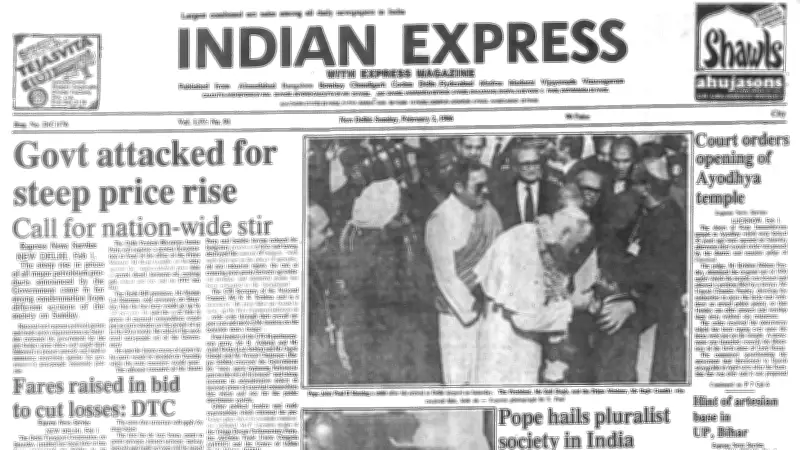
Forty years ago, on February 2, 1986, the front page of The Indian Express captured a pivotal moment in history, reflecting a nation grappling with economic policies, religious freedoms, and international student conflicts. This edition, originally published on that date, serves as a time capsule, highlighting issues that continue to resonate in contemporary discourse. The editorial perspective from that era provides a unique lens through which to view these events, offering insights into the societal reactions and implications of the day's headlines.
Steep Price Rise of Petroleum Products Sparks Widespread Condemnation
The government's announcement of a steep price rise for all major petroleum products ignited immediate and fierce condemnation from various segments of society. National and regional political parties, alongside trade union organizations, vocally criticized the move, labeling it as a pre-budget price hike that disproportionately affected the common people. In response, these groups urged their followers to unite in protest, advocating for a robust resistance movement against what they deemed anti-people economic policies. This outcry underscored the deep-seated tensions between governmental fiscal strategies and public welfare, setting the stage for ongoing debates over economic equity and policy transparency.
DTC Fare Hike Justified as Measure to Curb Mounting Losses
In a related development, the Delhi Transport Corporation (DTC) defended a significant increase in bus fares, framing it as a necessary step to mitigate its escalating working losses. A DTC spokesman explained that, despite the anticipated additional revenue of approximately Rs 45 crore from the new fares, the Corporation was projected to suffer an estimated working loss of Rs 45 crore for the fiscal year 1986-87. This justification highlighted the financial challenges faced by public transport systems, raising questions about sustainability and the balance between service provision and economic viability in urban infrastructure.

Ayodhya Temple Doors Unlocked After 35 Years Following Court Order
In a landmark legal decision, the doors of the Ram Janmabhoomi temple in Ayodhya, which had been locked for 35 years, were opened pursuant to a court order issued by District and Sessions Judge Krishna Mohan Pandey of Faizabad. The judge dismissed the original suit from 1950 that had led to the temple's closure and instead allowed a petition filed by lawyer Umesh Chandra Pandey. This ruling directed authorities to remove the locks, thereby enabling Hindus to offer prayers and worship their deity without restrictions. This event marked a significant moment in India's religious and legal history, reflecting the interplay between judiciary actions and cultural practices.
Violent Clashes Erupt at Dhaka University Amid Student Group Rivalry
The Dhaka University campus, often a site of political unrest, witnessed renewed violence as a series of hand bomb explosions and pistol shots erupted during clashes between rival student groups. Eyewitnesses reported that at least six students were injured in the confrontations between supporters of the pro-government Natun Bangla Chhatra Samaj and the opposition-backed Nationalist Students Party. This incident underscored the volatile nature of student politics in the region, highlighting the broader implications of ideological divides and their impact on educational environments and public safety.
Collectively, these stories from February 2, 1986, illustrate a day marked by economic dissent, legal progress, and social upheaval, offering valuable lessons for understanding historical contexts and their enduring relevance in today's world.