Centenarian Gandhian and Freedom Fighter V P Appukkutta Poduval to Vote in Upcoming Elections
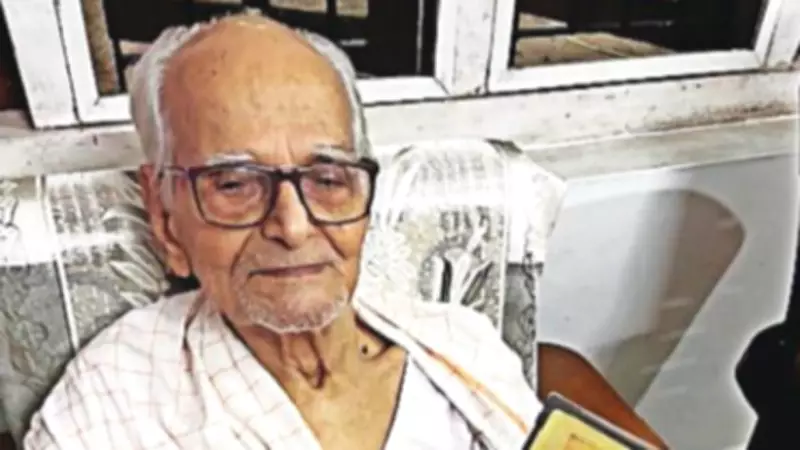
At an incredible 103 years of age, though official records list him as just over 100, Padma Shri awardee V P Appukkutta Poduval is preparing to cast his vote in the upcoming elections. A dedicated Gandhian and active participant in India's freedom movement, Poduval represents a rare living connection between the nation's struggle for independence and its modern electoral democracy.
A Living Link to India's Freedom Struggle
Seated calmly in his Payyanur home, Poduval is among the very few surviving Gandhians who have personally seen and heard Mahatma Gandhi. He vividly recalls his first electoral experience during the 1946 elections to the Madras Presidency, when he was working at the Akhila Bharatha Charka Sangham in Kozhikode.
"I had prepared diagrams explaining different types of charkas and cloth production," Poduval remembers. "Seeing those, Mathrubhumi, which was then planning a special election supplement, asked me to design its cover page."

Creating Political Art with Purpose
What Poduval created was far more than a simple illustration—it was a powerful political statement. His design emphasized the centrality of the Congress movement in the concept of Mother India while calling for the rejection of both British rule and Communist influence. The newspaper immediately accepted his work, and it became the cover of their election supplement—an image he still preserves with visible pride today.
The Simpler Electoral Process of 1946
Recounting the electoral procedures of his youth, Poduval describes a political landscape dominated by just three parties: Congress, Communist Party, and Muslim League. "There were no ballot papers as we see today," he explains. "Each party had a separate ballot box. Voters had to drop their vote into the box of their choice—yellow for Congress, red for Communists, and green for Muslim League."
Gandhian Discipline and Political Participation
As a worker with the Charka Sangham, Poduval and his colleagues were bound by strict Gandhian principles. "Gandhiji had instructed Sangham workers and employees not to actively participate in election campaigns," he recalls. "But we were urged to vote for the Congress, which we did wholeheartedly."
Campaigning during those early elections was minimalistic, more from necessity than choice. "There were hardly any resources for propaganda material," Poduval adds. "But the spirit of nationalism itself was enough campaign material."
First Encounter with Mahatma Gandhi
Poduval vividly remembers his first encounter with Mahatma Gandhi as a schoolboy in 1934, when Gandhi visited Payyanur to address a public meeting. "I was studying in Class V at the Mission School," he says. "Since it was a pro-government institution, the authorities did not permit us to attend. But we skipped classes to see him."
The consequence came the next day. "We were punished—caned on our hands—for skipping classes," Poduval recalls. "But it was worth it."
Active Role in the Quit India Movement
During the Quit India Movement of 1942, Poduval actively organized and attended night meetings at the houses of Congress supporters. "We used to secretly read Swathanthra Bharatham to understand what was happening across the country," he explains. "But we were eventually tipped off to the Malabar Special Police, arrested, and produced before the Thalassery court, which remanded us."
A Lifelong Commitment to Voting
Except during his work with the Khadi and Village Industries Commission, which took him across the country, Poduval has voted in every single election throughout his long life. Even in the most recent panchayat polls, he personally visited the polling booth to cast his vote. He confirms this tradition will continue in the upcoming elections as well.
This remarkable centenarian's story serves as a powerful testament to the enduring importance of democratic participation, connecting India's historic freedom struggle with its contemporary electoral processes through one man's unwavering commitment to his civic duty.