Union Home Minister Amit Shah has made a bold commitment to transform India's judicial landscape, promising that victims will receive complete justice—from the session court all the way to the Supreme Court—within a maximum of three years by the year 2029. This ambitious timeline was announced as he detailed the profound impact of the three new criminal laws set to be implemented across the country.
New Laws as the Foundation for Swift Justice
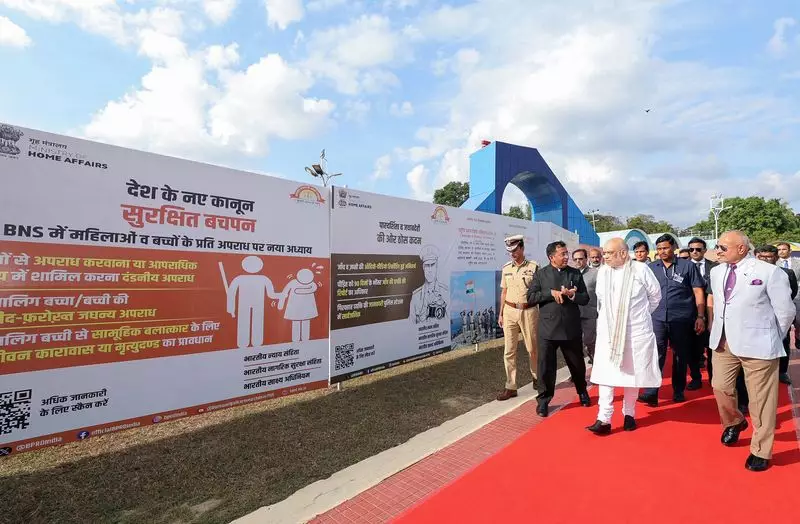
Amit Shah, while addressing a conference on the recently enacted legislation, explained the core mechanism behind this pledge. He stated that the Bharatiya Nyaya Sanhita, the Bharatiya Nagarik Suraksha Sanhita, and the Bharatiya Sakshya Adhiniyam are designed to create a justice system that is both speedy and focused on the rights of victims. The Home Minister emphasized that the laws mandate specific, strict timelines for every stage of the legal process, from the filing of an FIR to the delivery of the verdict.
"The entire journey from the lower court to the Supreme Court should not take more than three years," Shah asserted. He outlined that the new framework ensures investigations must be completed within a defined period, chargesheets must be filed promptly, and trials must commence without unnecessary delays. This systemic overhaul, he believes, will eliminate the decades-long waits that have plagued the Indian judicial system and eroded public trust.

Victim-Centric Approach and Technological Integration
A key pillar of the new laws is their victim-centric philosophy. Amit Shah highlighted that provisions have been made to ensure that victims, especially those from vulnerable sections like women and children, are treated with dignity and their testimony is recorded swiftly and sensitively. The laws introduce modern procedures for evidence collection and witness protection to strengthen cases from the outset.
Furthermore, Shah underscored the critical role of technology and digitization in achieving the three-year goal. The integration of e-courts, digital filing of FIRs and chargesheets, and video-conferencing for trials are expected to drastically cut down procedural delays. "Technology will bring transparency and efficiency," he noted, adding that it would also make the system more accessible to the common citizen.
Training and Implementation Roadmap
Acknowledging the scale of the change, the Home Minister detailed a massive capacity-building exercise underway for all stakeholders. He mentioned that over 2.5 lakh police, forensic, and prison officials have already received training on the new laws. Similarly, judicial officers and public prosecutors are undergoing extensive orientation programs to ensure smooth implementation from July 1, 2024.
Shah positioned this reform as a cornerstone of Prime Minister Narendra Modi's vision for a developed India by 2047. He argued that a robust and timely justice system is fundamental to good governance and national progress. The commitment to a three-year justice timeline is not just an administrative target but a promise of social justice and the rule of law for every Indian citizen.
The announcement sets a clear benchmark for the performance of the country's legal infrastructure. While the promise is ambitious, the government's strategy hinges on the successful rollout of the new legal codes, widespread technological adoption, and a fundamental shift in the working culture of investigative and judicial agencies. The nation will now watch closely as this blueprint for swift justice moves from policy to practice.