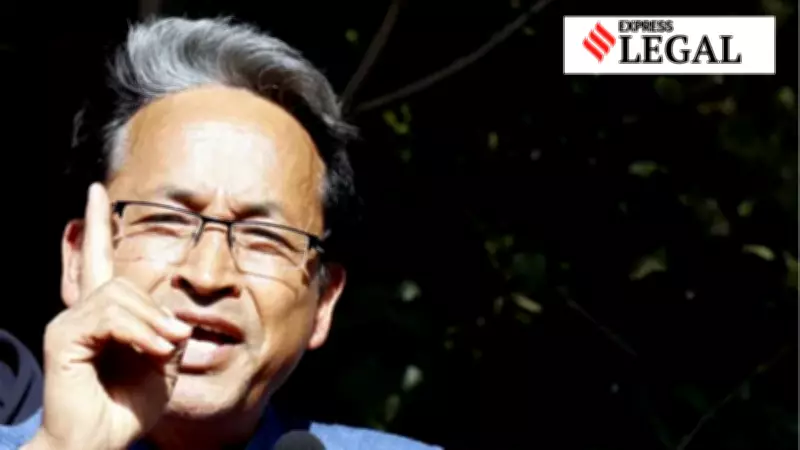
The Supreme Court of India is scheduled to hear a crucial plea today challenging the detention of prominent climate activist and engineer Sonam Wangchuk under the stringent National Security Act (NSA). This hearing represents a significant development in a case that has drawn national attention and raised questions about civil liberties and environmental advocacy.
Supreme Court Bench and Hearing Details
A bench comprising Justice Aravind Kumar and Justice Prasanna B Varale will preside over the matter, with proceedings expected to commence at approximately 2 PM. The plea has been filed by Gitanjali J Angmo, Wangchuk's wife, who has approached the apex court seeking relief against what she contends is an unjust detention order.
Arguments Presented in Previous Hearing
During the previous hearing, Senior Advocate Kapil Sibal, representing Gitanjali Angmo, presented compelling arguments before the court. Sibal asserted that the detention order against Wangchuk is fundamentally flawed as it relies upon stale First Information Reports (FIRs) that lack contemporary relevance.
Furthermore, Sibal challenged the evidentiary basis of the detention, arguing that the detaining authority selectively extracted portions from videos featuring Wangchuk, thereby presenting a distorted narrative. The senior counsel categorically denied allegations that Wangchuk made any derogatory remarks against Hindu deities, emphasizing that such claims are unfounded and misrepresent the activist's actual statements.
Background of the Case Against Wangchuk
Sonam Wangchuk was detained on September 26, 2025, under the provisions of the National Security Act, legislation that empowers governmental authorities to take pre-emptive action against individuals perceived as threats to public order or national security. Following his initial detention, Wangchuk was subsequently transferred to Jodhpur, where he remains confined.
The activist's detention occurred just two days after violent protests erupted in Ladakh, demanding statehood and Sixth Schedule status for the Union Territory. These demonstrations resulted in four fatalities and left ninety individuals injured. Government authorities have accused Wangchuk of inciting the violence, allegations that his legal team vehemently disputes.
Legal and Constitutional Implications
This case raises important questions about the balance between national security concerns and fundamental rights guaranteed under the Indian Constitution. The National Security Act, while providing the state with tools to maintain public order, has frequently been scrutinized for its potential misuse against activists and dissenters.
The Supreme Court's examination of this matter will likely consider whether the detention order meets the legal standards of necessity and proportionality, particularly given the arguments about reliance on outdated FIRs and selective evidence presentation.
Broader Context of Environmental Activism
Sonam Wangchuk, best known for his educational reforms and environmental advocacy in Ladakh, has become a symbol of grassroots activism in India. His detention has sparked conversations about the space for environmental dissent in the country and the legal protections available to activists working on climate-related issues.
The outcome of today's hearing could have far-reaching implications not only for Wangchuk personally but also for the broader community of environmental activists and civil society organizations operating in India.