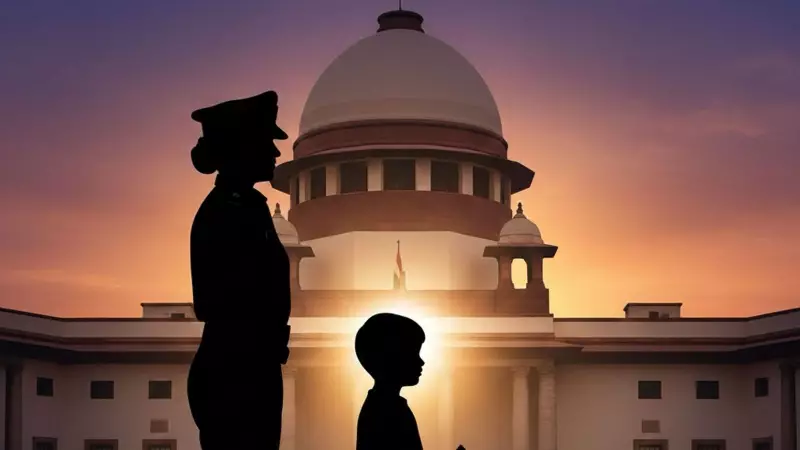
In a significant order that underscores the rights of persons with disabilities, the Supreme Court of India has intervened to stay the transfer of a widowed Army officer who is the sole caregiver of her severely autistic child. The bench, comprising Justices Dipankar Datta and Augustine George Masih, issued the interim order on Wednesday, December 4, 2025, which coincidentally was the International Day of Persons with Disabilities.
A Constitutional and Humanitarian Issue
The officer, Lieutenant Colonel Sumam T Mathew, had challenged her transfer order from the Military Hospital in Thiruvananthapuram to Chandimandir in Haryana. In her petition, she argued that her case transcends a mere service dispute. She framed it as "a constitutional and humanitarian issue involving the rights and survival of a disabled child." The apex court, acknowledging the gravity of the plea, issued notice to the Central government and concerned authorities, stating, "Until further orders, the order of transfer shall remain stayed."
The court has granted time to the Centre to file a rejoinder until January 9 and posted the matter for further hearing on January 16, 2025.
The Struggle of a Sole Caregiver
Lieutenant Colonel Mathew, who has served in the Military Nursing Service since 2006, lost her husband in 2021. Since then, she has been the only parent for her two sons. Her younger son, aged eight, has been diagnosed with severe Autism Spectrum Disorder (ASD) and has an 80% permanent disability. The child is non-verbal and also suffers from ADHD, sensory integration deficits, a seizure disorder, and exhibits significant self-injurious behaviour.
Her elder son, aged 16, is battling reactive depression, epilepsy, and behavioural challenges linked to the trauma of losing his father. Medical experts have warned that any disruption to his routine, travel, or environment could trigger severe behavioural breakdowns and seizure clusters.
An Irreplaceable Therapeutic Ecosystem
A core argument in the petition was the established and irreplaceable therapeutic support system in Thiruvananthapuram. The officer stated that both children are entirely dependent on her presence and this specialized ecosystem, which includes:
- Sree Chitra Tirunal Institute of Medical Sciences & Technology (with its Comprehensive Care Centre for Neurodevelopmental Disorders)
- Specialised paediatric neurology departments
- Numerous other institutions like NISH, CDC, ATIDHI, and Aster PMF Hospital
- A network of therapy centres that have supported the children's rehabilitation for years
The petition contended that this intricate web of care cannot be recreated at the new posting in Chandimandir, Haryana. It emphasized that rehabilitation is a continuous and fragile process requiring stability in language zone, school, neighbours, therapists, and medical support.
Alleged Overlook of Disability Law and Policy
Lieutenant Colonel Mathew's legal team, led by Senior Advocate Pijush Kanti Roy, argued that the Kerala High Court failed to consider crucial legal protections. The petition highlighted Section 9 of the Rights of Persons with Disabilities Act, 2016, which safeguards the right of disabled children to a home environment and protects against the disruption of rehabilitation.
Furthermore, the plea cited multiple government policy documents that mandate that a primary caregiver of a child with a disability should not be displaced. Despite presenting undisputed medical evidence and these binding policies, the transfer order was issued and later upheld by a single judge and then a division bench of the Kerala High Court in an order dated October 17.
The Supreme Court's decision to stay the transfer reflects a preliminary view that these vital aspects of disability rights and the profound human impact of uprooting the children were not adequately considered. This case now sets the stage for a broader legal examination of the state's duty towards employees who are caregivers of persons with disabilities.