Supreme Court Bench Rules on Compensation for Private Vehicle Requisition
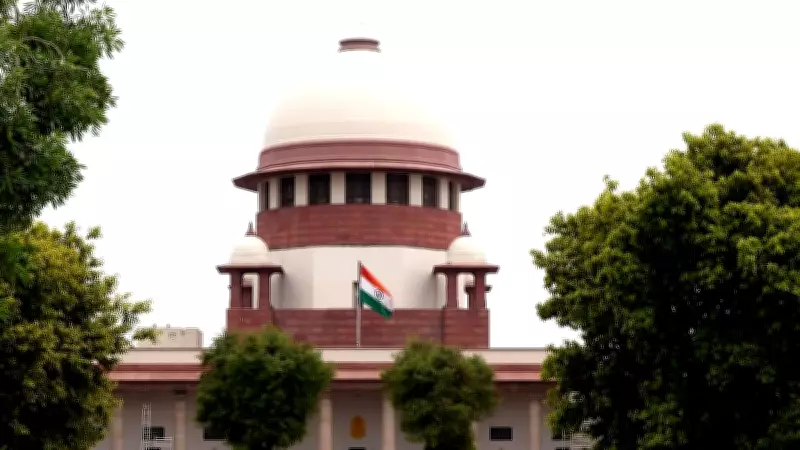
A significant ruling from the Supreme Court of India has clarified the legal obligations of authorities when requisitioning private vehicles for public purposes. The bench, comprising Justices Sanjay Karol and N Kotiswar Singh, delivered a judgment emphasizing that the state must provide compensation under the provisions of the Motor Vehicles Act.
Key Legal Principle Established
The court articulated a fundamental principle regarding state control and responsibility. In their statement, the justices declared, "When the State steps in, assumes control, and deploys the vehicle for its own purposes, it assumes with that control the corresponding responsibility." This ruling underscores that the act of requisitioning a private vehicle transfers not only physical control but also legal accountability to the state.
Implications Under the Motor Vehicles Act
The judgment specifically references the Motor Vehicles Act, which governs various aspects of vehicle use and regulation in India. By linking compensation requirements to this act, the court has provided a clear legal framework for such cases. This decision is expected to impact numerous instances where private vehicles are commandeered for emergency services, public events, or other governmental needs.

- The state's assumption of control over a private vehicle triggers compensation obligations.
- Compensation must be paid as per the Motor Vehicles Act, ensuring fair treatment of vehicle owners.
- The ruling applies to all authorities, including local and state governments, when requisitioning vehicles.
- This legal precedent aims to prevent arbitrary seizures without proper remuneration.
Broader Context and Significance
This ruling comes at a time when discussions about state powers and individual rights are increasingly prominent. By mandating compensation, the Supreme Court reinforces the balance between public necessity and private property rights. The decision is likely to influence future cases involving state requisition of private assets, setting a standard for accountability and fairness.
Legal experts anticipate that this judgment will lead to more structured protocols for vehicle requisition, potentially including standardized compensation rates and clearer procedures. Vehicle owners can now rely on this ruling to seek redress if their vehicles are taken without proper payment, enhancing legal protections for citizens.
In summary, the Supreme Court's decision marks a pivotal moment in Indian jurisprudence, affirming that state authority carries with it the duty to compensate those affected by its actions. This ruling not only addresses immediate concerns about vehicle requisition but also contributes to the broader discourse on governmental responsibility and individual rights in a democratic society.