Supreme Court Delivers Split Verdict on Corruption Probe Shield for Public Servants
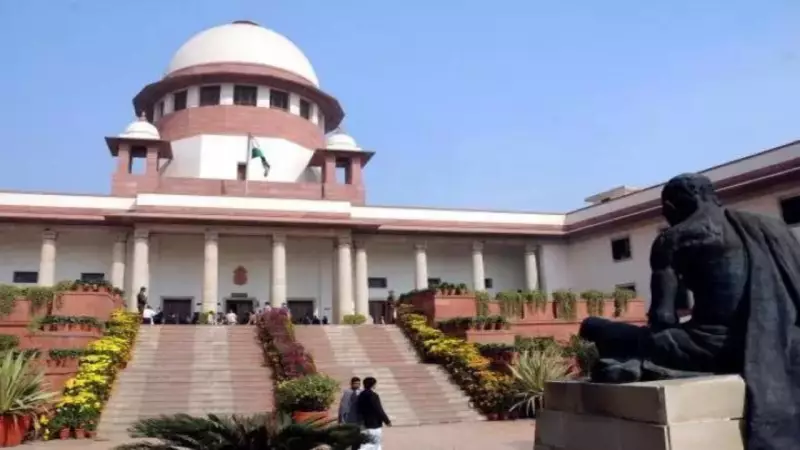
The Supreme Court of India delivered a divided judgment on Tuesday regarding Section 17A of the Prevention of Corruption Act. This controversial provision requires government approval before police can investigate corruption complaints against public servants.
Judges Clash Over Legality and Implications
A division bench comprising Justices B V Nagarathna and K V Viswanathan could not reach a unanimous decision. Justice Nagarathna declared Section 17A outright illegal, arguing it protects corrupt officials. She described the provision as "old wine in a new bottle" and a resurrection of a previously struck-down law.
Justice Viswanathan took a different view. He warned that striking down the entire section would be like "throwing the baby out with the bathwater." Instead, he proposed curing the defect by involving the Lokpal or Lokayukta in the approval process.

The Core Conflict: Protection vs. Accountability
Justice Nagarathna emphasized the need for zero tolerance toward corruption. She argued that mandatory prior sanction emboldens officials to follow their superiors' line to ensure safety. "This means the mechanism of a prior approval would be used to protect public servants who would align and against those who do not fall in line," she stated.
Justice Viswanathan highlighted the need to protect honest officers from frivolous complaints. He expressed concern that without some screening mechanism, officials might face constant harassment. "Civil servants should have the necessary freedom to take administrative decisions and express their views fearlessly," he noted, warning of potential policy paralysis.
Historical Context and Current Status
The court examined a Public Interest Litigation challenging Section 17A's validity. This provision was introduced in 2018 after the Supreme Court struck down a similar section in 2014. Justice Nagarathna pointed out that Section 17A contradicts previous larger bench judgments.
Both judges agreed the current provision lacks an independent screening mechanism. Justice Nagarathna called this absence "conspicuous" and cited "lack of objectivity, neutrality and fairness." Justice Viswanathan referenced the Law Commission's 254th report, which also recommended involving Lokpal/Lokayukta.
Divergent Solutions Proposed
Justice Nagarathna advocated for striking down Section 17A completely. She argued for an independent body completely separate from government control to consider approval requests.
Justice Viswanathan proposed a constitutional fix. He suggested making Section 17A valid only if the Lokpal or Lokayukta recommends approval or refusal. He warned that invalidating the provision entirely could lead to immediate police investigations based on any complaint, regardless of merit.
Case Forwarded to Chief Justice
Given the divergent opinions, the bench has directed the registry to place the case before the Chief Justice of India. The CJI will constitute an appropriate bench to reconsider the issues afresh. This split verdict leaves the legal status of corruption investigations against public servants in uncertainty until a larger bench resolves the matter.