Supreme Court Ruling Blocks Justice for Dalit Christians and Muslims
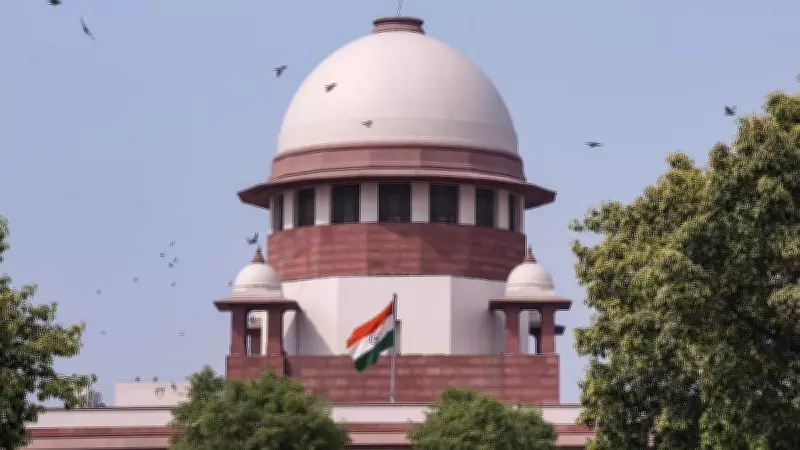
The Supreme Court of India has delivered a landmark ruling that effectively denies Scheduled Caste (SC) status to Dalit Christians and Muslims, a decision with profound implications for social justice and religious equality in the country. This judgment tightens the government's narrative that SC identity is intrinsically linked to 'Indic' religions, such as Hinduism, Sikhism, and Buddhism, excluding those who convert to Christianity or Islam.
Background and Context of the Ruling
The case centered on whether Dalits who convert to Christianity or Islam should retain their SC status, which provides access to affirmative action policies like reservations in education and employment. Historically, the Constitution (Scheduled Castes) Order of 1950 restricted SC status to Hindus, later amended to include Sikhs and Buddhists, but explicitly excluded Christians and Muslims. The recent Supreme Court ruling upholds this exclusion, arguing that conversion severs the caste-based discrimination that defines SC identity under the law.
This decision reinforces a long-standing government stance that caste is a social construct unique to 'Indic' religions, where it is intertwined with religious practices. By maintaining this distinction, the ruling aligns with political narratives that emphasize Hindu identity and resist broadening SC benefits to non-Indic faiths. Critics argue that this perpetuates inequality, as Dalit Christians and Muslims often face similar or worse socio-economic discrimination despite their religious conversion.

Implications for Social Justice and Religious Freedom
The ruling has sparked widespread debate on its impact on social justice and religious freedom in India. Proponents claim it prevents misuse of reservations and preserves the original intent of affirmative action for historically oppressed groups within specific religious contexts. However, opponents highlight that it creates a two-tier system where Dalits in 'Indic' religions receive state support, while those in Christianity or Islam are left without protections, despite facing caste-based prejudice in society.
This decision may deepen religious divisions and marginalize minority communities, as it legally codifies a hierarchy that privileges certain religions over others. It also raises questions about the secular principles enshrined in the Indian Constitution, which guarantees equality and prohibits discrimination based on religion. By tying SC status to religious affiliation, the ruling challenges the idea of caste as a social and economic issue separate from faith.
Future Prospects and Legal Challenges
Looking ahead, this ruling is likely to face further legal challenges and public scrutiny. Advocacy groups for Dalit Christians and Muslims are expected to petition for reconsideration, citing international human rights standards and empirical evidence of ongoing discrimination. The government may face pressure to amend laws or introduce new policies to address the exclusion, but political will remains uncertain given the alignment with current narratives.
In the broader context, this case underscores the complex interplay between religion, caste, and law in India. It highlights how judicial decisions can shape social policies and reinforce or challenge existing power structures. As the debate continues, the focus will be on whether India can reconcile its commitment to secularism with practices that differentiate based on religious identity.