Supreme Court Prioritizes Substantial Justice Over Procedural Technicalities
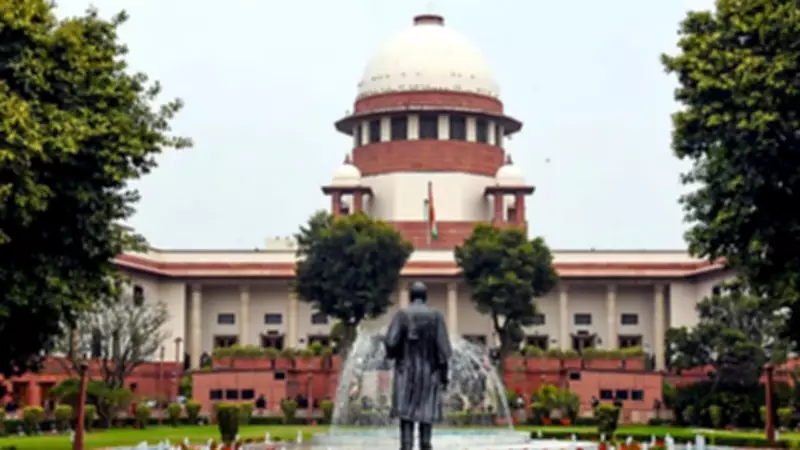
In a landmark ruling that underscores the primacy of justice over mere technicalities, the Supreme Court of India has overturned an Allahabad High Court order that mandated a complete retrial in a protracted murder case. The apex court's decision came after the high court had directed a fresh trial based solely on a minor procedural lapse—the trial judge's failure to affix his signature to the order framing charges.
A 17-Year Legal Odyssey Nearly Derailed by a Signature Omission
The case originated in 2007, involving nine accused individuals in a murder trial. Charges were formally framed by the trial court in 2009, but the order remained unsigned due to the absence of one of the accused at that specific hearing. Despite this oversight, the trial proceeded without incident for an astonishing 15 years, reaching an advanced stage with extensive examination of evidence and witnesses.
It was only in 2024, at the very conclusion of the proceedings, that the accused raised the issue of the unsigned order. The Allahabad High Court, accepting this belated challenge, ordered a retrial—a decision that would have effectively nullified nearly two decades of judicial work and forced the case back to square one.

Supreme Court Bench Distinguishes Between Illegality and Irregularity
A bench comprising Justices Ahsanuddin Amanullah and R Mahadevan firmly disagreed with the high court's approach. The justices emphasized that the criminal justice system is fundamentally designed to advance the ends of justice, not to thwart them on technical grounds. They invoked a precedent from a constitution bench verdict to clarify the critical distinction between fundamental illegality and curable procedural irregularity.
"Only those defects which go to the root of jurisdiction or occasion real prejudice can vitiate the proceedings," the bench stated, quoting the earlier ruling. "Defects of a lesser degree constitute irregularities requiring proof of failure of justice. The distinction between an illegality and an irregularity is thus well established."
In this instance, the Supreme Court found that the omission of a signature was not a "fatal" defect. The bench noted that the framing of charges had been properly done, recorded, read over, and acted upon by both the court and the parties involved. The accused had demonstrated full awareness of the accusations against them, as evidenced by their detailed cross-examinations and the defense strategies they employed throughout the trial.
Questioning the Timing and Motive Behind the Challenge
The Supreme Court also expressed strong reservations about the timing of the challenge. By raising the issue only at the fag end of the trial—after key eyewitnesses had passed away—the accused appeared to be exploiting a procedural loophole to derail the proceedings. The bench questioned the conduct of the accused, suggesting that such belated challenges, if accepted, would defeat the very object of criminal procedure.
"Acceptance of such belated challenges founded on procedural irregularities would defeat the object of criminal procedure, which is to advance the cause of justice and not to frustrate it on technical grounds," the court asserted in its ruling.
Broader Implications for the Indian Judicial System
This decision carries significant implications for the Indian legal landscape, particularly in how courts handle procedural lapses in long-pending cases. By quashing the retrial order, the Supreme Court has sent a clear message that technicalities should not overshadow substantive justice, especially when no real prejudice has been demonstrated.
The ruling reinforces the principle that procedural rules are meant to serve justice, not become obstacles to it. It also highlights the judiciary's role in preventing the misuse of legal technicalities to delay or evade accountability, thereby upholding the integrity and efficiency of the trial process.