Supreme Court Justice Questions Right of Non-Believers to Challenge Religious Customs
Justice B V Nagarathna, a member of the nine-judge Supreme Court bench led by Chief Justice Surya Kant, made a significant observation on Tuesday during the hearing on the core issue of 'fundamental rights versus faith and belief'. She stated that a person who does not believe in a religion and its religious practices has no right to file petitions challenging their validity.
Debate Over Judicial Scrutiny of Religious Practices
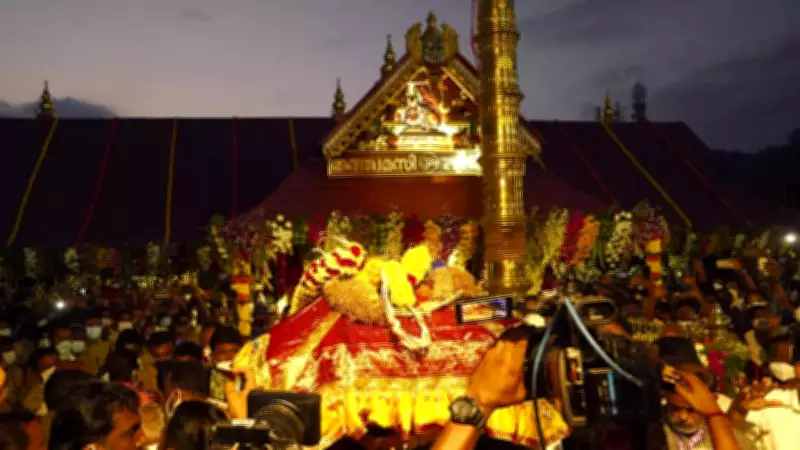
As senior advocate V Giri, representing the Sabarimala Ayyappa Thanthri, argued that no devotee can act in derogation of practices attached to the 'Naishtik Brahmachari' (eternal celibacy) attributes of Lord Ayyappa, Justice Nagarathna remarked, "A non-believer has no business to question customs or beliefs associated with a temple and its deity."
Justice Nagarathna further questioned why the court should delve into whether a practice is an essential part of religion or religious denomination once it has distinguished religious practices from secular activities. This stance appears to disagree with the 2018 Supreme Court judgment that struck down the custom barring entry of women aged 10-50 into the Sabarimala temple, terming it as not an essential religious practice.

Constitutional Protection for Religious Practices
Senior advocate Gopal Subramanium supported Justice Nagarathna's view, stating that while secular practices of a religious institution are amenable to judicial scrutiny, religious practices enjoy constitutional protection. He noted exceptions only when such practices breach public order, morality, or health.
Justice Ahsanuddin Amanullah emphasized that determining whether a practice is secular or religious must be done by the court on a case-by-case basis. Justice P B Varale raised a thought-provoking question: "Would it mean that with advancement in technology and spread of education, the community collectively cannot change or reform a particular religious practice?"
Questions on Community Debate and Reform
Justice Joymalya Bagchi supplemented this inquiry by asking, "If a religious practice is unique to a denomination and is held sacrosanct, will it prohibit debate within the community to bring about changes in the practice?"
In response, Giri argued that a person visits a temple to worship only if they have belief and faith in the deity. He contended that such a person cannot object to or question the customs and beliefs attached to the deity, suggesting that only the community itself can bring about changes in these customs.
Distinction Between Faith and Practice
Justice R Mahadevan offered a nuanced perspective, stating, "Faith is faith. Practice is different, yet it is based on faith." This highlights the complex interplay between belief systems and their practical manifestations.
Critique of Sabarimala Judgment
Senior advocate J Sai Deepak, appearing for a religious association, criticized the majority verdict in the Sabarimala case. He argued that it erred by equating the ban on entry of women of menstrual age into the temple—due to the unique attributes of Ayyappam—with the practice of 'untouchability'.
Deepak contended that when the Constitution, through Article 17, abolished untouchability and made it a penal offence, it specifically targeted social or caste-based untouchability, not ritualistic purity. He further argued that diverse religious spaces dedicated to specific forms of deities, which restrict access to believers of certain classes or sections without reference to caste, should not be treated as violating Article 17.
The ongoing hearing continues to explore the delicate balance between individual rights and religious autonomy, with significant implications for future jurisprudence on matters of faith and law.