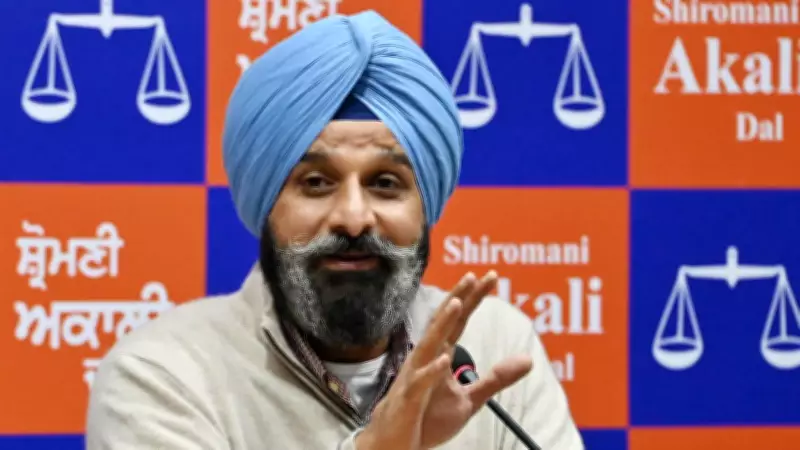
The Supreme Court of India has granted bail to Shiromani Akali Dal (SAD) leader Bikram Singh Majithia in a high-profile corruption case involving alleged disproportionate assets exceeding Rs 540 crore. This decision overturns the earlier denial of bail by the Punjab and Haryana High Court in December last year.
Supreme Court's Rationale for Granting Bail
A bench comprising Justices Vikram Nath and Sandeep Mehta issued the order while hearing Majithia's plea challenging the High Court's refusal. The bench cited several key factors in its ruling, emphasizing the circumstances of the case.
Key Considerations by the Bench
The Supreme Court noted that Majithia had previously been granted bail in an earlier NDPS (Narcotic Drugs and Psychotropic Substances Act) matter in 2022. The state's Special Leave Petition against that bail was dismissed by the court in 2025. Additionally, the bench highlighted that Majithia has been in custody for the last seven months, and the police report under Section 173(2) of the CrPC has already been filed.
The disproportionate assets case relates to the check period from 2007 to 2017, with the FIR lodged under the Prevention of Corruption Act in 2025. The court stated, "Considering the facts and circumstances of the case... we are inclined to grant bail." However, it left it open for the prosecution to request stringent conditions on Majithia's release.
Background of the Corruption Case
The corruption case was initiated based on a June 2025 report by a Special Investigation Team (SIT), which had probed an earlier FIR against Majithia and others under the NDPS Act. The SIT report alleged that Majithia and his wife accumulated wealth over Rs 540 crore through illegal entities. Following this, the senior Akali leader was arrested on June 25, 2025.
High Court's Stance on Denying Bail
In December last year, the Punjab and Haryana High Court denied bail to Majithia, citing serious economic offences. The court noted that the investigation revealed huge unaccounted money in his bank accounts and the establishment of numerous companies for surreptitious financial transactions. It also mentioned that money was routed through foreign entities in Singapore and Cyprus.
The High Court expressed concerns that Majithia, being in control of most entities with immediate family members, could influence the investigation, cover up transactions, manipulate records, or intimidate witnesses if released. It stated, "All this has adverse ramifications for the financial health of the State..."
Implications and Next Steps
With the Supreme Court's bail grant, Majithia is set to be released, subject to conditions that the trial court may impose. The case continues to draw significant attention due to its political and financial implications, involving a prominent leader from Punjab.
This development marks a pivotal moment in the legal proceedings, as the prosecution prepares to present its case in trial court while ensuring that bail conditions are stringent enough to safeguard the investigation's integrity.