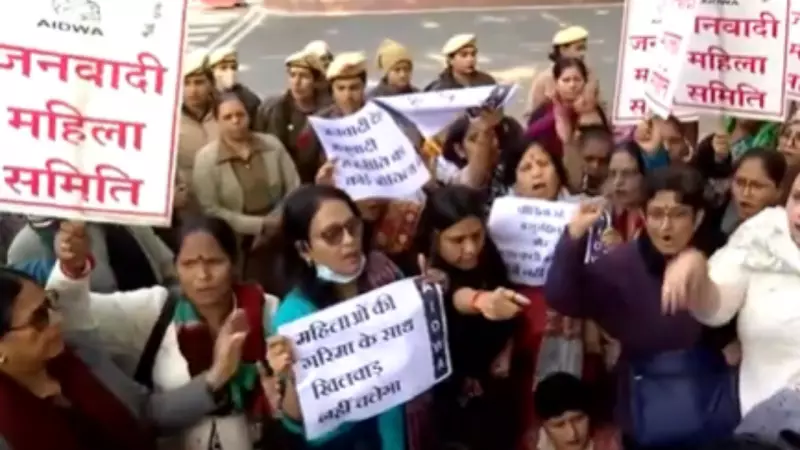
Angry demonstrators gathered outside the Delhi High Court on Wednesday, voicing strong opposition to the court's decision to grant conditional bail to Unnao rape convict Kuldeep Singh Sengar. The protest led to a swift police intervention, with officials declaring the assembly illegal and directing protesters to the designated protest site at Jantar Mantar.
Police Intervention and Defiant Demonstrators
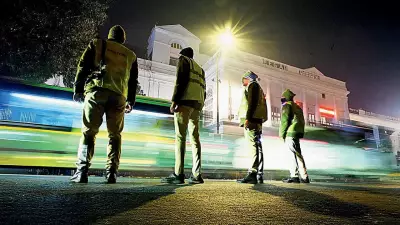
Law enforcement was quick to respond to the gathering outside the court premises. Police officials explicitly warned the crowd that demonstrating in that area was prohibited and illegal, cautioning that legal action could be taken against them. They advised the protesters to move their agitation to the sanctioned protest zone at Jantar Mantar. Despite these clear warnings, the demonstrators stood their ground, expressing deep-seated anger and frustration over the judicial ruling that granted bail to the convicted former BJP MLA.
Voices of Outrage and Demands for Justice
The core of the protesters' anger stemmed from the perceived injustice of releasing a man convicted of heinous crimes. Prominent women's rights activist Yogita Bhayana spoke to news agency ANI, capturing the national sentiment. She stated that women across India were profoundly hurt by the overturning of the rapist's sentence, an act that occurred in the very same court. "We will seek justice from the same place where the injustice occurred," she asserted, highlighting the determination to challenge the decision.
Another protester posed pointed questions to ANI, demanding accountability: "On what grounds was Kuldeep Sengar granted bail, when it was declared that he had committed rapes and murders? If a life sentence was given to him, then why is he out?" The protester emphasized the collective demand for Sengar to be sent back behind bars to ensure a sense of safety for women.
A Developing Story with National Repercussions
The bail decision and the subsequent protests have ignited a fresh wave of debate about judicial processes and justice for survivors of sexual violence in India. The case, which involves a former lawmaker convicted for rape and murder, continues to be a highly sensitive and closely watched legal battle. The protests outside the Delhi High Court underscore the public's vigilant scrutiny of the judiciary's actions in high-profile cases involving powerful individuals. The situation remains fluid, with activists vowing to continue their fight for what they call a stricter and more just outcome.