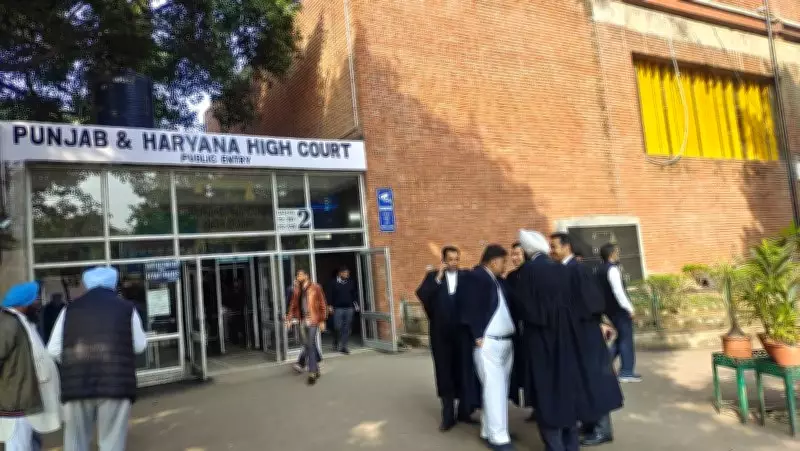
Punjab's Paid FIR Downloads Under Judicial Scrutiny in High Court PIL
The imposition of fees for downloading first information reports (FIRs) and related criminal justice documents from the Punjab Police Saanjh portal has sparked a significant legal challenge. A public interest litigation (PIL) filed before the Punjab and Haryana High Court argues that this policy creates an "illegal barrier" to transparency and access to justice, fundamentally undermining the principles of free public access to core legal records.
Petition Details and Legal Grounds
Filed by advocates Vasu Ranjan Shandilya and Abhishek Malhotra, the petition directly challenges the Punjab government's policy of monetizing access to FIRs, Daily Diary Reports (DDRs), and lost information reports. The plea asserts that these documents, by law, are required to be supplied free of cost, and the current fee regime lacks any statutory backing. Moreover, the policy has not been placed in the public domain, failing basic transparency tests and raising concerns about arbitrary governance.
The petition relies on Section 173(2) of the Bharatiya Nagarik Suraksha Sanhita, which mandates that copies of FIRs be provided without charge, and Rule 24.5 of the Punjab Police Rules, which ensures free supply of such documents. By imposing fees, the state government is alleged to be in direct violation of these legal provisions, thereby eroding public trust in the criminal justice system.

Broader Implications for Justice and Rights
Citing the Supreme Court's ruling in "Youth Bar Association of India vs Union of India," the PIL emphasizes that free and easy public access to FIRs is integral to maintaining transparency in criminal proceedings. Any financial barrier, the plea argues, defeats the very purpose of making these documents accessible online, disproportionately affecting ordinary citizens who seek information about legal matters. This includes individuals from economically disadvantaged backgrounds, for whom even nominal fees can pose a significant hurdle.
The petition further contends that the fee imposition infringes upon fundamental rights, including equality before the law and the right to information as part of free speech. It also impinges on personal liberty by restricting access to justice, contrary to the constitutional mandate of equal access for all. The PIL highlights how such policies can exacerbate existing inequalities, making it harder for vulnerable populations to navigate the legal system.
Relief Sought and Interim Measures
In response to these concerns, the petition seeks several key remedies from the High Court:
- Quashing of the Punjab government's policy that charges fees for downloading FIRs and DDRs.
- Restoration of free digital access to these documents on the Saanjh portal.
- Refund of any amounts already charged to users, along with applicable interest.
- An interim direction for the immediate suspension of the fee regime pending the court's final adjudication, to prevent further harm to public access during the legal proceedings.
This case underscores a critical debate over the balance between administrative costs and the public's right to information. As digital platforms become central to governance, ensuring they do not create new barriers to justice is paramount. The outcome of this PIL could set a precedent for how other states handle access to legal documents, potentially influencing policies nationwide to prioritize transparency and equity in the criminal justice system.