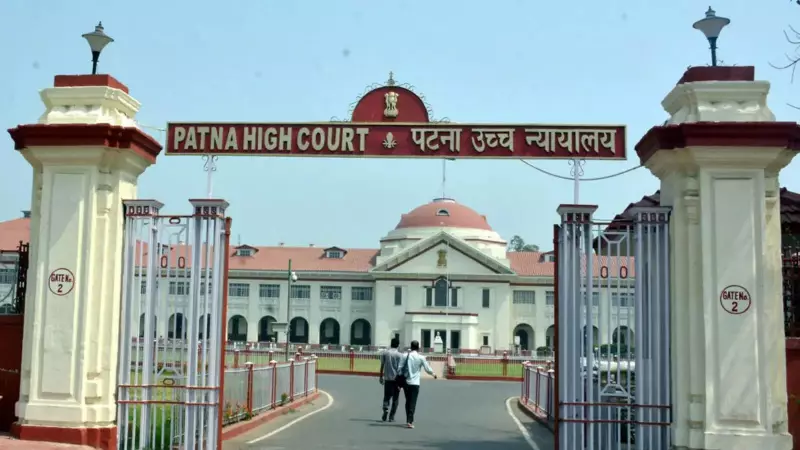
The Patna High Court has taken a significant step towards addressing the massive backlog of unpaid traffic fines in Bihar. On Tuesday, the court formally sought a detailed response from the state government regarding the establishment of a mechanism to settle pending traffic challans through Lok Adalats and special drives.
Court Directs State and Legal Services Authority
A division bench, comprising the Acting Chief Justice and Justice Alok Kumar Pandey, issued the directive while hearing a Public Interest Litigation (PIL) filed by Rani Tiwari. The court has asked both the Bihar government and the Bihar State Legal Services Authority (BSLSA) in Patna to file their replies on the matter. The court registry was instructed to issue formal notices to the authorities.
Advocate Vikas Kumar Pankaj, representing the petitioner, presented a compelling case. He argued that the current absence of a speedy settlement system for traffic fines has created a major statewide problem. The core issue is that vehicle owners with pending challans are unable to obtain their mandatory Pollution Under Control (PUC) certificates, a situation many remain unaware of until they try to renew their vehicle documents.

Successful Models from Other States Cited
Pankaj highlighted a contradictory stance within the state administration. He pointed out that even the District Transport Officer (DTO) in Patna had recommended against taking up traffic challan matters in Lok Adalats. The petitioner's counsel termed this position regressive, especially when compared to successful models implemented in other parts of India.
Examples from Chandigarh were presented, where special drives led to the compounding of thousands of pending traffic fines within a single week. Similar successful initiatives from the National Capital Territory (NCT) of Delhi, Uttar Pradesh, Gujarat, and Madhya Pradesh were also cited before the bench. In these states, Lok Adalats have been effectively utilized to clear large backlogs of traffic violation cases, providing much-needed relief to vehicle owners and reducing judicial clutter.
Next Hearing and Broader Implications
The Patna High Court has scheduled the next hearing in this important matter for March 10. The court's intervention underscores the growing need for administrative efficiency and public convenience in law enforcement. A positive outcome could streamline the process for millions of vehicle owners in Bihar, allowing them to clear fines and obtain essential certificates without protracted legal hurdles.
The PIL seeks to replicate a proven system that balances enforcement with accessibility. If implemented, a Lok Adalat-driven mechanism could significantly decongest the traffic courts while ensuring that fines are collected and compliance with pollution norms is enforced, creating a win-win situation for the public and the authorities.