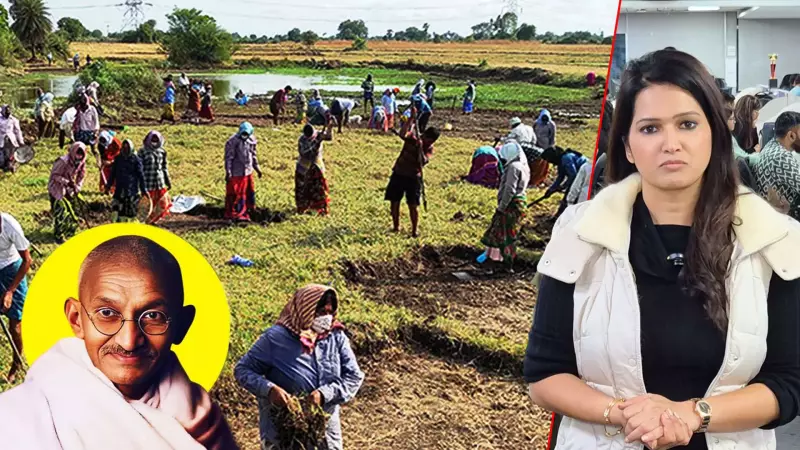
In a significant policy shift, the Indian government has announced the replacement of the long-standing Mahatma Gandhi National Rural Employment Guarantee Act (MGNREGA) with a new legislation named VB-G Ram G. The move, confirmed on December 15, 2025, aims to overhaul the rural job guarantee framework with a focus on enhanced productivity, technological oversight, and the creation of lasting infrastructure.
From MGNREGA to VB-G Ram G: The Core Upgrades
The original MGNREGA, launched in 2005, provided a legal guarantee of 100 days of wage employment per rural household. The new VB-G Ram G law builds upon this foundation but introduces several critical changes. The Centre promises more workdays annually for beneficiaries, although the exact number is yet to be specified. A major shift is the introduction of stricter monitoring mechanisms to curb fund leakages and ensure efficiency.
This will be achieved through AI-based verification checks and GPS tracking of projects and workers. The government asserts that these technological interventions will significantly reduce corruption and delays. Furthermore, the new scheme emphasizes the creation of more durable and productive rural assets, such as better water conservation structures and farm infrastructure, which are expected to directly benefit farmers.

Continuity Amidst Change: Protecting Worker Rights
Despite the overhaul, the government has clarified that certain fundamental rights of rural workers will remain protected. The legal right to demand work and the provision for an unemployment allowance if work is not provided within the stipulated time will continue under VB-G Ram G. This addresses concerns about the scheme's core guarantee being diluted.
Another key feature is the promise of predictable funding. The new law aims to streamline fund allocation and disbursement, ensuring that projects do not stall due to financial bottlenecks. The overarching goal, as stated by the Centre, is to increase rural incomes while plugging the gaps that plagued the previous system.
Implications for Viksit Bharat and the Rural Economy
The rebranding to VB-G Ram G explicitly ties the rural employment scheme to the broader Viksit Bharat (Developed India) vision. By focusing on creating permanent rural assets like irrigation ponds, check dams, and rural connectivity infrastructure, the scheme aims to contribute to long-term agricultural productivity and village development.
For farmers, the anticipated improvement in water resources and rural infrastructure could mean better resilience against droughts and improved market access. For workers, the potential for more workdays and timely wages, backed by technological transparency, could lead to more stable household earnings. The government frames this transition not as an end to the employment guarantee but as a necessary upgrade for a modernizing economy.
As the details of the VB-G Ram G implementation are rolled out, all eyes will be on its execution. The success of this ambitious replacement will hinge on how effectively the high-tech monitoring tools are deployed on the ground and whether the enhanced promise of work and wages truly reaches India's rural workforce.