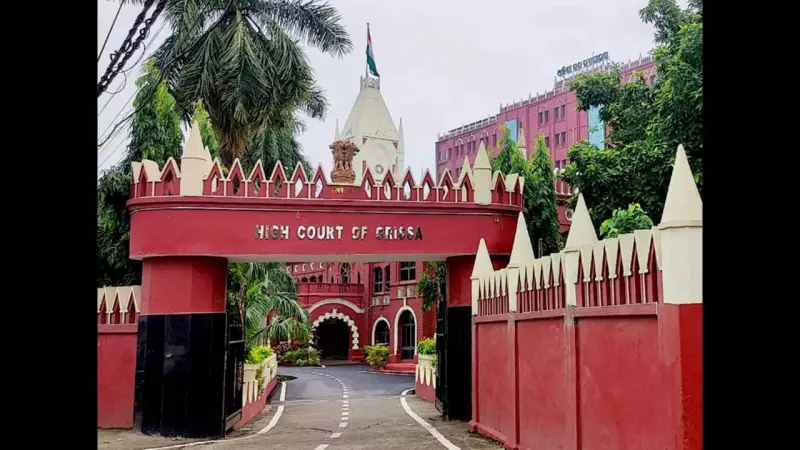
The Orissa High Court has delivered a significant verdict, upholding the state government's policy decision to exclude certain women's self-help groups (WSHGs) from participating in paddy procurement operations for the upcoming 2025-26 season. The court ruled that their past engagement did not create an automatic or enforceable right for indefinite continuation.
Court Dismisses Petitions from Subarnapur SHGs
A bench presided over by Justice Sashikanta Mishra recently dismissed a batch of 13 petitions filed by WSHGs from Subarnapur district. These groups had challenged their exclusion from the procurement process for the current cycle.
The petitioners argued that they were duly selected through an open Expression of Interest (EOI) process in 2019. Since their selection, they had been actively engaged in both kharif and rabi season procurement for four consecutive years on behalf of the Odisha State Civil Supplies Corporation (OSCSC). They contended that their removal this year, with procurement being restricted to Primary Agricultural Credit Societies (PACS), was arbitrary as it was done without assigning reasons or granting them a hearing.

Administrative Policy, Not a Statutory Right
In his order dated December 19, 2024, Justice Mishra firmly rejected these arguments. The court observed that the engagement of WSHGs under the 2019 guidelines was purely administrative and a matter of state policy.
The bench held that these guidelines were executive instructions framed to facilitate procurement. They did not confer any statutory or vested right on existing SHGs to continue indefinitely. The court noted that from 2019 to 2024, the state had consistently continued with the initially selected groups without issuing fresh EOIs, a practice that went unchallenged.
"Mere deviation from a procedural prescription in an executive guideline, in the absence of demonstrable arbitrariness or violation of statutory provisions does not… render the action of the state illegal," Justice Mishra stated.
Performance Review and Public Interest
The judgment referenced the government's July 12, 2024 decision to undertake a performance review of all engaged SHGs. The subsequent district-wide assessment conducted in Subarnapur was deemed a policy decision taken in public interest.
The court recorded the government's adopted principle: SHGs with satisfactory track records were allowed to continue, PACS were preferred where necessary, and fresh EOIs were issued only in areas where mismanagement was reported. This classification, the court ruled, had a direct nexus with the goal of efficient procurement and did not violate the equality clause under Article 14 of the Constitution.
On the question of natural justice, the court held that the disengagement was neither penal nor stigmatic. "In such circumstances, insistence on individual showcause notices or personal hearings cannot be treated as mandatory," it concluded, adding that the principles of natural justice were substantially complied with.
A Note on Future Empowerment
While declining to interfere with the government's decision, Justice Mishra added an important observation. He suggested that, in keeping with the spirit of women's empowerment, the state should consider providing adequate opportunities to new SHGs and even those previously debarred for mismanagement in future procurement years. This, however, should be done without compromising on the core objectives of efficiency and transparency in the procurement system.
This ruling clarifies the legal standing of policy-based engagements and reinforces the government's discretion in modifying administrative procedures for larger public interest, while also nudging authorities to keep women's empowerment in focus for future policy frameworks.