Nepal's Political Landscape Transformed by Youth-Led Landslide Victory
In a stunning political development that defies conventional South Asian electoral patterns, Nepal has witnessed a seismic shift in power. A political party that was not in existence just four years ago has secured a landslide, near two-thirds majority in the national elections. This unprecedented victory was orchestrated under the leadership of a 35-year-old political newcomer who employed an unconventional campaign strategy.
The Unorthodox Campaign That Captured a Nation
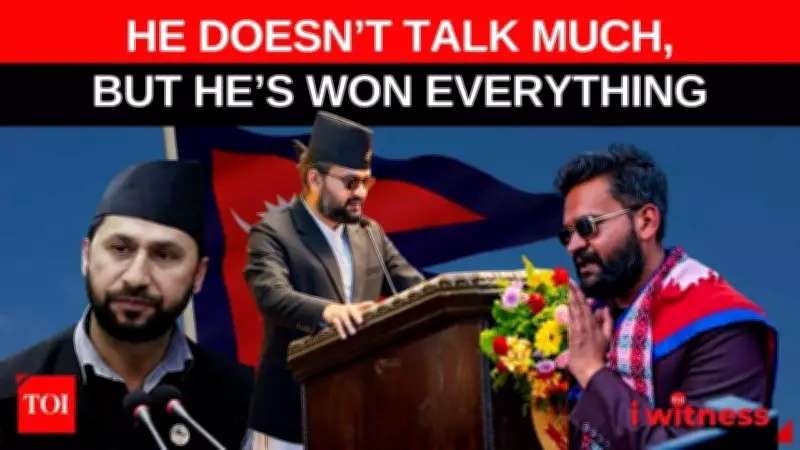
The winning candidate, Balen Shah, conducted a campaign that broke all traditional political rules. He delivered only one speech every eight days throughout the election period, maintaining an aura of mystery and focus. Shah categorically refused all media interviews, creating scarcity around his public appearances that only heightened public interest. Despite this minimal public engagement strategy, young voters demonstrated extraordinary enthusiasm, with some reportedly breaking down in tears simply to obtain a selfie with the charismatic leader.
Shah's campaign tactics included directly labeling his political rival as a terrorist, a controversial move that nonetheless resonated with certain voter segments. He further solidified his unconventional approach by refusing to participate in any debate with opposing candidates, choosing instead to communicate through carefully controlled public appearances and social media channels.
The Deeper Story: A Generation's Revolt Against Instability
This electoral earthquake represents far more than just another political victory. According to election observers, it signifies a profound Gen Z-led revolt against Nepal's chronic political instability. The country has experienced eighteen different governments in just fourteen years, creating widespread disillusionment with established political parties and traditional leadership.
Young voters, particularly those in urban centers, have expressed frustration with what they perceive as a revolving door of ineffective governance. They have rallied behind Shah's message of radical change and his outsider status, viewing him as a break from the political establishment they blame for Nepal's economic stagnation and governance challenges.
The Unlikely Partnership That Could Transform or Destabilize
Central to Shah's electoral success was his strategic partnership with Rabi Lamichhane, a popular television personality turned politician. This unlikely alliance between a political newcomer and a media figure created a powerful coalition that appealed to both disaffected youth and broader segments of the population dissatisfied with traditional politics.
However, political analysts express concern about the sustainability of this partnership. The collaboration between Shah and Lamichhane represents a high-risk political experiment that could either transform Nepal's governance structures or spectacularly implode under the pressure of governing a complex nation with diverse needs and expectations.
Radical Economic Promises That Alarm Experts
Perhaps most concerning to economic observers are the genuinely alarming economic policies proposed during Shah's campaign. The most controversial promise involves unpegging the Nepalese rupee from the Indian rupee, a move that economists warn could trigger devastating inflation and destabilize Nepal's fragile economy.
Additional radical economic proposals include:- Complete overhaul of Nepal's taxation system
- Massive infrastructure spending without clear funding mechanisms
- Substantial increases in social welfare programs
- Re-negotiation of international trade agreements
Financial experts express deep concern that these policies, if implemented without careful planning and gradual transition, could lead to economic turmoil that would disproportionately affect Nepal's most vulnerable populations.
The Morning After: Governing a Political Earthquake
As the dust settles on this historic electoral victory, attention turns to the practical challenges of governance. Shah's party now faces the monumental task of translating campaign rhetoric into effective policy while managing sky-high public expectations. The international community watches closely as Nepal embarks on this uncharted political path, with neighboring countries particularly concerned about potential economic ripple effects.
This election represents a case study in how political discontent, particularly among younger demographics, can manifest in unexpected electoral outcomes. It serves as a warning to established political parties across South Asia that voter patience with traditional politics has limits, and that new political forces can emerge rapidly to capitalize on public frustration.
The coming months will reveal whether this political earthquake leads to sustainable transformation or becomes another chapter in Nepal's turbulent political history. What remains clear is that Nepal's political landscape has been fundamentally altered, with implications that will resonate far beyond its borders.