IIT Delhi's Revolutionary Lightweight Bulletproof Vest Unveiled at Ahmedabad Conference
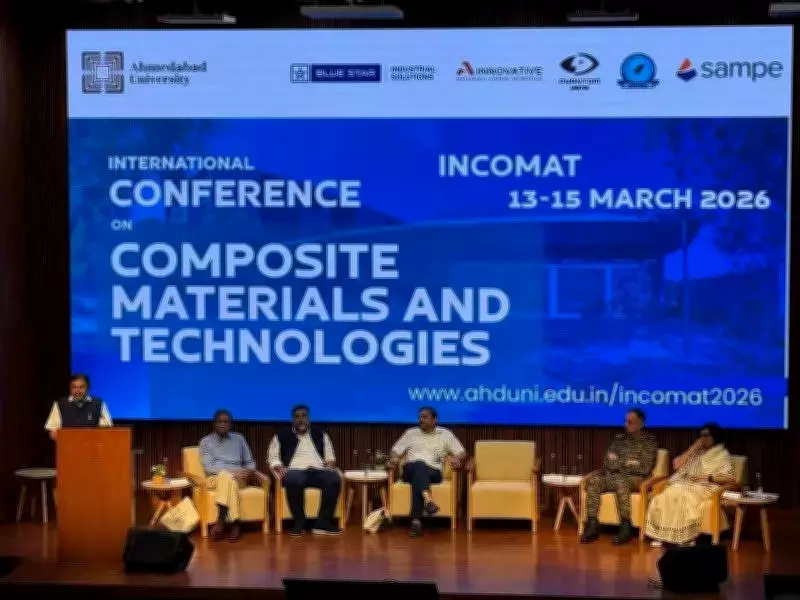
In a significant advancement for national security, experts from the Indian Institute of Technology Delhi (IIT-D) have successfully developed a groundbreaking lightweight bulletproof vest designed to protect security forces with enhanced efficiency and reduced weight. This innovation, known as Advanced Ballistics for High Energy Defeat (ABHED), was detailed at the International Conference on Composite Materials and Technologies (InCoMat 2026), held at Ahmedabad University on Friday.
Addressing Critical Safety Challenges
The project, initiated a couple of years ago, aimed to tackle the multifaceted challenge of creating body armor that could withstand high-velocity threats while minimizing the burden on personnel. The primary objectives included ensuring protection against three consecutive bullets from rifles like the AK-47 and stopping a single bullet from a sniper rifle, all while significantly reducing the vest's weight.
Prof Naresh Bhatnagar from IIT-D shared insights into the development journey at the DRDO Industry Academia Centre of Excellence (DIA CoE), highlighting the collaborative efforts that led to this breakthrough.

Innovative Use of Composite Materials
Hemant Chouhan, an associate professor in the School of Engineering and Applied Science at Ahmedabad University and a key contributor to the project, explained how composite materials played a pivotal role. By utilizing polymers and indigenous boron carbide ceramic material, the team achieved the same or greater ballistic efficiency at a reduced weight.
"Reduction of even a few grams makes a lot of difference for the armed forces personnel," Chouhan emphasized, underscoring the importance of lightweight gear for mobility and endurance in combat situations.
Broad Participation and Future Applications
The conference saw active participation from various prestigious organizations, including:
- Defence Research and Development Organisation (DRDO)
- Space Application Centre of the Indian Space Research Organisation (SAC Isro)
- Indian Army
- Academia and industry representatives
Makarand Joshi, director of R&DE (Engg) at DRDO, elaborated on multiple projects aimed at meeting armed forces requirements, such as developing noses for fighter jets and bridges capable of supporting tank movements. Nilesh Desai, director of SAC Isro, highlighted the space sector as a major frontier for composite materials due to their unique qualities, noting ongoing collaborations with organizations like the Ahmedabad Textile Industry's Research Association (Atira).
Major General Gaurav Bagga, GOC of the Golden Katar Division of the Indian Army, expressed optimism about researchers and innovators ensuring the safety of armed forces through advancements in composite materials.
Exploring Challenges and Opportunities
Speakers at the event also delved into the broader challenges and opportunities within the science of composite materials. They discussed varied applications and the integration of multiple scientific disciplines to create diverse classes of materials tailored to specific needs, from defense to space exploration.
This development marks a crucial step forward in enhancing the protective gear for India's security forces, combining cutting-edge technology with practical usability to address real-world threats effectively.