Royalist Resurgence in Kathmandu
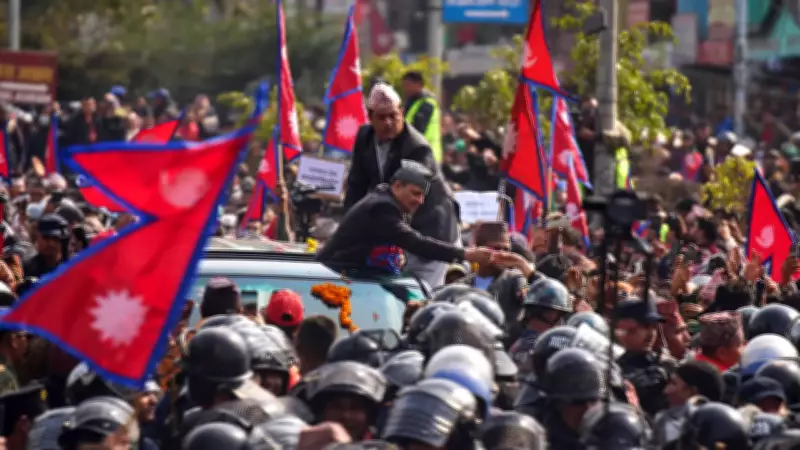
Thousands of fervent supporters of Nepal's former monarch gathered outside Kathmandu's Tribhuvan International Airport on Friday, vociferously demanding the restoration of the monarchy that was abolished nearly two decades ago. The massive demonstration represented a significant show of force for royalist sentiments in the Himalayan nation.
A Royal Welcome Despite Restrictions
Former King Gyanendra Shah waved to cheering crowds from the sunroof of his vehicle as hundreds of police officers in full riot gear attempted to manage the enthusiastic supporters at the airport's main entrance. The former monarch was returning from a three-month holiday in eastern Nepal, and his arrival sparked emotional scenes among loyalists.
"Bring back the king. We love our king more than our own selves. Restore constitutional monarchy," the crowd chanted repeatedly, their voices echoing through the airport perimeter. Additional supporters lined the entire route from the airport to Gyanendra's private residence, creating a continuous corridor of royalist enthusiasm.

Remarkably, the gatherings remained entirely peaceful throughout the day, with no arrests reported by authorities. Pro-monarchy demonstrators shouting "King, come and save the country" offered elaborate bouquets of flowers and waved the national flag vigorously as Gyanendra arrived at his home.
Voices from the Crowd
Sanatan Prasad Regmi, a 55-year-old supporter, articulated the frustration driving the movement: "We must restore the monarchy because the king can be a caring guardian of all Nepali people, something many corrupt political leaders have failed to do. We have no use for a republic that has brought us only instability and broken promises."
The rally occurred despite explicit prohibitory orders issued by the Kathmandu District Administration Office, which had banned gatherings of more than five people in and around the airport area. Security presence was exceptionally heavy across the entire airport perimeter, with authorities determined to prevent any escalation of tensions.
Political Mobilization
Cadres of the pro-monarchist Rastriya Prajatantra Party, led by senior leader Kamal Thapa, were prominently present at the demonstration site. They were joined by loyalist groups led by Navaraj Subedi and medical professional Durga Prasai, who had been gathering in the airport area since early Friday morning.
During a press conference in Kathmandu on Thursday, Durga Prasai made a bold declaration: "We want to restore the institution of monarchy before the March 5 general election. This election cannot proceed legitimately without addressing our fundamental agenda of reinstalling a Hindu monarch in our country."
Historical Context and Resurgence
Nepal formally abolished its monarchy in 2008 following massive street protests in 2006 that forced Gyanendra to relinquish his authoritarian rule. Parliament subsequently voted to end the monarchy permanently, and the former king left the Royal Palace to live as a common citizen in Kathmandu.
However, pro-monarchy demonstrations have resurfaced dramatically over the past year amid severe economic distress and continuing political instability. Nepal has experienced an astonishing 14 changes of government in just 18 years, a pattern of instability that has unsettled investors and significantly slowed economic growth.
Many ordinary Nepalis have expressed profound frustration with the republican system, accusing it of failing to deliver on fundamental promises of development, job creation, and effective governance.
Broader Political Backdrop
The renewed royalist demonstrations come just months after the September 8 protests led by Gen Z youth activists, which were sparked by growing public anger over corruption, lack of accountability, and the perceived failure of political elites. These earlier protests followed the Nepalese government's controversial ban on social media platforms.

The unrest ultimately led to the resignation of Prime Minister KP Sharma Oli. Sushila Karki, Nepal's first woman Chief Justice, was subsequently sworn in as interim Prime Minister. The 73-year-old Karki will hold the position until the first week of March, when elections are scheduled to choose a new executive head.
Tragically, the movement referred to as the Gen Z revolution resulted in 74 deaths when police used lethal force to suppress protests against the government of K.P. Sharma Oli, who is currently in hiding.
Election Implications
The show of royalist support occurs at a critical juncture, just ahead of parliamentary elections scheduled for March 5. A total of 65 political parties are contesting 275 seats in the assembly. Nearly 19 million of Nepal's 30 million people are eligible to vote, including approximately one million new voters—mostly youths—added to the rolls following recent protests.
Pro-Gyanendra groups, which secured about 5% of seats in the last election, are actively hoping to increase their parliamentary representation significantly. They argue that only a constitutional monarchy can provide the stability and unifying leadership that Nepal desperately needs.
Despite this visible groundswell of support from royalist groups, political analysts note that Gyanendra's chances of an immediate return to power remain limited, as broader political backing continues to reside with parties firmly opposed to restoring the monarchy institution.
The airport demonstration represents more than just a welcome for a former monarch—it symbolizes a growing political movement seeking to redefine Nepal's constitutional future as the nation prepares for crucial elections that will determine its political direction for years to come.