Sridhar Rangayan & Saagar Gupta: The Quiet Revolutionaries of Indian Queer Cinema
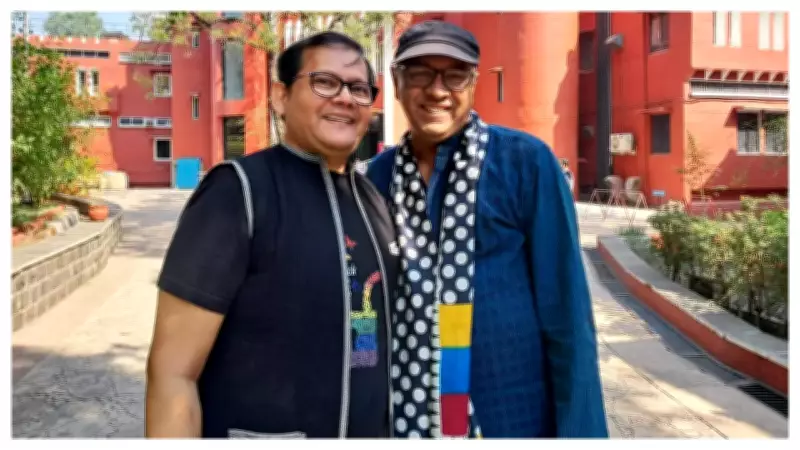
In a cultural landscape where queer narratives have historically faced marginalization and invisibility, two Mumbai-based filmmakers have emerged as steadfast architects of change through their cinematic vision and unwavering activism. Sridhar Rangayan and Saagar Gupta, partners in both life and creativity for more than thirty years, have meticulously crafted a body of work that seamlessly intertwines compelling storytelling with profound social transformation.
An Unconventional Journey into Filmmaking
Sridhar Rangayan reflects on their unexpected path: "If someone had told us decades ago that we would become filmmakers, organize an international film festival, and travel globally sharing queer stories, we would have dismissed it as fantasy." Both hailing from traditional family backgrounds—Sridhar from Mandya in Karnataka and Saagar from Meerut—they lacked any formal creative lineage. Their homes valued art and cinema, but their professional trajectories were initially divergent: Sridhar trained in engineering and visual design, while Saagar studied hotel management.
Destiny intervened in 1994 when they met and fell in love. Over the subsequent thirty-two years, they have navigated life's challenges together, united by a shared passion for authentic storytelling. Saagar Gupta emphasizes: "What sustained us through every struggle was this mutual dedication to narratives that matter."

Pioneering Queer Representation in Indian Cinema
The duo embarked on their filmmaking journey in 2002, driven by a glaring absence of genuine LGBTQ+ representation in mainstream Indian media. At the time, portrayals were often caricatured and disconnected from the lived realities of the community. Inspired by rare, courageous works like Riyad Wadia's BomGay, they sought to showcase the beauty, dignity, and truth of queer experiences—particularly the grace they observed in friends performing drag at private gatherings.
Their debut film, Gulabi Aaina (The Pink Mirror), created on a micro-budget, faced monumental obstacles: actors refusing queer roles, denial of certification by the censor board, and near-impossible distribution channels. Despite these hurdles, the film achieved iconic status as India's first feature focusing on drag queens, screening at eighty-six international festivals and garnering widespread acclaim.
Evolution of Storytelling and Global Recognition
As their filmography expanded with works like Yours Emotionally, 68 Pages, Project Bolo, Purple Skies, and the critically acclaimed Breaking Free, Rangayan and Gupta prioritized authenticity above all. Their narratives, both fictional and documentary-based, deepened engagement with real queer experiences, making art and advocacy inseparable.
Recurring themes of family and acceptance are powerfully explored in films such as Evening Shadows and its sequel Kuch Sapney Apne. Sridhar notes: "Audiences frequently tell us our films resonate as if they're about their own homes. We focus on real locations, relatable casting, and lived-in worlds rather than superficial glamour."
Their work has earned thirty-seven international awards and screenings at over 350 festivals worldwide, with three films available on Netflix. Among the most cherished honors are the National Award for Breaking Free in 2016, celebrated with their families' proud support, and the Laadli Award for Kuch Sapney Apne in 2025, where Sridhar's mother joined them on stage—moments that symbolized life coming full circle.
Transformative Impact and Community Building
Beyond accolades, the true measure of their impact lies in tangible social change. Numerous young individuals have used their films as tools to come out to parents, while many parents have written to express how these stories facilitated acceptance of their LGBTQ+ children. Notably, Evening Shadows inspired the formation of Sweekar – The Rainbow Parents, India's first support group for parents of queer children, which now boasts more than six hundred members.

Saagar shares: "Knowing our films serve as bridges within families is the ultimate reward. This transformation is what drives our creative mission."
The Future of Queer Cinema and Their Ongoing Legacy
Observing the current cinematic landscape, Rangayan and Gupta express joy at the proliferation of bold queer stories by younger filmmakers and the increased acceptance facilitated by OTT platforms. "The environment is far more welcoming today than we ever imagined," they acknowledge.
Looking ahead, the duo remains committed to challenging norms, supporting emerging queer filmmakers, and expanding the boundaries of independent cinema through festivals, OTT releases, theatrical showcases, and community screenings. Sridhar concludes: "The rainbow flag has guided our path, and we will continue to carry it forward—higher, brighter, and with unwavering pride."