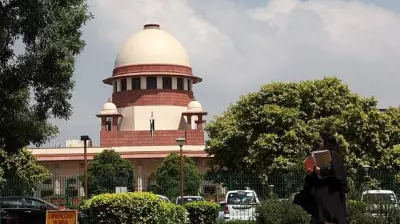
Nagpur High Court: Religious Symbols Alone Cannot Prove Conversion to Christianity
The Nagpur bench of the Bombay High Court has delivered a significant ruling, stating that the presence of a cross or pictures and statues of Jesus Christ in a person's home cannot be treated as conclusive proof that the individual has converted to Christianity or abandoned their Hindu identity. This decision emphasizes the need for concrete documentary evidence to support claims of religious conversion.
Court's Ruling on Conversion Claims and Caste Certificate
A division bench comprising Justices Mukulika Jawalkar and Nandesh Deshpande recently made this observation while hearing a petition filed by a college student from Akola. The student had challenged the rejection of his application for a scheduled caste (SC) certificate by the Akola Caste Scrutiny Committee. The committee had concluded that the student's forefathers had converted to Christianity, thereby disqualifying him from SC benefits.
The authorities had based their decision on the presence of a cross and images of Christ in the applicant's house, along with a school record from 1962 that described the family as Christian. However, the High Court found this reasoning insufficient and unsustainable.
Requirement for Documentary Evidence
The bench explicitly stated that any allegation of conversion must be supported by documentation of baptism rituals or a baptism certificate. "The scrutiny committee must examine whether formal conversion rituals took place," the court noted, highlighting the importance of procedural evidence over mere symbolic presence.
The petitioner argued that his family never formally converted to Christianity. He explained that his grandfather had described himself as Christian in school records only to avoid caste discrimination, but no actual religious conversion occurred. To support his claim, the petitioner presented several official records, including:
- School and government documents
- A caste validity certificate issued to a relative
- Other relevant paperwork demonstrating his family's continued Hindu identity
Court's Decision and Directions
After thoroughly examining the material presented, the High Court found the district authorities' decision to be "patently erroneous" and "perverse." The court set aside the order of the Akola Caste Scrutiny Committee, criticizing its reliance on superficial evidence without proper documentary backing.
The court then directed the authorities to issue an SC certificate to the petitioner, ensuring his rightful access to benefits and protections under the scheduled caste category. This ruling reinforces the legal principle that conversion claims require substantive proof, safeguarding individuals from arbitrary decisions based on circumstantial evidence.
This case underscores the judiciary's role in protecting citizens from discriminatory practices and ensuring that administrative decisions are grounded in factual and documented evidence rather than assumptions or symbolic interpretations.