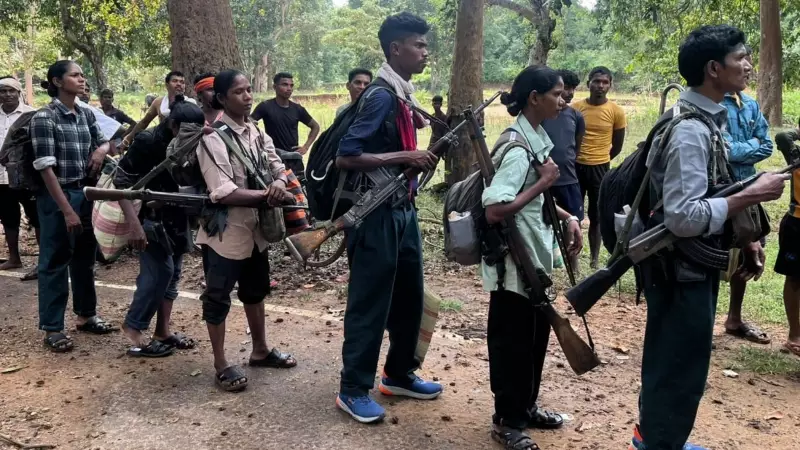
In a significant development for India's internal security, a top commander of the banned CPI (Maoist) has agreed to lay down arms. Barsa Deva alias Barsa Sukka, a senior leader of the People's Liberation Guerrilla Army (PLGA) Battalion 1, is set to surrender before Telangana's Director General of Police (DGP) on Saturday, January 3, 2026.
A Strategic Blow to Left-Wing Extremism
Telangana DGP B Shivadhar Reddy stated that this surrender could signal the end of the Maoist narrative in Chhattisgarh's Sukma district, a longtime insurgent stronghold. "This is the end of the Maoist story in Chhattisgarh’s Sukma district," Reddy told The Indian Express. He emphasized that with the killing of key commander Madvi Hidma last year and now Deva's surrender, there is likely no one left to lead violent Maoist activities in the region.
Deva will not surrender alone. He is expected to be accompanied by his personal security team and 18 other cadres, dealing a further manpower blow to the dwindling insurgent group. The DGP revealed that after Deva came under intense pressure from security forces, including Telangana's anti-Maoist agencies, he chose the path of surrender.

The Road to Surrender and a Dwindling Movement
This decision follows a personal appeal from Chhattisgarh's Deputy Chief Minister and Home Minister, Vijay Sharma. Sharma met with the families of both Hidma and Deva in their native village of Puvarti, urging Deva to give himself up. The minister contrasted Deva's choice with that of Hidma, who was killed in an encounter in Andhra Pradesh's Alluri Sitarama Raju district after ignoring surrender calls.
Barsa Deva was a formidable figure in the Maoist hierarchy. As a member of the Dandakaranya Special Zonal Committee, he was one of the most wanted commanders, accused of orchestrating multiple attacks on security forces. He was also allegedly involved in the deadly ambush on Congress leaders in Sukma in May 2013. The government had announced a reward of over Rs 50 lakh for information leading to his capture.
Appeal for Rehabilitation and the Remaining Threat
DGP Reddy used this opportunity to appeal to other remaining Maoist leaders to surrender and avail the benefits of state rehabilitation policies. He noted that Telangana's surrender and rehabilitation framework has been adopted by other states as a successful model.
With Deva's exit, very few top-tier Maoist leaders remain active underground. However, security forces continue their hunt for senior leader Thippiri Tirupathi alias Devuji, the general secretary of CPI (Maoist), who is originally from Telangana. A coordinated search operation is underway across Chhattisgarh, Odisha, Telangana, and Andhra Pradesh to locate him.
This surrender is the latest in a series of setbacks for the Maoist movement, which saw significant weakening last year through a combination of successful encounters and a spate of surrenders. The event underscores the increasing effectiveness of coordinated security operations and rehabilitation-focused policies in India's long-standing fight against Left-Wing Extremism.