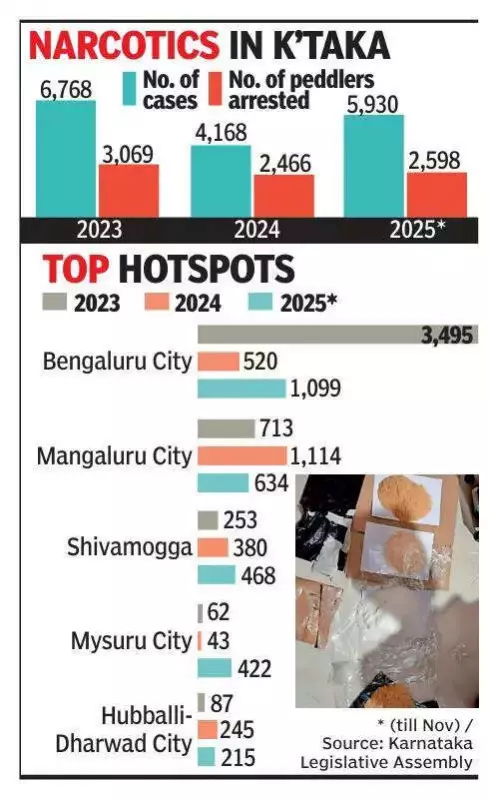
The state of Karnataka is grappling with a significant surge in drug-related offences, with authorities registering a staggering 5,900 cases under the Narcotic Drugs and Psychotropic Substances (NDPS) Act until November 2025. This alarming trend has been primarily attributed to a growing interest in narcotics among the youth, driven by factors like party culture and mental stress.
Statewide Crackdown and Key Seizures
Cases have been filed across the spectrum of drug crimes, including cultivation, production, possession, sale, and consumption. A major breakthrough occurred recently when the Maharashtra Anti-Narcotics Task Force (ANTF), in a joint operation with Karnataka police, dismantled a significant drug network in Bengaluru. This raid led to the seizure of raw materials valued at over Rs 1 crore, intended for producing banned substances. Police data indicates that a majority of the cases are linked to personal consumption and possession.
In a recent Winter Session of the legislature, Home Minister G Parameshwara addressed the issue, replying to a query by MLA Abbayya Prasad. He cited party culture, mental stress, lack of peace and values as key reasons for the rising drug use. The minister also highlighted that unemployed, impoverished, and thrill-seeking youth are being lured into the trade for quick money, noting the "large flow of money in the drug trade" as a reason for the expanding drug mafia.

City-Wise Data and Long-Term Trends
The data presented by the Home Minister reveals a concerning geographical spread. Bengaluru city tops the list with 1,099 NDPS cases, followed by Mangaluru City with 634 cases. Looking at a broader timeline, from 2023 to 2025, Karnataka has registered a total of 16,866 cases under the NDPS Act, leading to the arrest of 8,133 peddlers.
In Mysuru City, proactive measures have shown results. Police Commissioner Seema Latkar stated that increased surprise raids and area domination initiatives have helped identify drug consumers. By December 31, Mysuru City had registered approximately 492 NDPS cases.
Government's Multi-Pronged Response
To combat this menace, the government has established a dedicated Anti-Narcotics Task Force (ANTF) headed by an ADGP-rank officer. The DGP's office has instructed all police units across Karnataka to conduct extensive awareness campaigns against drug addiction. These initiatives include organizing programs in schools and colleges to deter young people.
A crucial public tool, the toll-free number 1933, has been launched for citizens to report drug sales and consumption anonymously. Furthermore, the government has shown a strict stance against negligence within its ranks, taking disciplinary action against 26 police officers and personnel who failed to curb the drug trade in their jurisdictions over the past two years.
Experts like BN Raveesh, Professor and Head of Psychiatry at Mysuru Medical College and Research Institute, point to additional social factors. He emphasizes that peer pressure and lack of supervision are significant contributors pushing the youth towards drugs, underscoring the need for a comprehensive societal response alongside law enforcement.