Strait of Hormuz Crisis: IRGC Fires at UK and French Ships, Trump Claims Helplessness
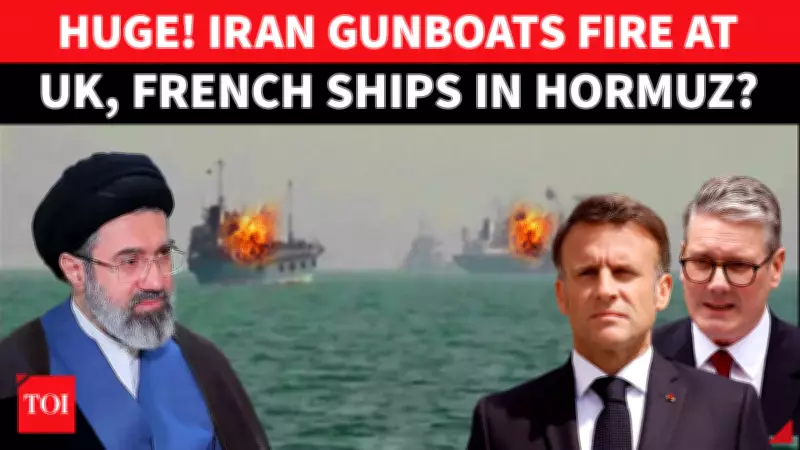
In a dramatic escalation of tensions in the critical Strait of Hormuz, reports have emerged of Iranian forces firing upon vessels linked to the United Kingdom and France. The incident, which occurred on April 20, 2026, has sent shockwaves through global maritime security circles, raising fears of a broader conflict in this volatile region.
Conflicting Reports and Presidential Claims
U.S. President Donald Trump publicly asserted that British and French-linked ships were targeted by the Islamic Revolutionary Guard Corps (IRGC), Iran's elite military force. However, subsequent investigations by maritime security agencies have introduced significant confusion, suggesting that different vessels may have been involved in the attacks. This discrepancy has led to a cloud of uncertainty surrounding the precise identities of the targeted ships.
Maritime security officials have confirmed that multiple incidents of gunfire were reported, with at least one ship being struck by a projectile. Fortunately, no casualties have been reported so far, but the psychological impact on crew members and the shipping industry is profound.

Regional Volatility and Global Implications
The Strait of Hormuz is one of the world's most crucial maritime chokepoints, through which approximately one-fifth of global oil shipments pass. Any disruption here can have immediate and severe consequences for international energy markets and global trade routes.
President Trump's characterization of the situation as one where he feels "helpless" underscores the complex geopolitical dynamics at play. The United States, despite its military presence in the region, faces significant challenges in responding to such provocations without triggering a wider conflict.
Broader Context of Iran's Military Posturing
This incident occurs against a backdrop of increasing Iranian military assertiveness in the Persian Gulf region. The IRGC has been conducting more frequent naval exercises and has recently showcased new missile capabilities, which Tehran claims are designed for "World War 3" scenarios. These developments have created panic in Washington and prompted U.S. troops in the Gulf to be placed on high alert.
The targeting of British and French vessels specifically suggests a calculated move by Iran to test Western resolve and potentially drive wedges between allied nations. Both the UK and France have historically maintained strong diplomatic and military ties with the United States, making them symbolic targets for Iranian aggression.
Maritime Security Challenges
Maritime security agencies are struggling to maintain accurate situational awareness as conflicting reports continue to emerge. The fog of war is particularly thick in maritime environments where vessel identification can be challenging, and hostile actors may deliberately spread misinformation.
The incident has prompted emergency meetings among Western allies, with discussions focusing on how to secure shipping lanes without escalating tensions further. Options being considered include increased naval patrols, enhanced intelligence sharing, and diplomatic pressure on Iran through international organizations.
Economic and Diplomatic Fallout
The immediate economic impact has been a spike in oil prices as traders factor in the increased risk premium for shipments passing through the Strait of Hormuz. Insurance costs for vessels operating in the region have also surged, creating additional financial burdens for shipping companies.
Diplomatically, the incident has strained already tense relations between Iran and Western powers. It comes at a time when negotiations over Iran's nuclear program have repeatedly stalled, creating a dangerous vacuum where military confrontations become more likely.
As the situation continues to develop, the international community watches with growing concern. The Strait of Hormuz remains a tinderbox where a single spark could ignite a much larger conflagration with global consequences.