West Bengal's Pivotal 2026 Election: A Battle Beyond Anti-Incumbency
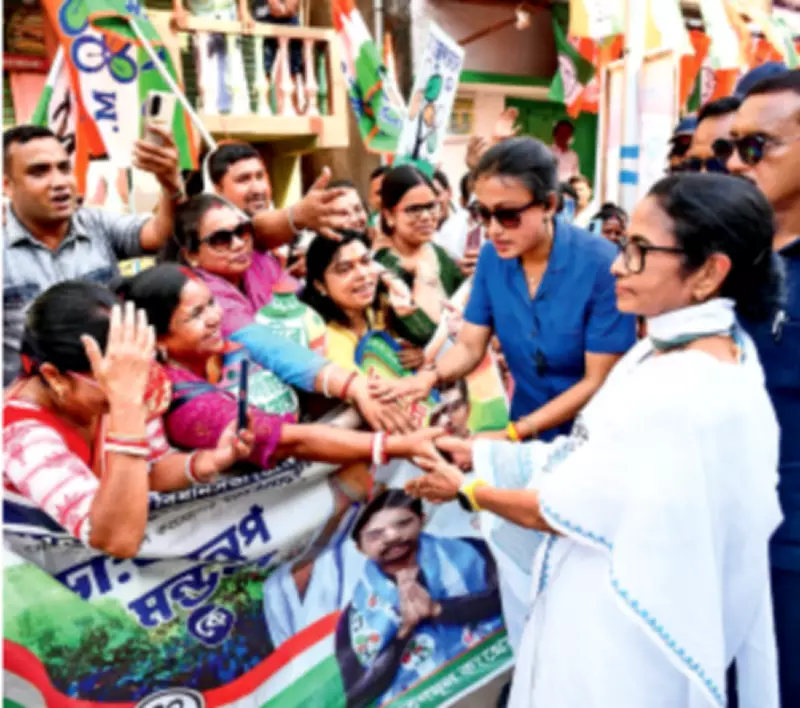
Securing a fourth consecutive term in West Bengal, which would extend her tenure to an unprecedented twenty years, presented Chief Minister Mamata Banerjee with her most formidable challenge yet. The Trinamool Congress leader confronted the Bharatiya Janata Party's powerful election machinery, vast resources, and the charismatic campaigning of Prime Minister Narendra Modi.
The Shifting Political Landscape
For five years leading up to the 2026 election, Banerjee meticulously prepared to defend her political stronghold. However, public discontent had been simmering due to several high-profile incidents. The rape and murder of a junior doctor at Kolkata's state-run R G Kar Medical College and Hospital, along with the rape of a student on a college campus in Kasba, sparked widespread public outrage. These events, combined with ongoing reports of violence against women in rural areas, amplified existing anti-incumbency sentiments among voters.
Despite Banerjee's public demonstrations demanding justice for the R G Kar victim, these actions failed to significantly alter the prevailing mood of dissatisfaction with her administration's fifteen-year rule.

The Citizenship Verification Controversy
The political dynamics underwent a dramatic transformation when the BJP transitioned from challenger to perceived oppressor following nationwide crackdowns on ghuspaithiyas – illegal Bengali-speaking immigrants presumed to be infiltrators from Bangladesh. The arrests and deportations, which left some individuals stranded and harassed in Bangladesh, provoked anger across Bengal's political spectrum.
This sentiment intensified with controversial statements questioning Bengali's status as a language and Delhi Police's search for a "Bangladeshi language" translator. Many Bengalis perceived these actions as assaults on their cultural identity, pride, and historical legacy. The BJP became associated with attacks on fundamental aspects of Bengalihood, including dietary practices conflicting with certain interpretations of Sanatan Dharma.
The Special Intensive Revision (SIR) Process
The 2026 election evolved into what many described as a definitive confrontation rather than a routine electoral exercise. Central to this transformation was the Election Commission's Special Intensive Revision of electoral rolls, designed to identify and remove ineligible voters – predominantly Bengali-speaking Muslims allegedly from Bangladesh who had reportedly received sanctuary from Trinamool Congress since 2011.
The SIR process created a new category of "voters under adjudication" and resulted in approximately 91 lakh voters (nearly 12% of the electorate) being either deleted or placed under review. This reduced West Bengal's voter base from 7.08 crore to 6.44 crore, making SIR the dominant election issue rather than traditional anti-incumbency concerns.
Constitutional and Political Implications
The situation grew so complex that the Supreme Court invoked Article 142 of the Constitution to ensure "complete justice" for 34.45 lakh people denied voting rights following SIR implementation. The Court overturned the Election Commission's decision to freeze electoral rolls without conducting proper hearings – a move Banerjee promptly claimed as a victory for the people.
Meanwhile, the BJP's unwavering defense of SIR as a necessary citizenship verification process alienated some of its core supporters, including the Matua community – a Scheduled Caste group that fled to India after 1971. Union Home Minister Amit Shah's parliamentary declaration that SIR aimed to "detect, delete, deport" ineligible voters further polarized the political landscape.
Women Voters and Welfare Schemes
Despite widespread discontent, Banerjee maintained significant support among women voters through popular welfare programs like Lakshmir Bhandar (direct cash transfers) and Swasthya Sathi (cashless healthcare services). This loyalty appeared more substantive than transactional, as evidenced by resistance to BJP's promise of doubled cash transfers under their renamed Matri Shakti Bharosa Scheme.

However, the disproportionate deletion of 57 lakh women from electoral rolls threatened Banerjee's most loyal voting bloc, potentially triggering a swing toward the BJP among female voters who had supported Trinamool in previous elections.
Changing Political Dynamics
Unlike 2021, when Trinamool Congress experienced significant defections to the BJP, the 2026 election witnessed a reverse flow of politicians returning to Banerjee's party. The most notable example was Pabitra Kar, a close aide of BJP opposition leader Suvendu Adhikari, who joined Trinamool and became their candidate from Nandigram.
The BJP's campaign emphasized a "zero tolerance for ghuspaithiyas" approach and promoted their "double-engine" governance model. However, this positioning transformed the party from a challenger offering better governance to one prioritizing the identification and deportation of alleged infiltrators – predominantly Muslims according to BJP estimates.
The Identity Politics Dimension
Both principal rivals positioned themselves as champions of Bengali nationhood, albeit with fundamentally different interpretations. The BJP version emphasized cleansing Bengal of allegedly illegal Muslim immigrants from Bangladesh who threatened the Hindu majority. In contrast, Trinamool Congress defended a secular, inclusive vision of Bengal shaped by generations of nationalist leaders who contributed to India's freedom struggle.
Trinamool's election slogans, particularly "Jataoi koro hamla, abar jitbe Bangla" (No matter how many attacks, Bengal will win), positioned Banerjee as the defender of Bengal's pluralistic identity against perceived cultural assaults.
Emerging Political Variables
The electoral calculus gained additional complexity with the emergence of the Indian Secular Front, which won one seat in 2021 and contested over thirty seats in 2026. This party threatened to draw Muslim and Dalit votes away from Trinamool Congress, potentially altering the outcome in closely contested constituencies.
As the campaign progressed, the election transformed into a multifaceted confrontation: between Trinamool Congress and the Election Commission regarding SIR implementation, between Trinamool and BJP over governance and identity issues, and within communities over citizenship verification processes that affected neighbors, friends, and colleagues.
The fundamental question remained whether BJP could successfully frame Trinamool as facilitating large-scale illegal immigration, or whether Trinamool could effectively portray BJP as fundamentally "anti-Bengali" in its policies and rhetoric.